How Long Is The Ferry Ride From Hobart To Bruny Island?
The Bruny Island ferry crossing takes 20 minutes from Kettering, and the drive from Hobart to Kettering takes 35 to 40 minutes. Here is the full door-to-shore picture, with fares, timetables and tour options.
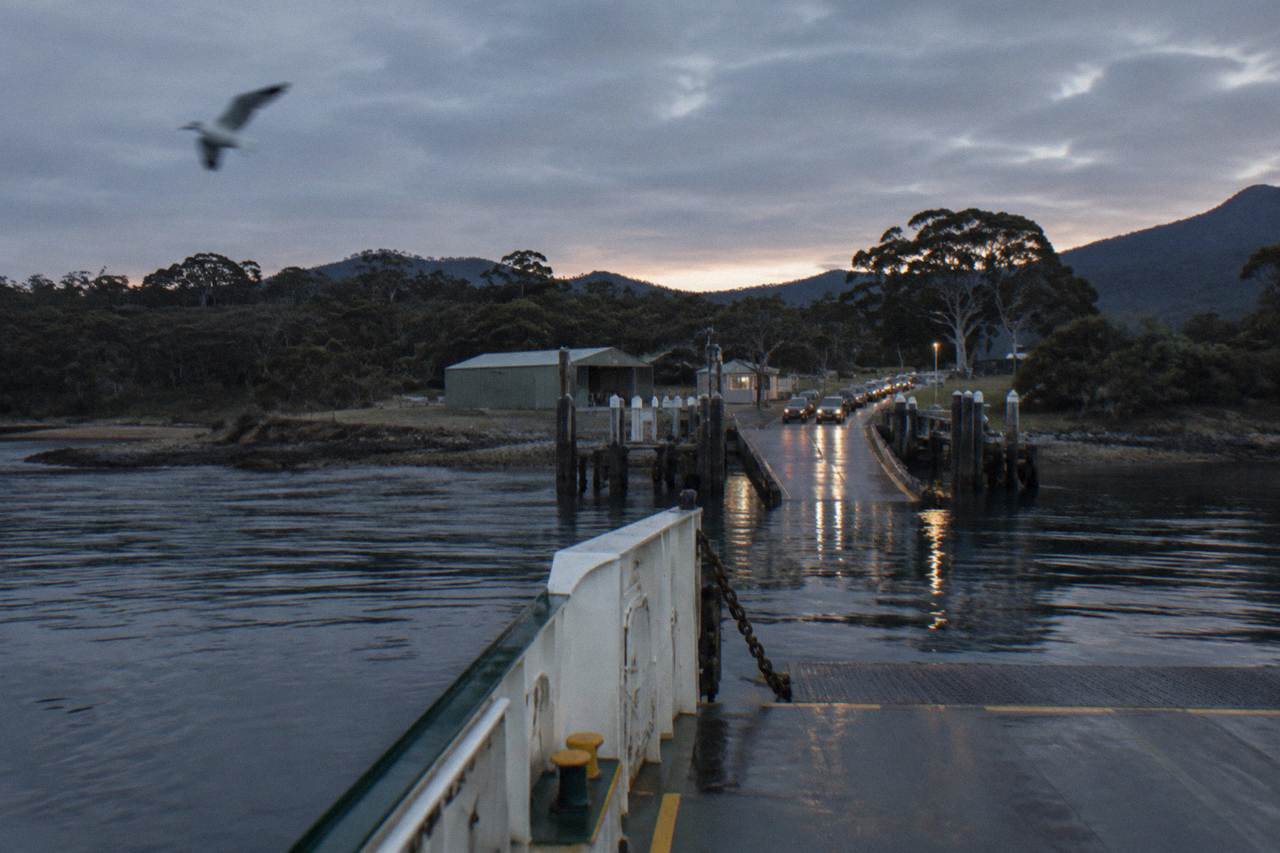
The Bruny Island ferry is one of those Tasmanian institutions that sounds simple and is, mostly, simple: a 20-minute crossing from Kettering to Roberts Point, running every day of the year. The number that catches people out is not the sailing time, it is everything around it. Hobart is not a ferry port. You drive 35 to 40 minutes south to Kettering, you queue for the next available sailing rather than a booked departure time, and once you land at Roberts Point you are at the northern end of an island that takes a fair while to drive down. The question "how long is the ferry ride" therefore has a short answer and a longer, more honest one, and this article gives you both. If all that queueing and driving sounds like a lot of holiday spent sitting still, our guide to a scenic flight over Bruny Island shows what the island looks like when you swap the ferry queue for a window seat.
How Long Is The Ferry Ride From Hobart To Bruny Island?
The crossing itself takes 20 minutes each way, and there is no faster or alternative passenger service. Getting from central Hobart to the Kettering terminal takes 35 to 40 minutes by road, so a realistic door-to-shore figure is roughly an hour before you factor in queueing, which at busy times can add a wait of one or more sailings. To see how the road and sailing legs fit together, the complete guide to driving from Hobart to Bruny Island covers fares and what to expect once you land.
That 20-minute figure comes straight from the operator. The Bruny Island ferry is run by Island Connections (formerly SeaLink), which operates the route 365 days a year between Kettering, on the mainland side of the D'Entrecasteaux Channel, and Roberts Point on North Bruny. The operator's own timetable page states the crossing time plainly, and it is the figure to trust; you may still see the old 15-minute claim floating around on third-party pages, and the operator's number supersedes it.
The drive from Hobart to Kettering is worth pinning down too, because the two sources disagree slightly and the honest answer is a range. The operator calls it a 35-minute drive from Hobart. Parks and Wildlife Service Tasmania says about 40 minutes via Kingston on the A6 and then the B68. Traffic on the Southern Outlet, and whether you are leaving from the Hobart waterfront or from a hotel further out, will decide where in that 35 to 40 minute band you land. Budget the upper end on weekday mornings.
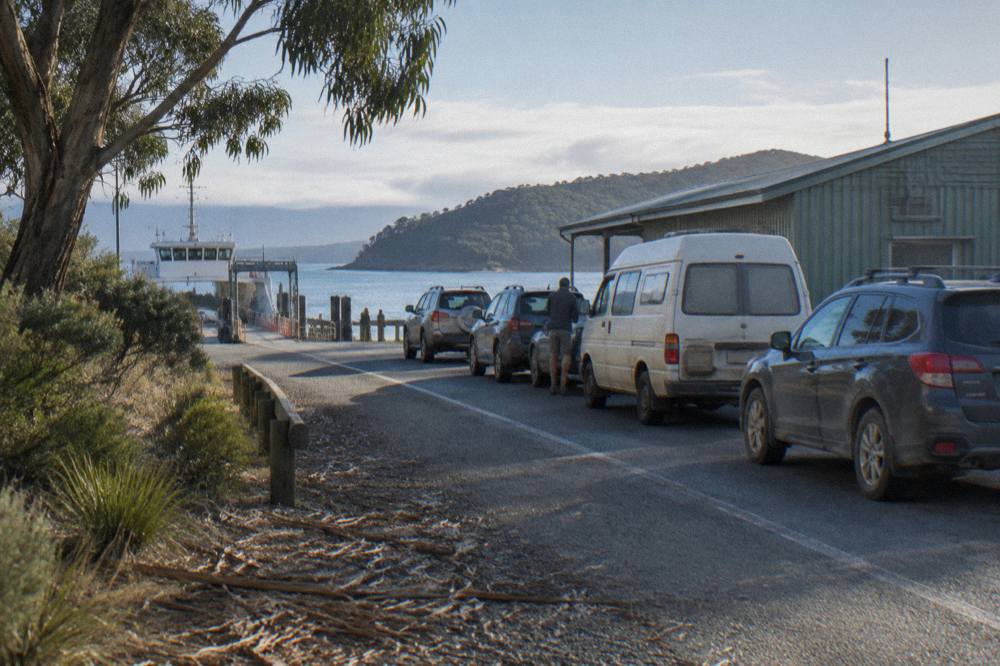
One more thing belongs in the headline answer: the ferry runs a queueing system rather than a reservation system. Departures from Kettering leave every 20 minutes between 6.10 am and 7.00 pm, and pre-purchased tickets are valid for the next available ferry, not a specific departure time. In peak summer periods the queue of vehicles can exceed one sailing's capacity, which is the single biggest source of "the ferry took us an hour" complaints. The sailing is 20 minutes; the waiting line is what varies.
Here are the core numbers in one place.
| Leg | Time | Notes |
|---|---|---|
| Hobart to Kettering terminal | 35 to 40 minutes | Via Kingston, A6 then B68 |
| Kettering to Roberts Point crossing | 20 minutes | Every 20 minutes, 6.10 am to 7.00 pm from Kettering |
| Roberts Point to The Neck | Allow well over 30 minutes further driving | Island roads are single-lane in places |
| Roberts Point to Cape Bruny Lighthouse | 1 hr 15 min | Per the lighthouse page |
Read that table as a chain rather than a set of separate facts. A day-tripper leaving a Hobart hotel at 9 am, catching a 10 am sailing and driving straight to the lighthouse will not stand at the base of the tower until close to midday, before a single minute of actual sightseeing. That is the arithmetic that decides whether a one-day visit feels relaxed or rushed, and it is why many travellers hand the driving to a tour operator instead. If the queueing and the driving sound like work, the alternative is to let someone else handle the whole run. All three of these guided days from Hobart include the ferry crossing in the price:
Where Does The Ferry Leave From, And What Is Kettering Like?
The ferry departs from Kettering, a small marina village on the Channel Highway roughly 35 to 40 minutes south of Hobart, and lands at Roberts Point on North Bruny. Kettering has a ticket booth, upgraded dual ramps and queueing areas, and no other ferry port serves the island. If you're planning the whole trip from the city, the full Hobart to Bruny Island drive guide covers the road timing, fares and what to expect after you land.
Kettering is not a big place. The terminal has undergone upgrades including dual ramps and improved queueing areas, which matters in summer when vehicle volumes swell. Tickets can be pre-purchased online or bought at the Kettering terminal booth, and there is no check-in desk or gate in the airport sense: you join the vehicle queue, and the crew marshals cars, campervans and motorcycles aboard in loading order.
The return leg leaves from Roberts Point on the island side on the same every-20-minutes rhythm. All tickets are return fares, valid for 365 days, so you do not need to commit to a specific coming-home time when you buy. That open-return structure is one of the more traveller-friendly ferry arrangements in Australia, and it is worth knowing before you stand at the booth wondering which sailing to pick: the answer is that it does not matter, the ticket covers the next available boat whenever you turn up.
Pedestrians travel free, and so does every passenger in a vehicle, including the driver; bicycles and motorcycles pay A$8.10 return. Only the vehicle pays. That pricing quirk shapes a lot of travel decisions on this route: a couple in a car pays one vehicle fare for both people, while two cyclists pay A$8.10 return each for their bikes. If you are weighing a self-drive day against a guided day tour that folds the ferry into the ticket, the marginal ferry cost per person in a shared coach is effectively invisible.
How Much Does The Ferry Cost, And Who Pays?
A visitor vehicle under 6 m pays from A$50.90 with a Saver fare, or A$58.60 Regular from 28 September to 30 November and A$67.30 Regular from 1 December to April. Passengers, including the driver, travel free with a vehicle; motorcycles and bicycles pay A$8.10 return.
The fare table is split into Regular and Saver options, with peak pricing applied to the Regular fare only, between 1 December and April. That makes the cheapest times to bring a car across the shoulder months, and the dearest the height of summer, which is also when the queues are longest. For planning purposes, treat the under-6-m vehicle figure as the standard car fare and note that larger vehicles between 6 and 10 m, which covers many campervans, pay A$100.10 to A$115.10 depending on the season, or A$87.20 on a Saver fare.
| Ticket type | Saver | Regular, 28 Sep to 30 Nov | Regular, 1 Dec to Apr |
|---|---|---|---|
| Visitor vehicle under 6 m | A$50.90 | A$58.60 | A$67.30 |
| Visitor concession vehicle under 6 m | A$37.50 | A$43.20 | A$49.60 |
| Vehicle 6 to 10 m | A$87.20 | A$100.10 | A$115.10 |
| Motorcycle or bicycle | A$8.10 | A$8.10 | A$8.10 |
| All passengers, incl. driver | Free | Free | Free |
Every fare in that table is a return fare, valid for 365 days from purchase. There is no one-way pricing, which simplifies things: whatever you pay at Kettering covers the trip home whenever you take it. If you are staying on the island for a week or arriving in November and leaving in January, the same ticket still works.
A question that follows naturally: do you need to pre-book? No, and in fact you cannot book a specific sailing at all. The operator's fares page explains the system: pre-purchased tickets are for the next available ferry, not a departure time. Pre-purchasing online simply saves you the booth transaction. For a fuller treatment of the booking question, see our companion piece on whether to pre-book the Bruny ferry, and for the wider journey picture, our guide to getting from Hobart to Bruny Island.
Do You Still Spend All That Time On A Guided Tour?
No, in the sense that on a guided day tour the ferry is folded into the itinerary rather than being a leg you manage. Every full-day tour from Hobart on the island's roster includes the return ferry crossing in its price, and the guide handles the queue, the boarding and the schedule.
Every full-day tour from Hobart includes the return ferry in the price. The Pennicott Gourmet Tasting Day, formally the Hobart: Bruny Island Gourmet Sightseeing Day Tour, is a 9.5-hour coach day from A$290 per person that includes the ferry crossing plus tastings of fudge, honey, mead, cheese and ale and a beachside lunch, with hotel pickup applying to select CBD hotels only. It carries a 4.8 rating from 581 reviews. A guest named Melissa left a typically warm verdict: "What an amazing day from pick up and drop off to our motel. All experiences were fantastic. Zoe was extremely knowledgeable and made the day fun! Highly recommended!" If Bruny is on your list but you're weighing it against Maria Island, our comparison of Maria Island and Bruny Island as Hobart day trips lays out the honest pros and cons.
A budget option in the same category is the Tassie Tours full-day guided tour, a 10-hour minibus day from A$180 per person with hotel pickup in the Hobart CBD, the round-trip ferry, live commentary and the National Parks Pass, with food paid for separately. It holds 4.7 from 938 reviews. One reviewer, jodie, described a day that ran "very smoothly from picked up to delivery back", taking in the barge ride, a pub lunch and the lighthouse. The small-group lighthouse day from Bruny Island Safaris, from A$280 per person with 4.8 across 1,003 reviews, adds exclusive access inside Cape Bruny Lighthouse plus oysters at Get Shucked, a one-course lunch at Hotel Bruny and the Parks Pass, for up to 20 guests. If you're still deciding between Bruny and its east coast rival, our guide to choosing between Maria Island and Bruny Island compares the two day trips side by side.
The point for this article's question is arithmetic. On any of these tours, the 35 to 40 minute drive, the ferry queue and the 20-minute crossing are absorbed into a planned schedule, and the sailing becomes part of the sightseeing rather than a logistics hurdle. On a winter morning or a peak-summer Saturday, that difference is not trivial. The coach pulls into the Kettering queue with the driver knowing the loading patterns, and passengers spend the crossing on deck rather than watching a queue indicator.
What Is The Crossing Actually Like?
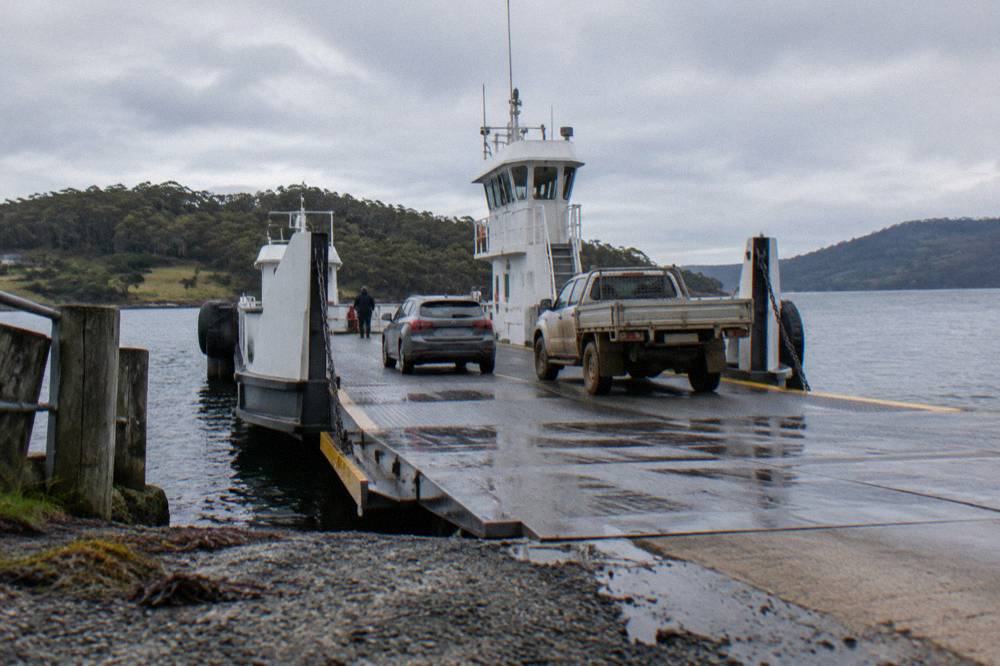
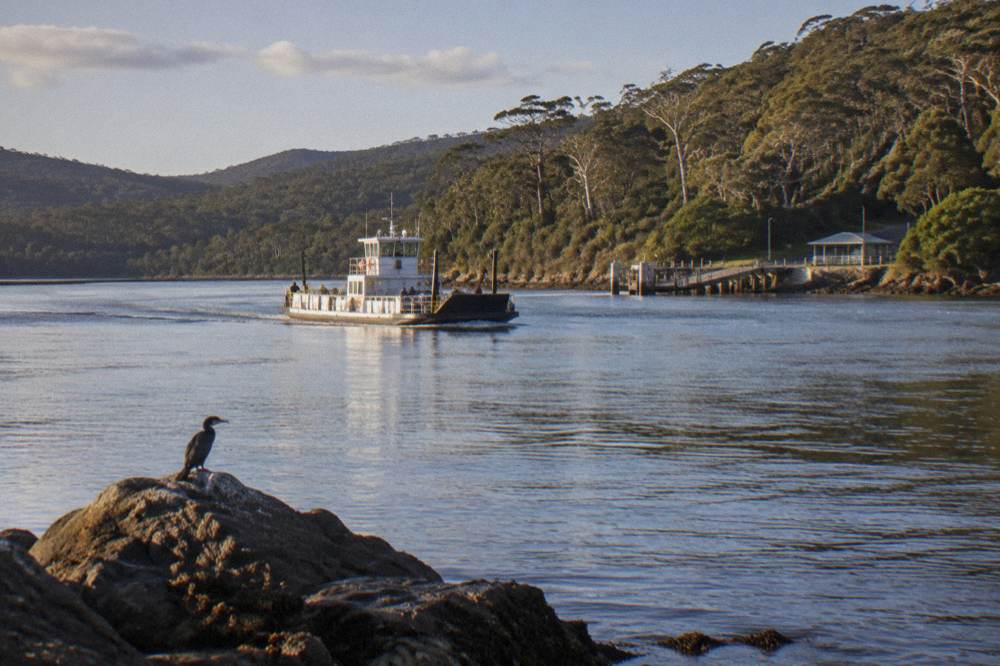
The crossing is a 20-minute open-water run across the D'Entrecasteaux Channel, sheltered enough that it rarely feels like an ocean passage, with vehicles parked on open decks and passengers free to stay in their cars or stand on deck and watch the shoreline close in on both sides.
The channel between Kettering and Roberts Point is protected water, not open ocean, which is why the ferry runs on schedule 365 days a year in almost all conditions. On deck you get a genuine taste of the island before you have even arrived: the marina masts at Kettering falling behind, the wooded slopes of North Bruny rising ahead, and often seabirds working the water. It is a working vessel rather than a cruise, so think of it as a very short, very scenic commute.
For readers planning their own logistics rather than a tour day, there are two practical facts worth carrying. First, the only fuel available on the island is at Adventure Bay General Store, and there is no ATM anywhere on Bruny, so fill up and get cash before you leave the mainland. Second, the island's roads are narrow and partly single-lane, so the driving time from Roberts Point to southern sights is real: the lighthouse alone is 1 hr 15 min from the ferry terminal. Day-trippers who budget only the crossing time routinely underestimate the day.
If your interest in the water goes beyond a 20-minute shuttle, the three-hour wilderness cruise from Adventure Bay, from A$190 per person with 4.8 from 632 reviews, is the island's proper boat experience: an open-air vessel along the dolerite coastline looking for seals, dolphins and sea birds, with an option to add the bus and ferry connection from Hobart. And on the same theme of short, contained experiences, a 30-minute guided climb of the 1838 Cape Bruny Lighthouse runs from A$25 per person, 4.9 across 316 reviews, meeting at the lighthouse car park for up to 10 travellers, with the Parks Pass and transport not included.
For the complete picture of the terminal, the fares and the queueing system, our dedicated Bruny Island ferry guide covers it in depth, and the operator's own Bruny Island page carries the current timetable and any service notices. Conditions on any transport service can change, so a quick check of the operator page the day before travel is cheap insurance.
When Should You Cross, And How Bad Are The Queues?
Departures leave Kettering every 20 minutes from 6.10 am to 7.00 pm, 365 days a year, so the schedule itself is generous; the variable is demand, which peaks on summer weekends and public holidays when vehicle queues can stretch past one or more sailings, roughly 20 to 40 extra minutes of waiting.
The rhythm of the day matters more than the timetable number. The first departures from Kettering are around 6.10 am and the last around 7.00 pm, which gives early risers a genuine head start: an 8 am arrival at the terminal on a summer Saturday is a very different experience from a 10.30 am arrival. Islanders and regulars cross early, tour coaches cross mid-morning, and day-trippers cluster late morning, so the queue builds through the day and again for the evening return window.
There is no reservation system to game, so the levers you control are timing and fare type. Crossing on a Saver fare in the shoulder season saves money but does not save queue time; crossing at 7 am saves queue time but not money. The summer timetable currently in force commenced on 28 September 2026, and the same every-20-minute frequency runs across it.
A word on the island's own rhythm at the far end: the Neck viewing platform, where little penguins and short-tailed shearwaters come ashore at dusk, is a drawcard that pairs oddly with ferry timing, because watching for penguins at last light means catching one of the final return sailings or staying overnight. The wildlife guidelines from the Tasmanian government ask visitors to arrive before last light, use only dim red-light torches, never shine light toward the water or the birds, approach the observation point from the land rather than the beach, and stay quiet. Penguins leave the water under cover of darkness to avoid predators, which is why patience and silence are the whole method.
For travellers who would rather not run that logistics puzzle themselves, this is where the guided product earns its keep. A tour day that includes the ferry, like those profiled above, converts the timetable question into someone else's problem, and the multi-day options extend the same logic: the two-day Bruny and Port Arthur combination from Tassie Tours, from A$310 per person with 4.8 from 15 reviews, includes hotel pickup, the ferry ticket and the National Parks Pass across two days from Hobart.
Common Questions About The Bruny Island Ferry Ride
How Long Is The Ferry Ride From Hobart To Bruny Island?
The ferry crossing takes 20 minutes between Kettering and Roberts Point. Getting from Hobart to the Kettering terminal takes 35 to 40 minutes by road, so the full journey from the city to standing on Bruny Island is roughly an hour before any queueing, with every-20-minute departures from 6.10 am to 7.00 pm.
How Often Does The Bruny Island Ferry Run?
The ferry departs Kettering every 20 minutes between 6.10 am and 7.00 pm, and the service runs 365 days a year. It uses a queueing system: pre-purchased tickets are valid for the next available ferry, not a specific departure time.
Do Passengers Pay On The Bruny Island Ferry?
No. All passengers, including the driver, travel free with a vehicle, and pedestrians travel free as well. Only the vehicle pays: from A$50.90 Saver or A$58.60 to A$67.30 Regular return for a visitor vehicle under 6 m, and A$8.10 return for a motorcycle or bicycle.
Can You Book A Specific Ferry Sailing?
No. The operator runs a queueing system, and pre-purchased tickets are for the next available ferry rather than a chosen departure. You can pre-purchase online or pay at the Kettering booth, and all tickets are return fares valid for 365 days.
Is There Fuel Or An ATM On Bruny Island?
The only fuel on the island is at Adventure Bay General Store, and there is no ATM on Bruny. Fill the tank and withdraw cash on the mainland side before you board at Kettering.
Do Guided Tours Include The Ferry?
Yes. Every full-day guided tour from Hobart on the roster includes the return ferry crossing in its price, along with the drive from Hobart, so the 20-minute crossing and the terminal queue are handled by the operator rather than by you.
Back on the question of getting the whole day right, this site, Bruny Island Tasmania Tours, exists for exactly that: the ferry number is the easy part, and the rest of the island rewards a plan. Twenty minutes on the water, 35 to 40 minutes to reach it, and a full day either side.