What Is The Best Part Of Bruny Island To Stay?
A plain-spoken look at where to stay on Bruny Island, comparing Adventure Bay, Alonnah, the north and Kettering without hotel rates or star ratings.
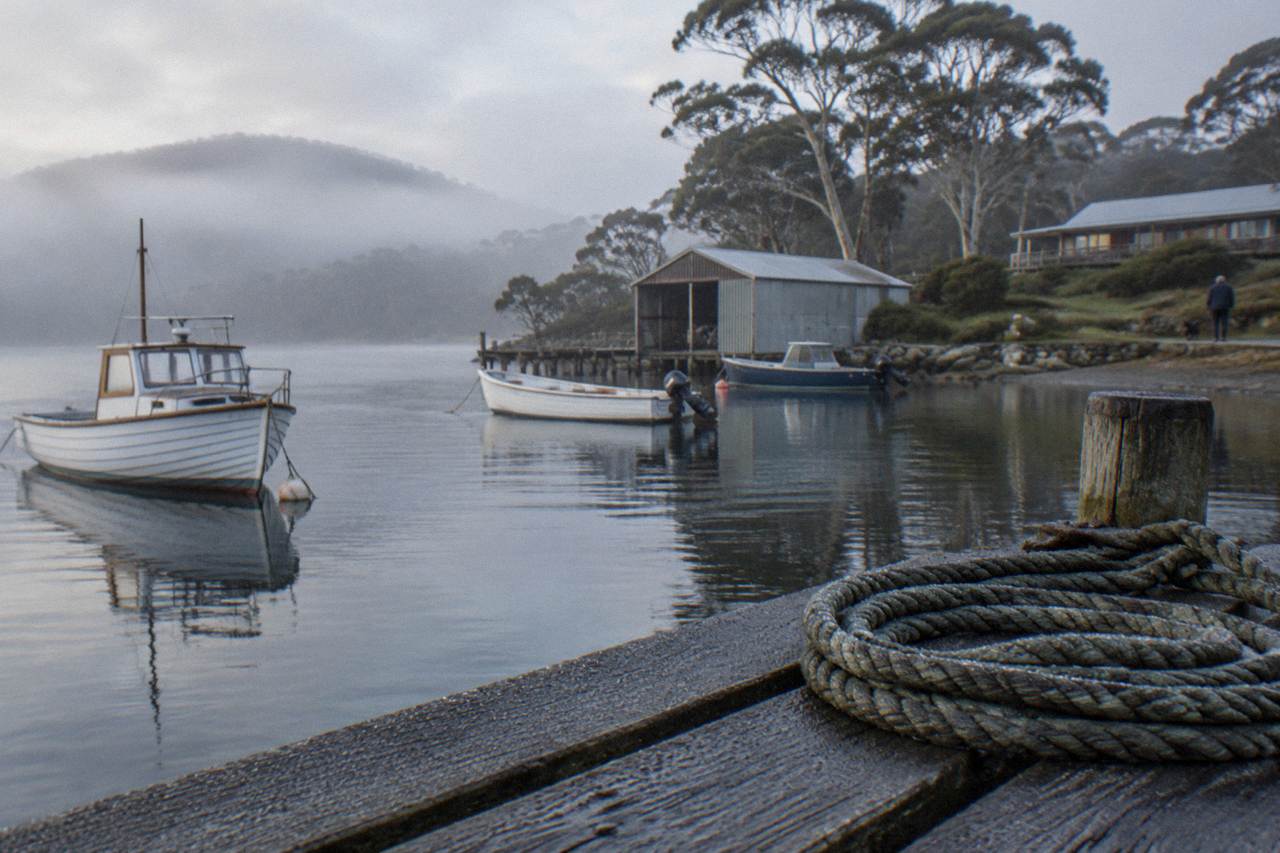
Bruny Island is not one village but a string of small settlements spread across a long, narrow landmass. The question of where to stay is really a choice about pace, access and what you want outside your door each morning. The best part of Bruny Island to stay is Adventure Bay if you want a beach, a shop, a cafe and the shortest drive to the wilderness cruise departure point. Alonnah and Lunawanna suit travellers who prefer a quiet, local feel with a pub and a general store. North Bruny and the Kettering mainland offer the easiest ferry access and the closest link to Hobart. Each option comes with trade-offs, and the right one depends on how many days you have and whether you are self-catering.
What Is The Best Part Of Bruny Island To Stay?
Adventure Bay is the best part of Bruny Island to stay for first-time visitors, with the island's only fuel stop, a general store, café and direct access to the wilderness cruise departure point. Alonnah suits those seeking a quieter, local feel with a pub, small shop and waterfront views, while North Bruny and Kettering offer easy ferry access and a shorter drive to Hobart's restaurants.
Bruny Island stretches from Dennes Point in the north to Cape Bruny in the south, connected by a narrow isthmus called The Neck. The ferry from Kettering lands at Roberts Point on North Bruny, so every overnight stay on the island itself involves that 20-minute crossing. The island has no large supermarkets and no chain hotels. Accommodation is mostly self-contained cottages, holiday homes, a handful of B&Bs and two caravan parks. There is no ATM on the island and the only fuel pump is at the Adventure Bay General Store, so planning ahead matters.
The four main areas to consider are Adventure Bay on South Bruny, the Alonnah-Lunawanna stretch also on South Bruny, the northern settlements around Dennes Point and Barnes Bay, and the mainland township of Kettering where the ferry departs. Each has a distinct character, and the distances between them are real: from the ferry terminal at Roberts Point to Adventure Bay is a drive of under an hour, and from Adventure Bay to the Cape Bruny Lighthouse is a similar drive south. Understanding those drive times is key to choosing a base that does not eat your day in the car.
Adventure Bay: The Island's Beachside Hub
Adventure Bay serves as Bruny Island’s primary beachside hub, offering the only fuel pump, a general store, café and takeaway, plus direct access to the three-hour Pennicott wilderness cruise. Its long, east-facing beach delivers calm morning waters, and white wallabies occasionally emerge near the Fluted Cape entrance at dusk. Accommodation spans beach houses to a holiday park, with most properties within walking distance of the cruise jetty.
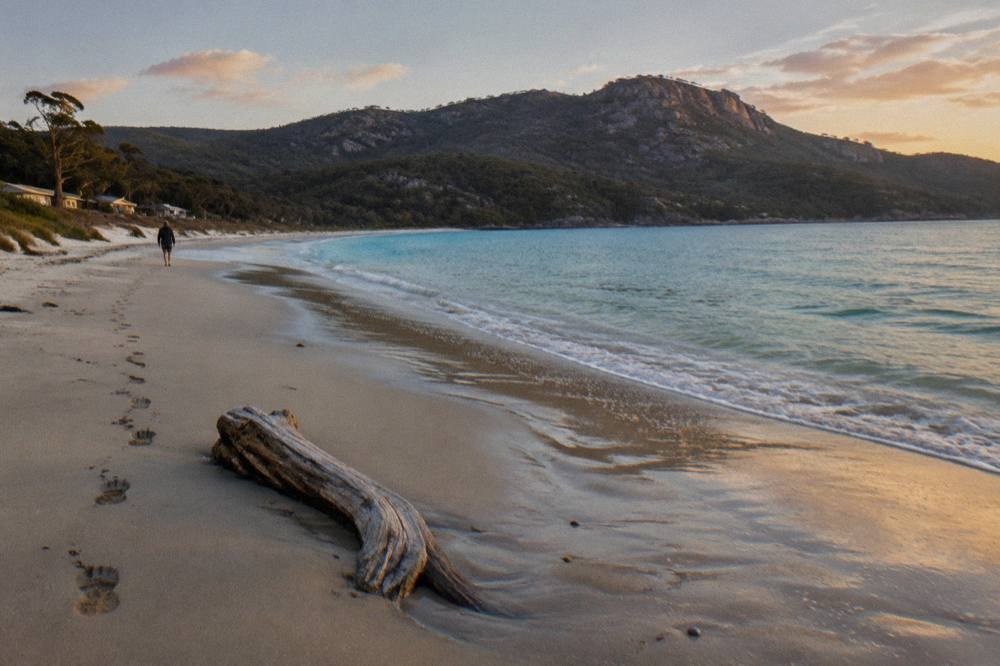
Adventure Bay sits on the eastern side of South Bruny, facing the Tasman Sea. The bay's shape shelters it from the prevailing westerlies, so mornings are often calm and the water is swimmable in summer, though the beaches are unpatrolled and the water stays cool year-round. The Bureau of Meteorology's Cape Bruny station records a mean maximum of 20.2°C in January and February, so a beachside stay in high summer is pleasant rather than tropical. The general store sells fuel, basic supplies and takeaway food, and there is a cafe a short walk from the beach. It is not a bustling town, but it has enough infrastructure to support a multi-day stay without constant driving.
For visitors who plan to join the Bruny Island wilderness cruise, Adventure Bay removes the morning drive. The cruise departs from the Adventure Bay jetty, and the three-hour trip runs along the dolerite cliffs of the South Bruny coast past The Friars, where Australian fur seals haul out, and into the open water where whales are sometimes seen. A guest review on the listing calls it a "thrill ride with all the big waves" and notes the chance to see wildlife and "awesome scenery." Staying in Adventure Bay means you can walk to the jetty, do the cruise in the morning, and spend the afternoon at the beach or driving to the lighthouse. The Bruny Island cruises guide compares the full-day and cruise-only options in more detail.
The trade-off is distance from the ferry. Adventure Bay is the furthest south of the main settlements, a drive of under an hour from Roberts Point, and that drive includes the winding road through The Neck and past Alonnah. If you plan to come and go from the island multiple times, that adds up. The area also has limited dining: the cafe and the general store close by late afternoon, and the nearest pub is at Hotel Bruny in Alonnah, about a 15-minute drive north. Self-catering is the norm.
Alonnah And Lunawanna: Quiet South Bruny Living
Alonnah and Lunawanna deliver quiet South Bruny living with a low-key mix of holiday cottages, B&Bs, a pub open daily, a general store, and a boat ramp, all set along the channel coast roughly halfway between the ferry and the lighthouse. It’s ideal for travellers who want a walkable pub meal and don’t mind short drives to the beach or cruise.
Hotel Bruny is the social anchor of this stretch. It serves pub meals in a dining room with water views. The Alonnah General Store stocks a limited range of groceries, and the Bruny Island Community Health Centre is nearby, with 24-hour accident and emergency services. That matters on an island with no hospital. Lunawanna, a few kilometres south, is quieter still and closer to the start of the Labillardiere Peninsula walk. There is no cafe, no fuel and no shop in Lunawanna itself, so you drive to Alonnah or Adventure Bay for supplies.
Staying in this area puts you within a short drive of Adventure Bay, the cruise jetty and the Cape Bruny Lighthouse road, and a moderate drive from the ferry. It is a good middle ground if you want to explore both the far south and the northern beaches without repositioning. The downside is that dining options are limited to the pub and whatever you cook. The Berry Farm, when in season, is a short drive away, but its opening months are not published on an official page, so do not count on it outside the warmer months. The Bruny Island Cheese Co cellar door, open 10am to 4pm daily, is about 20 minutes north, and Get Shucked oysters are a similar distance, open 9.30am to 4.30pm daily. For a fuller list of producer stops, see the Bruny Island producers guide.
North Bruny And Kettering: Convenience And Calm
For the perfect blend of convenience and calm, North Bruny and Kettering are the top choices. North Bruny’s Dennes Point and Barnes Bay offer peaceful Channel views just a short drive from the ferry, while Kettering on the mainland provides a marina, pub, cafe and supermarket only 35-40 minutes from Hobart. Neither has Adventure Bay’s immediate beach access, but both slash driving time and keep Hobart’s restaurants within easy reach for dinner.
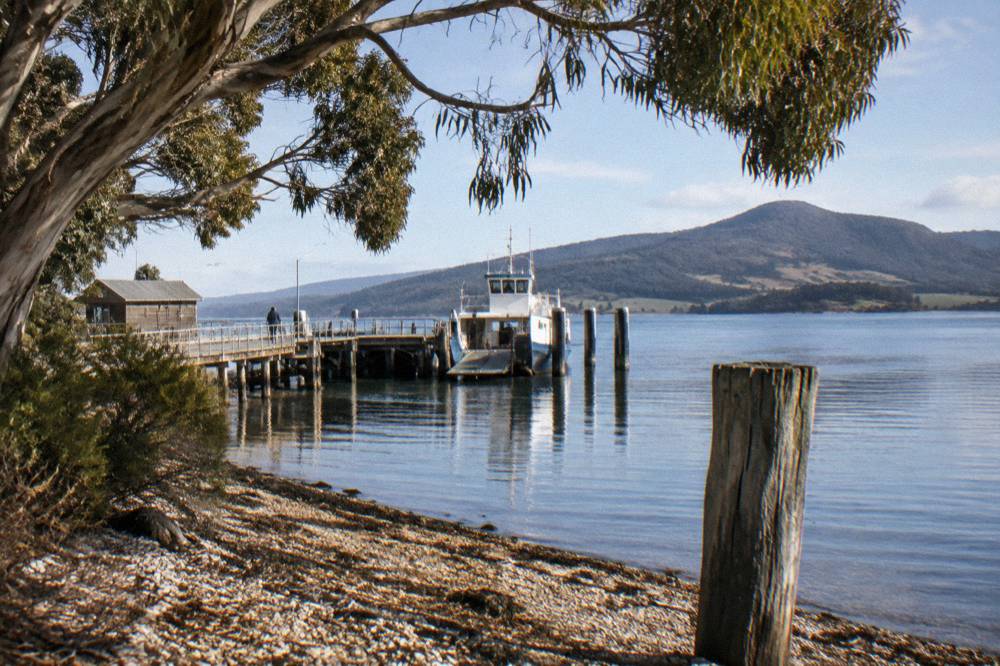
North Bruny is the island's quieter end. Dennes Point has a small cafe, a gallery and a sheltered beach that is popular with families. Barnes Bay is a scattering of holiday homes with no shop. The appeal is the calm channel water, the north-facing aspect and the short drive to the ferry. You can be on the 6.10am sailing from Kettering and in Hobart by 7.30am, or catch the last ferry back at 7.00pm and be home in minutes. The trade-off is distance from the island's main attractions: Adventure Bay is a drive of under an hour south, the lighthouse over an hour, and the wilderness cruise departure point a similar distance. North Bruny works best for a relaxed stay where the island's beaches and walks are the draw, rather than a packed sightseeing itinerary.
Kettering is not on Bruny Island at all, but it is the most practical base for anyone who wants to visit the island as a day trip and sleep on the mainland. The township has a marina, the Oyster Cove Inn, a cafe, a small IGA supermarket and the ferry terminal itself. The Island Connections ferry departs every 20 minutes from 6.10am to 7.00pm, 365 days a year, and the crossing takes 20 minutes. Tickets are return fares valid 365 days, and passengers travel free with a vehicle. A standard visitor vehicle under six metres costs A$58.60 return in the shoulder season (28 September to 30 November) or A$67.30 in the peak summer period from 1 December, with a Saver fare of A$50.90 available year-round. Staying in Kettering means you pay the ferry fare each day you cross, but you save on island accommodation and you keep Hobart's dining scene within a 35 to 40 minute drive.
The Kettering option also solves the island's limited evening food problem. On Bruny, dinner options are Hotel Bruny in Alonnah, the Bruny Island Premium Wines restaurant on Saturday nights, or what you cook yourself. In Kettering, the pub and the cafe are open for dinner, and Hobart is a short drive away. For a two-night trip where you plan one full day on the island, Kettering is often the most flexible choice.
Staying In Hobart And Day-Tripping
Staying in Hobart and day-tripping to Bruny Island is a practical choice, offering city restaurants and a wide range of hotels, with a 40-minute drive to the ferry and frequent crossings that make a full day on the island straightforward. You miss the slow island morning and dusk at the Neck, but you avoid self-catering and overnight logistics.
Hobart's advantages are obvious: hotels at every price point, restaurants open seven nights, and no ferry fare to pay unless you are driving across. If you join a guided day tour, the operator handles the ferry, the driving and the itinerary, and you return to Hobart by evening. The Bruny Island Tasmania Tours roster lists several full-day coach and small-group tours that collect from Hobart hotels and include the ferry crossing, producer tastings and a stop at The Neck. The Pennicott Gourmet Tasting Day, for example, runs 9.5 hours from Hobart with tastings of fudge, honey, mead, cheese and ale, plus a beachside lunch. The Tassie Tours Budget Day is one of the lowest-priced full-day guided options on the roster, from A$180 per person, with hotel pickup, the ferry and the National Parks Pass included, while food and drinks are extra. For a broader look at the food-focused day tours, see the Bruny Island food and wine tours guide.
Day-tripping from Hobart works well if you have only one day for Bruny Island. The trade-off is that you miss the island's quietest hours: the early morning at Adventure Bay before the day-tour coaches arrive, the dusk penguin viewing at The Neck, and the chance to linger at a producer without watching the clock. The Parks and Wildlife Service notes that little penguins and short-tailed shearwaters can be seen at dusk at the Bruny Island Neck Conservation Area viewing platform. That experience is only possible if you stay on the island or drive back late, which means a dark, winding road and a ferry crossing after sunset.
What To Look For In Bruny Island Accommodation
Look for self-contained accommodation with a well-equipped kitchen rather than star ratings; also verify linen, barbecue facilities, and proximity to shops. Bring fresh food from Hobart or Kettering as there’s no large supermarket. On South Bruny, confirm water supply (often tank water) and expect patchy mobile coverage south of Alonnah. A vehicle is essential for getting around: the island has only one fuel pump at Adventure Bay.
The island's accommodation stock is dominated by holiday rentals, with a handful of B&Bs and two caravan parks. The Adventure Bay Holiday Park and the camping areas in South Bruny National Park are the main options for tents and campervans. Camping fees in the national park are A$10 per night for one or two campers until 2 November 2026, rising to A$18 per site per night from 3 November, with a maximum of six people per site. The Pines campground is free. All national park campgrounds require a valid parks pass: a Daily Pass costs A$49.15 per vehicle for up to eight people, or A$24.55 per person on foot or by bus. A Holiday Pass, valid for up to two months, is A$98.35 per vehicle. The Bruny Island camping guide covers the campgrounds and booking details.
Booking well ahead is essential for the summer months, especially for beachfront properties at Adventure Bay and for the holiday park. The island's accommodation stock is small, and weekends from December to March fill months in advance. The Bruny Island Ultra and Marathon in late spring will bring a spike in demand, so if your dates overlap, book early. For last-minute trips, Kettering and Hobart offer more availability and a wider price range.
Planning Your Base: A Quick Comparison
The table below lays out the four main base options side by side, using only facts from the island's official pages and the tour roster. No hotel rates or star ratings appear, because they vary by season and property. Use this as a planning tool, not a booking engine.
| Base | Ferry Access | Nearest Shop | Evening Food | Best For |
|---|---|---|---|---|
| Adventure Bay | Longest drive (south) | General store (fuel, basics) | Self-cater or cafe (daytime only) | Beach access, cruise departure, families |
| Alonnah / Lunawanna | Moderate drive | Alonnah General Store | Hotel Bruny (pub, 7 days) | Quiet stay, pub meals, central location |
| North Bruny (Dennes Point) | Short drive | None (drive to Kettering or Alonnah) | Self-cater or Kettering pub | Ferry convenience, channel views, calm |
| Kettering (mainland) | At terminal | IGA supermarket, cafe | Oyster Cove Inn, cafe, Hobart 35 min | Day trips to island, mainland dining, no self-cater |
The drive times assume normal conditions and no ferry queue. On summer weekends, the queue at Kettering can add 30 to 60 minutes, so factor that into any plan that involves a timed tour departure. The ferry operates on a queueing system: pre-purchased tickets are for the next available sailing, not a specific departure time, so you cannot reserve a crossing slot.
Multi-Day Tours As An Alternative To Staying
Multi-day guided tours remove the need to select a single base, instead offering overnight itineraries that combine Bruny Island with Hobart or Port Arthur. Two available options, the 2 Day Tasmanian Highlights Tour and the 2 Day Bruny Island and Port Arthur Tour, include hotel pickup, ferry tickets, National Parks Passes, and guided sightseeing, ideal for those who prefer a structured, self-drive-free experience.
The two-day Hobart and Bruny combo, from A$305 per person, spends one day exploring Hobart's highlights and a second day on Bruny Island, with Bonorong Wildlife Sanctuary entry and the National Parks Pass included. The two-day Bruny and Port Arthur option, from A$310 per person, covers Bruny on day one and the Port Arthur Historic Site on day two, with entry fees included. Both run in an air-conditioned minibus with a local guide and hotel pickup in Hobart. Accommodation is not included in the price, but the operator's listing provides recommendations, and the guided format means you do not need to plan ferry times or driving routes. The full list of multi-day tours that include Bruny Island compares the two-day and three-day options.
For travellers who want a longer stay, the three-day Tasmanian Highlights loop adds a third day and a visit to Port Arthur, from A$455 per person. It covers Hobart, Bruny Island and the Tasman Peninsula in a single itinerary, with cheese tastings, the Bruny ferry ticket, Bonorong entry and the National Parks Pass included. Food, drinks and the lighthouse tour cost extra.
Multi-day tours work especially well for visitors who are not renting a car. The ferry is a vehicle ferry, and walk-on passengers travel free. A guided tour handles all the connections, and you see the island's highlights without the logistics. The trade-off is less flexibility: you follow the group schedule, and you cannot linger at a beach or a producer beyond the allotted stop.
If you have two or three days and want to see both Bruny Island and the Tasman Peninsula, the multi-day combos are a strong alternative to booking separate accommodation and driving yourself. They also solve the island's limited evening dining: you overnight in Hobart or at Port Arthur, where restaurants are plentiful.
What About Camping?
Camping on Bruny Island is a budget-friendly stay option, with three campgrounds in South Bruny National Park: Jetty Beach, The Neck and Cloudy Corner, offering basic facilities, walk access, and a free site at The Pines; a parks pass is needed, and camping is best in warmer months with mean maximums of 17 to 20°C, though a vehicle is required for access and supplies.
The Neck campground is the most popular, sitting on the isthmus between North and South Bruny with views across the channel and the ocean. It is a short walk from the penguin viewing platform, and the beach is steps away. Jetty Beach is further south, near the start of the Labillardiere Peninsula walk, and Cloudy Corner is on the remote east coast, popular with surfers. All three have pit toilets and no power. Water is not always available, so bring your own.
Camping fees are low. Until 2 November 2026, a site for one or two campers costs A$10 per night, with extra adults at A$5 and children at A$2.50. From 3 November, the fee moves to a flat A$18 per site per night for up to six people. The Pines campground remains free. A Daily Parks Pass costs A$49.15 per vehicle, or a Holiday Pass covering two months is A$98.35. If you are camping for more than two nights, the Holiday Pass is the better value, and it also covers entry to other Tasmanian national parks.
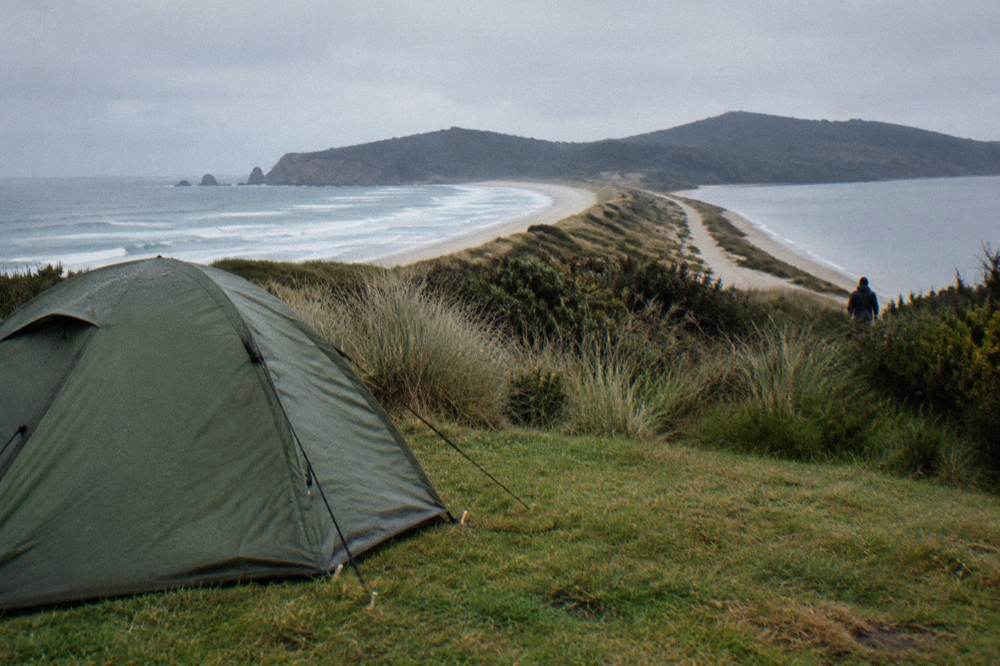
The camping experience on Bruny is exposed: the weather can change quickly, and the Cape Bruny climate station records mean rainfall of 70 to 86 millimetres a month from May to October, with August the wettest month at 85.7 millimetres. Summer is drier but still averages 39 to 58 millimetres a month. Bring a tent that can handle wind and rain, and check the Parks Tasmania alerts page for any fire restrictions or track closures before you go.
Which Area Suits Your Trip Style?
Match your base to your pace: for a packed itinerary, choose Adventure Bay or Hobart; for a slow, self-catered escape, pick North Bruny or Alonnah; for a one-night road trip stop, Kettering is ideal. Families love Adventure Bay for its beach and store, couples prefer Alonnah's quiet pub, and solo travellers without a car should book a guided day tour from Hobart.
The table below summarises the best fit for common trip types, drawn from the facts above and the island's real infrastructure.
| Trip Type | Best Base | Why |
|---|---|---|
| One full day on Bruny, sleep elsewhere | Hobart or Kettering | No island accommodation needed; day tour or self-drive |
| Two nights, self-drive, beach focus | Adventure Bay | Beach, shop, cruise jetty, fuel |
| Two nights, self-drive, quiet and pub meals | Alonnah | Hotel Bruny, central location, local feel |
| Three nights or more, self-catering, relaxed pace | North Bruny (Dennes Point) | Ferry close, channel beaches, Hobart reachable |
| Camping, budget, walks | The Neck or Jetty Beach campgrounds | Low cost, inside the park, walk access |
| No car, want a guide | Hobart (multi-day tour) | Tour handles all logistics, accommodation in Hobart |
The ferry is the one constant. No matter where you stay on the island, you cross on the Island Connections ferry, which operates 365 days a year, every 20 minutes from 6.10am to 7.00pm from Kettering. The crossing takes 20 minutes, and all tickets are return fares valid 365 days. A standard vehicle under six metres costs A$58.60 return in the shoulder season or A$67.30 in peak summer, with a Saver fare of A$50.90 available. Motorcycles and bicycles cost A$8.10 return. Passengers travel free with a vehicle. If you are staying in Kettering and crossing as a foot passenger, you pay nothing for the ferry, but you need a vehicle or a tour to get around the island.
Common Questions About Bruny Island Accommodation
What Is The Best Part Of Bruny Island To Stay?
The best part depends on your priorities. Adventure Bay has the beach, the shop, the fuel pump and the wilderness cruise departure point, making it the most practical base for first-time visitors. Alonnah offers a quieter, local feel with a pub and a general store. North Bruny and Kettering give the easiest ferry access and the shortest drive to Hobart.
Can I Stay On Bruny Island Without A Car?
It is difficult. A guided day tour from Hobart or a multi-day tour that includes transport is the best option for visitors without a vehicle.
Is There A Supermarket On Bruny Island?
No. The island has two general stores, one at Adventure Bay and one at Alonnah, which stock basic groceries. The nearest full supermarket is the IGA at Kettering on the mainland. Bring fresh food with you, especially if you are staying on South Bruny.
How Far Is Adventure Bay From The Ferry?
Adventure Bay is the furthest south of the main settlements, a drive of under an hour from the ferry terminal at Roberts Point. The route crosses The Neck and passes through Alonnah. In summer, the ferry queue at Kettering can add 30 to 60 minutes to the total journey from Hobart.
Do I Need A Parks Pass To Camp On Bruny Island?
Yes, a valid parks pass is required for all campgrounds inside South Bruny National Park, including The Neck, Jetty Beach and Cloudy Corner. A Daily Pass costs A$49.15 per vehicle, and a Holiday Pass covering two months costs A$98.35. The Pines campground is free and does not require a pass.
What Is The Closest Town To The Bruny Island Ferry?
Kettering is the mainland township where the ferry departs. It has a marina, a pub, a cafe, a small IGA supermarket and the ferry terminal. Hobart is a 35 to 40 minute drive north of Kettering.