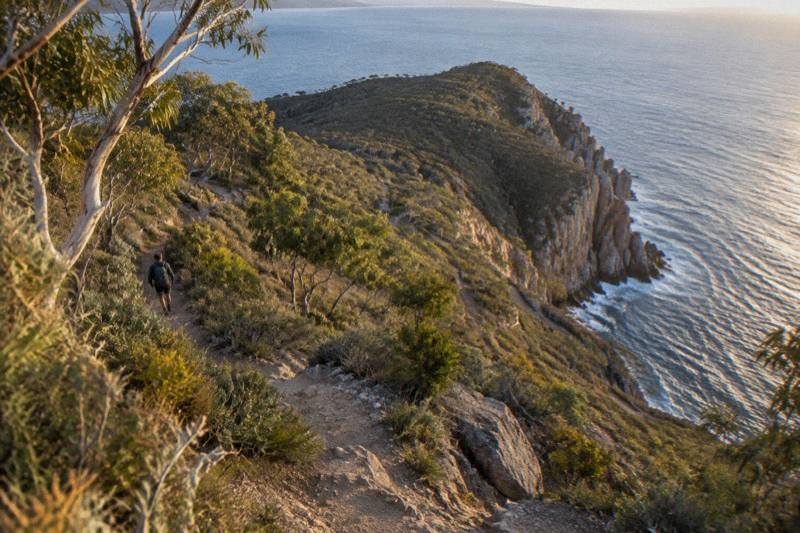
Bruny Island Walks: Fluted Cape, The Arch And Guided Hikes
Bruny Island packs steep dolerite cliff walks, a natural sea arch and quiet beach tracks into one small island, and a parks pass plus a car are the two things most self-guided walkers forget.
Short answer
The best-known Bruny Island walk is the Fluted Cape Track, one of Tasmania's 60 Great Short Walks, steep with unprotected cliff edges. A vehicle parks pass costs A$49.15 for 24 hours. Guided options include a small-group hike-and-taste day from A$169 per person and the 30-minute Cape Bruny Lighthouse climb from A$25.
Bruny Island's walking list is short but unusually sharp: one of Tasmania's 60 Great Short Walks at Fluted Cape, a natural sea arch reachable at low tide, a lighthouse reserve at the southern tip and a neck of sand between two halves of the island. The catch for visitors is rarely the walking itself. It is the two practical facts that shape every self-guided day: South Bruny National Park requires a valid parks pass, priced at A$49.15 per vehicle for 24 hours, and independent walkers generally need a car or a tour to reach trailheads, so independent walkers need their own vehicle or a tour that carries them. This guide compares the island's walking options honestly, from the steep cliff track to the guided small-group hike, and sets out what each one costs and demands. If you would like to see those same cliffs and the sea arch from above rather than below, our guide to the Bruny Island scenic flight covers what a short trip overhead actually reveals.
Which Bruny Island Walks Suit Short Visits?
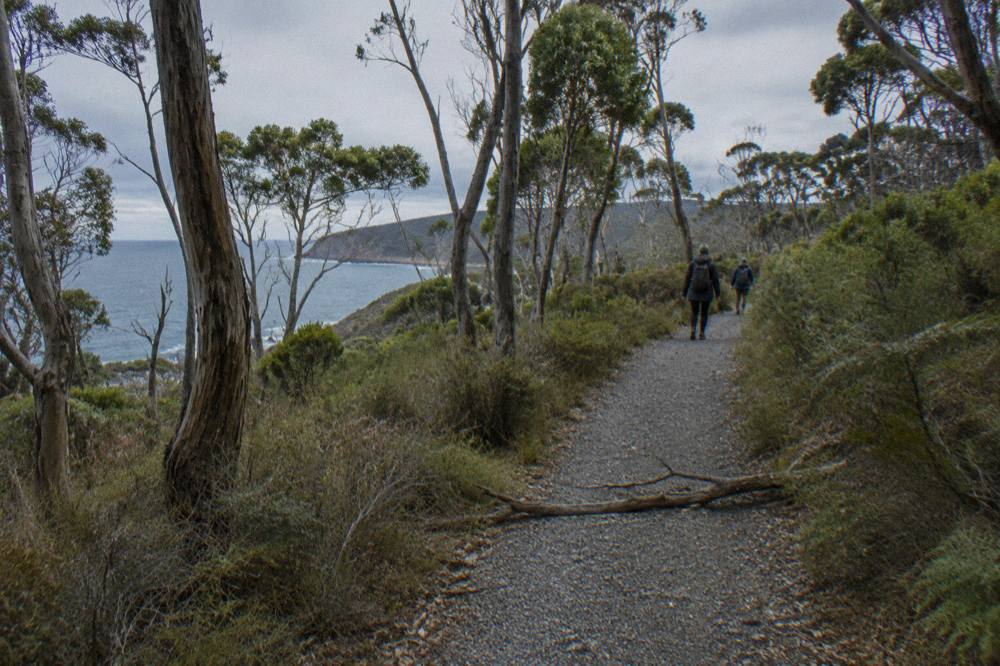
The walks that suit a short visit are The Neck boardwalk and stairs, the beach section toward The Arch, and the Fluted Cape circuit if you have two to three hours and steady legs. All three sit in the island's south and centre, close to Adventure Bay, so one base covers them. A valid parks pass is required for South Bruny National Park, which includes Fluted Cape and Cape Bruny.
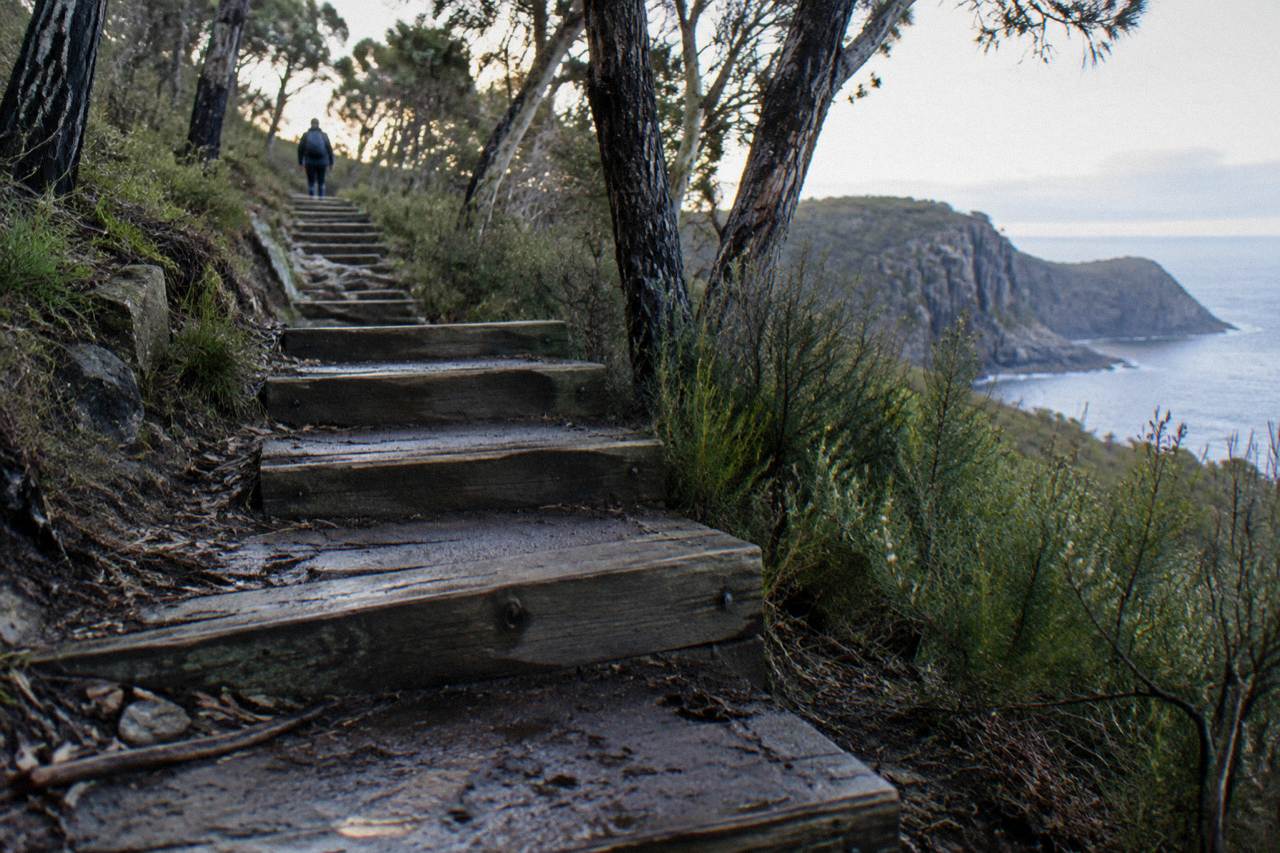
The Neck is the island's most-photographed strip of sand, and its timber staircase and viewing platform give the widest panorama on the island for the least effort. It sits in the Bruny Island Neck Conservation Area rather than inside the national park proper, though we do not state a pass position for the viewing platform itself because no official page confirms one. Little penguins and short-tailed shearwaters nest here, and the parks service asks dusk visitors to follow its penguin watching guidelines: arrive before last light, use a red-filtered torch only, never point a light at the water or the birds, approach the platform from the land side and stay quiet. For a different angle on that same sweep of coastline, the guide to the Bruny Island scenic flight covers what you can spot from the air.
From Adventure Bay, the Fluted Cape Track is the serious walk of the set. The park's own page describes it as one of the 60 Great Short Walks and is blunt about its character: it is steep, and there are unprotected cliff edges. That combination makes it a poor choice for small children or anyone uneasy near drops, and a genuinely rewarding one for walkers who want dolerite columns, sea views and a proper climb. The white variant of Bennett's wallaby is sometimes seen feeding in paddocks near the Fluted Cape entrance at dusk, which the park page notes as a local curiosity rather than a promise.
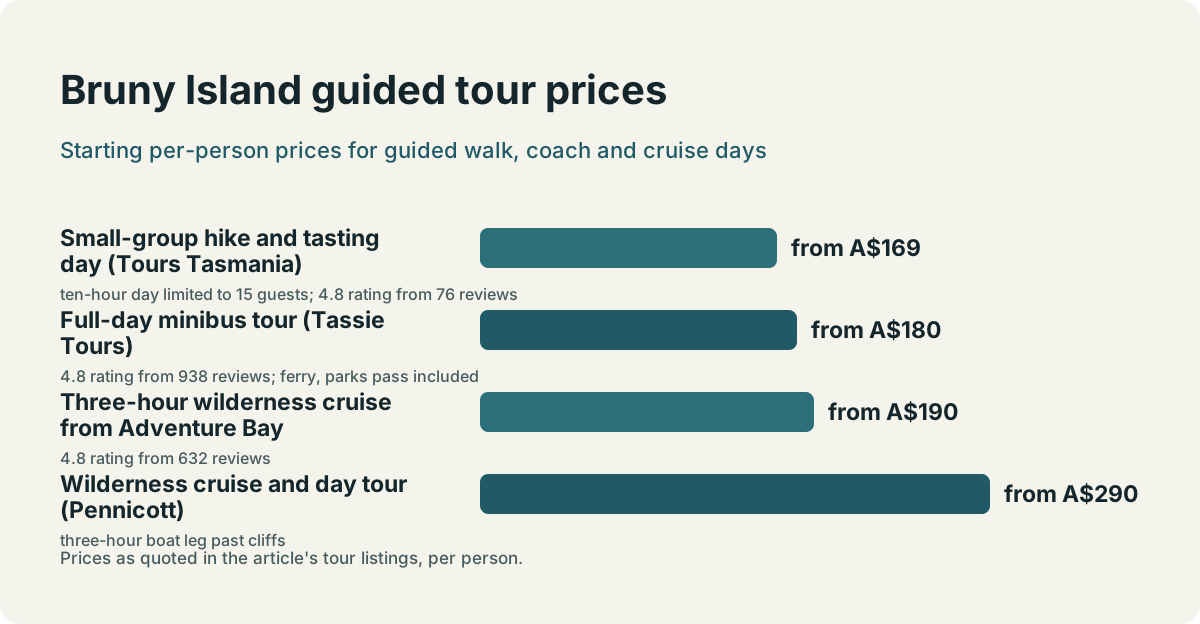
For visitors weighing a guided day against a self-drive, the small-group hike from Tours Tasmania is the roster's dedicated walking tour: a ten-hour day limited to 15 guests that hikes the coast to The Arch and climbs stairs to 360-degree views, then finishes with an afternoon of local produce tastings. You can compare it with the Gourmet Coach Day if food rather than walking is the priority.
Between the coach and the hike sits the budget full-day minibus tour from Tassie Tours, from A$180 per person, which includes the ferry and commentary but leaves food to buy separately. Walkers who choose it get short stops rather than trail time, which is the honest trade-off at that price.
What Makes The Fluted Cape Track Bruny's Signature Walk?
Fluted Cape Track is Bruny Island's signature walk because it is the island's entry on Tasmania's list of 60 Great Short Walks, climbing from Adventure Bay past cliffs of fluted dolerite to elevated viewpoints above the Southern Ocean. The park page warns it is steep with unprotected cliff edges, so it demands footwear and a head for heights rather than special equipment.
The track begins near Adventure Bay at the island's south-east corner and climbs through bush to the cliff tops above the cape. The dolerite columns that give the cape its name are the same rock architecture that lines much of Tasmania's east coast, and from the high sections the view runs down toward The Friars, the rocky islets where Australian fur seals haul out. The park service lists about 120 bird species recorded on the island, so binoculars earn their weight on this walk more than on any other Bruny track.
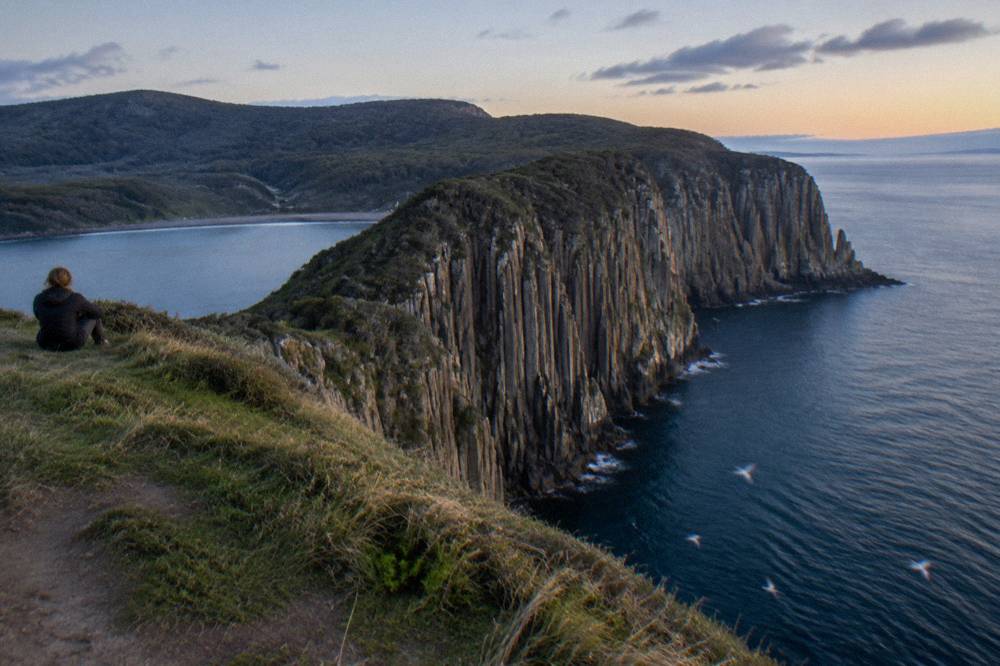
Two rules govern the walk in practice. First, a valid parks pass is required for entry to South Bruny National Park, at A$49.15 per vehicle for up to 8 people for 24 hours or A$98.35 for a two-month Holiday Pass, per the parks pass page. Second, conditions change: tracks, weather and access can shift at any time, so check Parks and Wildlife Service alerts before you set out. The park's beaches are unpatrolled, and the cliff edges are unfenced at the top, which is exactly why the park page flags them.
Walkers who want the cliff scenery without driving themselves can fold Fluted Cape views into a guided day. The small-group hike and tasting tour from Tours Tasmania, from A$169 per person with a 4.8 rating from 76 reviews, covers coastal walking and the viewpoints, while Pennicott's wilderness coast cruise and day tour, from A$290 per person, shows the same cliffs from sea level, a three-hour boat leg past cliffs and caves with lunch included.
For families or nervous walkers, the honest alternative is the beach-level walking around Adventure Bay and the easy section toward The Arch, which delivers coastal scenery without the exposure. The Neck staircase covers the rest: big views, minimal climbing, no cliff edges.
How Hard Is The Walk To The Arch?
The walk to The Arch is moderate rather than alpine: a coastal track from Adventure Bay, with the final approach to the arch itself passable around low tide, which is the single timing fact that decides the day. Allow roughly two to three hours return at an unhurried pace, with firm sand, rock platforms and some track sections underfoot rather than a sustained climb.
The Arch is a natural sea arch in the cliffs and rock platforms south of Adventure Bay, reached along the same stretch of coast that the guided hike uses. Tide tables matter here: at higher water the arch approach can be cut off, and no tour or guide can change the tide. Independent walkers should check the tide before committing, plan to be off the rock platforms well before the water rises, and treat the unpatrolled beaches and rock edges with respect. The park page states plainly that beaches in South Bruny are unpatrolled.
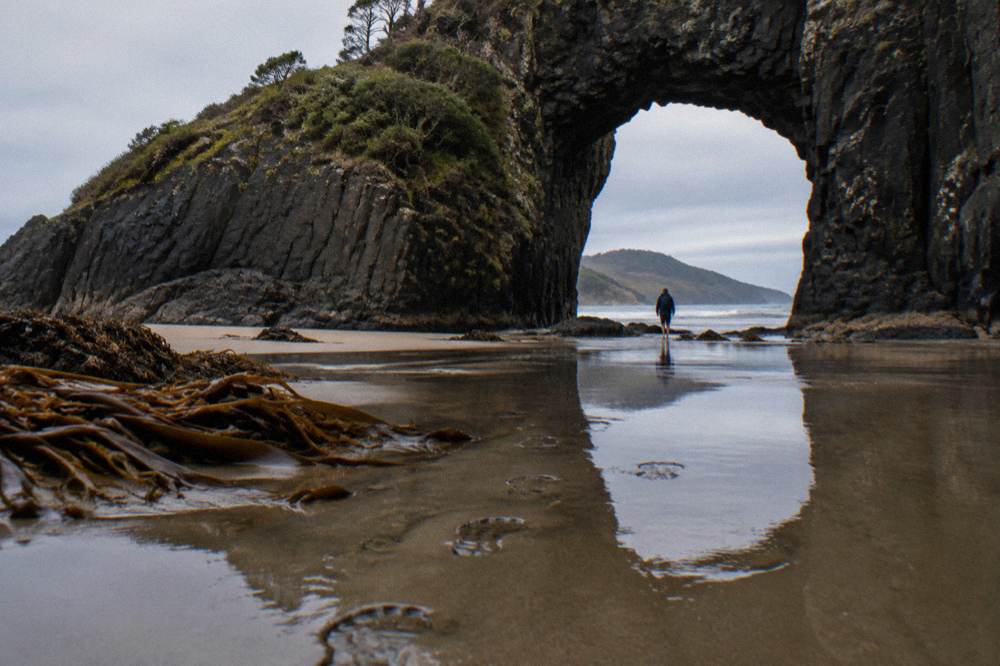
This is the walk that best suits the roster's guided hiking day, because the guide handles the timing judgment that independent visitors most often get wrong. The listing for the Hobart: Bruny Island Adventure: Hike, Highlights & Tastes day describes hiking Bruny's coast to the Arch and up stairs to 360-degree views, then an afternoon of local produce tastings, with ferry transfers included and meals and drinks not. It runs at a maximum of 15 guests, from A$169 per person, rated 4.8 from 76 reviews, with free cancellation up to 2 days before the tour.
Self-guided walkers pay nothing for the track itself, but the parks pass and the ferry are real costs: A$49.15 for a 24-hour vehicle pass, plus the return vehicle fare from Kettering at A$58.60 Regular for a vehicle under 6 metres through November, rising to A$67.30 from December to April, with a A$50.90 Saver option. Passengers, including the driver, travel free with the vehicle.
The three-hour wilderness cruise from Adventure Bay, from A$190 per person with a 4.8 rating from 632 reviews, is a third way to see the same cliffs and look for seals, dolphins and sea birds, though weather and operations decide every sailing. A review of the full cruise day from Sam reads: "Great tour, weather was great, got my thrill ride with all the big waves, got to see wildlife and awesome scenery would highly recommend."
Do You Need A Car For Bruny Island Walks?
Yes for self-guided walking, with one exception: independent walkers need their own vehicle. The exception is a guided tour from Hobart, which bundles the ferry, the driving and in several cases the walking itself.
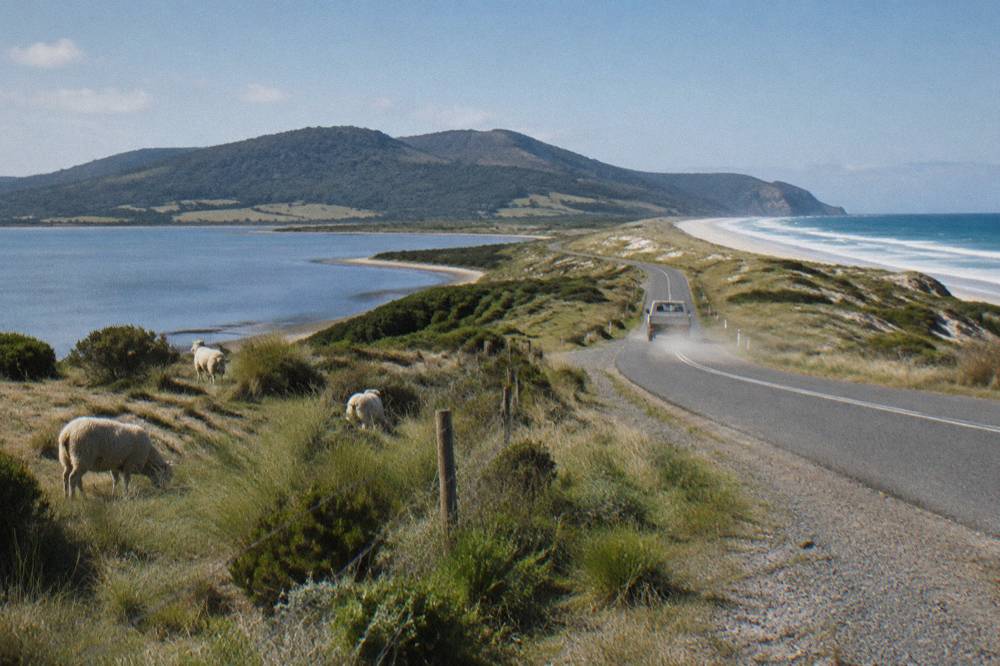
Getting there is simple in outline. The Island Connections (formerly SeaLink) ferry runs 365 days a year from Kettering, every 20 minutes from 6.10 am to 7.00 pm, with a 20-minute crossing. Hobart to Kettering takes 35 to 40 minutes depending on which official page you believe, so a car-based walking day from Hobart is comfortably done but starts early. All ferry tickets are return fares valid 365 days, pre-purchased tickets are for the next available ferry rather than a timed departure, and the system runs on queueing. Our ferry guide covers fares and the queue in more detail, and the how to get there guide covers the drive.
On the island, two logistics facts surprise visitors: the only fuel is at Adventure Bay General Store, and there is no ATM anywhere on the island, both per the parks page. For walkers that means a full tank before Kettering and cash or card planning for lunch stops.
Guided tours dissolve the car question entirely. The small-group hike does not collect from hotels, so it meets in Hobart and includes ferry transfers. The Tassie Tours full-day minibus tour, from A$180 per person with a 4.7 rating from 938 reviews, does pick up at Hobart CBD hotels and includes the ferry, the National Parks Pass and live commentary, with food paid for separately. A guest review from jodie praises the mix: "The tour went very smoothly from picked up to delivery back.I cant choose 1 great spot as it was all different the whole day from barge ride to pub lunch to lighthouse,Forrest walk to chocolate shop."
Which Walks Need A Parks Pass, And What Does It Cost?
A valid parks pass is required for entry to South Bruny National Park, which covers the Fluted Cape Track, Cape Bruny Lighthouse and the southern walks, and a Daily Pass costs A$49.15 per vehicle for up to 8 people for 24 hours or A$24.55 per person arriving by bus, cycle or on foot. There is no island entry fee as such, and tour listings differ on whether a pass is included.
The pass structure, per the parks service, is straightforward. A Holiday Pass at A$98.35 per vehicle covers up to two months and suits visitors staying several days, or pairing Bruny with other Tasmanian national parks. Walkers arriving on a guided coach are usually covered by the tour's own arrangement, but the roster rows differ: the Tassie Tours and Bruny Island Safaris days list the National Parks Pass as included, while other listings do not mention it. Read the booking page for the specific tour rather than assuming.
| Pass type | Price | Covers |
|---|---|---|
| Daily Pass, per vehicle | A$49.15 | Up to 24 hours, up to 8 people |
| Daily Pass, per person | A$24.55 | Up to 24 hours, arriving by bus, cycle or on foot |
| Holiday Pass, per vehicle | A$98.35 | Up to 2 months, up to 8 people |
| Holiday Pass, per person | A$49.20 | Up to 2 months, arriving by bus, cycle or on foot |
The camping note matters for walkers planning multi-day visits: park campgrounds at Jetty Beach, The Neck and Cloudy Corner charged A$10 per night for one or two campers up to 2 November 2026, moving to A$18 per site per night for up to 6 people from 3 November, while The Pines campground carries no charge. Our camping guide has the detail.
For a fuller walk-by-walk comparison across the island, including longer options such as the Labillardiere Peninsula circuit, see the things to do on Bruny Island overview and the park's own South Bruny pages. The same pass rules apply across all of them.
Guided Hike Or Self-Guided Walk: Which Should You Choose?
Choose the guided hike if you have no car, want the tide and route decisions handled, or want produce tastings folded into the day: the roster's small-group hike runs at A$169 per person for up to 15 guests. Choose self-guided if you have a vehicle, want to linger at Fluted Cape or The Neck at dusk, or are walking with young children, where the pass cost per vehicle beats per-person tour pricing.
The honest comparison is about control versus convenience. Self-guided walking on Bruny Island Tasmania Tours' home island costs the ferry, the pass and your own food, and buys you the freedom to walk at dawn, wait out weather, or stand at The Neck at dusk for the penguins. Guided walking buys certainty: the ferry is booked, the route is timed to the tide, and someone who knows the island drives.
| Option | Format | From | Pass included | Best for |
|---|---|---|---|---|
| Self-guided walks | Own vehicle | A$58.60 ferry + A$49.15 pass per vehicle | You buy it | Freedom, dusk wildlife, families |
| Hike, Highlights & Tastes day | Small group, max 15, no hotel pickup | A$169 per person | Not stated | Walkers without a car |
| Tassie Tours full-day tour | Minibus, max 20, hotel pickup | A$180 per person | Yes | Budget first visit, commentary |
| Cape Bruny Lighthouse tour | Guided climb, max 10, no transport | A$25 per person | No, pass required | Adding a short highlight |
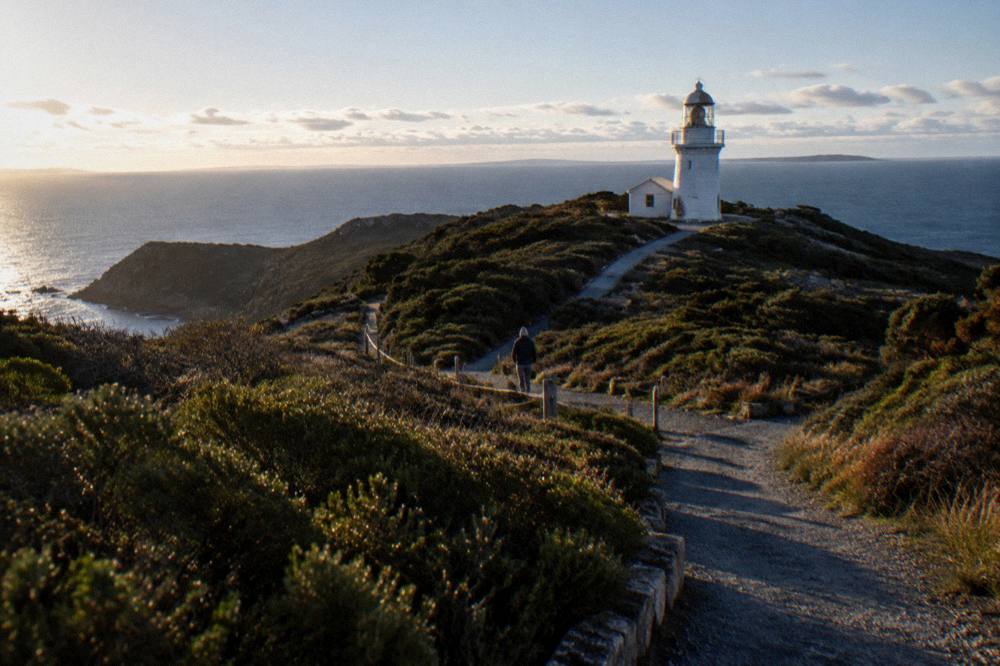
The lighthouse climb deserves its line in any walking itinerary. The 1836 lighthouse, first lit in 1838 and last lit in 1996, is the only southern Tasmanian lighthouse open for tours; the grounds are open any time with vehicle access from 9.30 am to 4.30 pm, the site is 1 hr 15 min from the ferry terminal at Roberts Point, and the 30-minute guided climb costs from A$25 per person with a 4.9 rating from 316 reviews. Binoculars are provided, but transport to the cape is not. Our lighthouse guide has the full detail.
Walkers with a bigger appetite for Tasmania can also pair Bruny with Port Arthur or Hobart's highlights on the roster's two- and three-day minibus combos, from A$305 and A$455 per person respectively, each including the ferry and the National Parks Pass, though the lighthouse tour is not included on those days.
What Is The Best Season For Walking On Bruny Island?
The warmest walking months at Cape Bruny are January and February, both with a mean maximum of 20.2 degrees, and the driest is January with 39.3 mm mean rainfall; the wettest is August at 85.7 mm, and July is the coldest with a mean maximum of 12.2 degrees. Layers matter more than the calendar: coastal wind shapes every walk here at any time of year.
The Bureau of Meteorology's Cape Bruny station gives the island a milder, damper profile than most visitors expect. Even midsummer tops out around 20 degrees on average, and winter means lows near 7 degrees rather than snow. Rainfall is spread across the year with a winter peak, so waterproofs belong in the pack in every season, and the fire danger season normally runs November to March, when total fire bans can apply on hot, windy days.
| Month | Mean max (C) | Mean min (C) | Mean rainfall (mm) |
|---|---|---|---|
| Jan | 20.2 | 12.4 | 39.3 |
| Feb | 20.2 | 12.4 | 50.9 |
| Mar | 18.9 | 11.7 | 53.1 |
| Apr | 16.7 | 10.1 | 56.2 |
| May | 14.4 | 8.7 | 69.3 |
| Jun | 12.6 | 7.3 | 76.3 |
| Jul | 12.2 | 6.7 | 72.7 |
| Aug | 12.9 | 6.7 | 85.7 |
| Sep | 14.5 | 7.5 | 70.8 |
| Oct | 15.6 | 8.3 | 70.9 |
| Nov | 17.0 | 9.6 | 56.7 |
| Dec | 18.6 | 10.7 | 58.2 |
Spring through autumn suits the walking itself, and the warmer months are when the wildlife layer of the island is most active: shearwaters visit Tasmanian shores in late spring to late summer to nest, and the little penguin colony at The Neck comes ashore at last light in the evenings. Our weather guide unpacks the seasonal detail, and the penguin guide covers the dusk viewing rules.
For visitors who want walking plus premium food in one small-group day, the signature six-guest tasting tour from Bespoke Tours Hobart, from A$360 per person with a 5 rating from 9 reviews, adds a private driver and producer visits, though its hikes are strolls rather than the cliff track.
Common Questions About Bruny Island Walks
Which Bruny Island Walks Suit Short Visits?
The Neck boardwalk and stairs, the beach approach to The Arch around low tide, and the Fluted Cape circuit if you have two to three hours. All sit close to Adventure Bay, and one base covers them. A parks pass is required for South Bruny National Park, which includes Fluted Cape.
What Makes The Fluted Cape Track Bruny's Signature Walk?
It is the island's entry on Tasmania's list of 60 Great Short Walks, climbing from Adventure Bay past fluted dolerite cliffs to viewpoints above the Southern Ocean. The park page warns it is steep with unprotected cliff edges, so it needs steady footwear and a head for heights.
How Hard Is The Walk To The Arch?
Moderate. It is a coastal track from Adventure Bay with the final approach passable around low tide, and the tide decides the day. Allow two to three hours return at an unhurried pace, with firm sand and rock platforms rather than a sustained climb.
Do You Need A Car For Bruny Island Walks?
For self-guided walking, yes: independent walkers need their own vehicle. A guided tour from Hobart is the exception, bundling the ferry and the driving into the day.
Which Walks Need A Parks Pass, And What Does It Cost?
A valid parks pass is required for South Bruny National Park, covering Fluted Cape and Cape Bruny. A Daily Pass costs A$49.15 per vehicle for up to 8 people for 24 hours, or A$24.55 per person by bus, cycle or on foot. There is no island entry fee.
What Is The Best Season For Walking On Bruny Island?
January and February are the warmest months, both with a mean maximum of 20.2 degrees, and January is the driest at 39.3 mm mean rainfall. August is the wettest at 85.7 mm and July the coldest. Layers and waterproofs matter in every season.