Bruny Island Camping: Sites, Fees And Who It Suits
Camping on Bruny Island means three national park campgrounds, Jetty Beach, The Neck and Cloudy Corner, plus the free site at The Pines. Fees changed on 3 November 2026, so check the current rates before you book.
Short answer
Camping on Bruny Island sits inside South Bruny National Park at Jetty Beach, The Neck and Cloudy Corner. Until 2 November 2026 a site cost A$10 per night for 1 or 2 campers; from 3 November 2026 it is A$18 per site per night for up to 6 people. The Pines campground is free, and a parks pass is required to enter the park.
Bruny Island camping happens almost entirely inside South Bruny National Park, at three vehicle-accessible campgrounds: Jetty Beach, The Neck and Cloudy Corner. The parks service runs all three, a fourth site at The Pines carries no charge, and the fee structure changed on 3 November 2026, when the nightly rate moved from a per-camper model to A$18 per site per night for up to 6 people. This guide lays out the sites, the current fees, the parks pass rules that sit on top of them, and how a camping trip can still be paired with a guided day so you are not mapping every drive yourself.
Getting there is part of the plan. The vehicle ferry from Kettering, run by Island Connections (formerly SeaLink), takes 20 minutes and departs every 20 minutes between 6.10 am and 7.00 pm, and the drive from Hobart to the Kettering terminal takes 35 to 40 minutes. Full fare and timetable detail lives in the Bruny Island ferry guide, and this page focuses on what happens after the boat.
Where Can You Camp On Bruny Island?
Bruny Island has three Parks and Wildlife Service campgrounds inside South Bruny National Park, Jetty Beach, The Neck and Cloudy Corner, plus the free The Pines campground nearby. All are basic, unpowered sites for tents and some campervans, bookable through the parks booking system, and none offers showers or powered hookups. The choice between them comes down to which side of the island you want to wake up on.
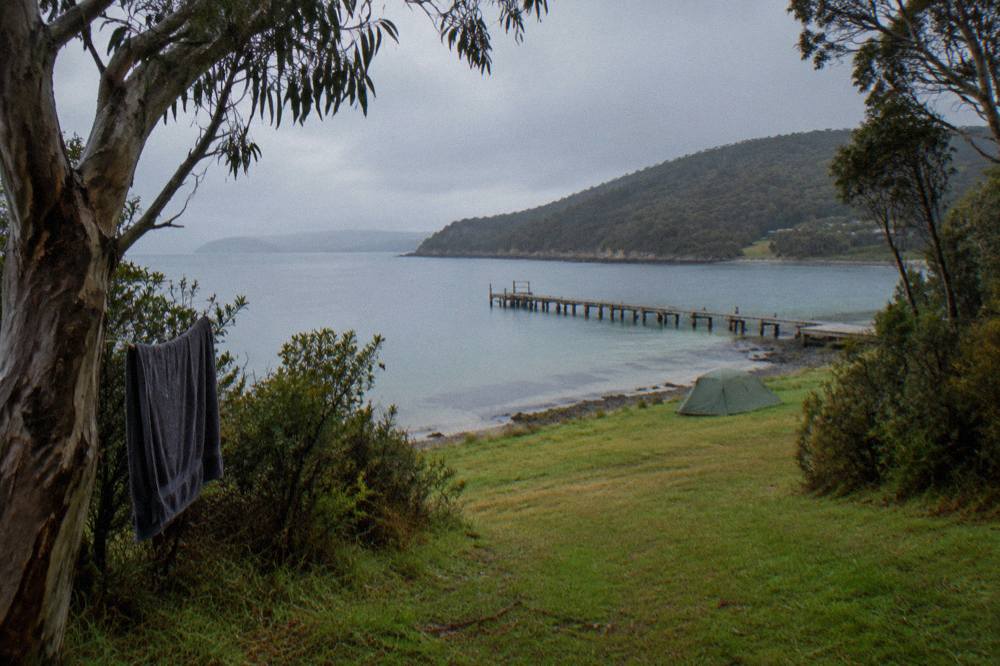
Jetty Beach sits on the sheltered eastern side of the island near Adventure Bay, a short walk from a small sandy beach and a historic jetty. It suits families and anyone who wants calm water swimming, easy access to the Adventure Bay walks, and a base close to the Fluted Cape Track, one of Tasmania's 60 Great Short Walks, which the parks service describes as steep with unprotected cliff edges. The Neck campground sits at the narrow isthmus joining north and south Bruny, next to the viewing platform where little penguins and short-tailed shearwaters come ashore at dusk. Cloudy Corner is the most remote of the three, on the island's exposed southern coast near Cloudy Bay, a popular surf spot, and it suits self-sufficient campers with their own water and gear.
A few practical notes shape every stay. The only fuel on the island is at Adventure Bay General Store, and there is no ATM anywhere on Bruny, so arrive with a full tank and a card that works. Beaches are unpatrolled. Campgrounds fill hardest across summer weekends and public holidays, and the parks service recommends booking ahead in peak season. Conditions on tracks and sites change, so check the Parks and Wildlife Service alerts page before you travel.
| Campground | Setting | Best for | Fees |
|---|---|---|---|
| Jetty Beach | Sheltered eastern shore near Adventure Bay | Families, calm water, walk access to Fluted Cape Track | Paid, per-site fee |
| The Neck | Central isthmus beside the penguin viewing platform | Penguin and shearwater viewing at dusk, splitting north and south | Paid, per-site fee |
| Cloudy Corner | Exposed southern coast near Cloudy Bay | Self-sufficient campers, surfers, solitude | Paid, per-site fee |
| The Pines | Near the national park | Budget stays, no facilities expected | No charge |
What Does Camping On Bruny Island Cost?
Until 2 November 2026 the fee was A$10 per night for 1 or 2 campers, with each extra adult A$5 and each extra child A$2.50. From 3 November 2026 the model changed to A$18 per night per site, covering up to 6 people. The Pines campground carries no charge at all, and these camping fees sit on top of, not instead of, the parks pass required to enter South Bruny National Park.
The per-site change matters for group maths. Under the old structure, a family of two adults and two children paid A$20 per night at Jetty Beach or The Neck, A$10 plus two child rates. Under the new structure the same family pays A$18 per night, a small saving. Solo campers, though, saw their cost rise from A$10 to A$18. If your travel dates straddle 3 November 2026, the booking system applies the fee that matches each night. The parks camping page prints the full schedule: South Bruny camping fees and bookings.
Budget the ferry alongside the campsite. A visitor vehicle under 6 metres pays A$58.60 return on the Regular fare from late September to the end of November, rising to A$67.30 from 1 December to April, with the Saver option at A$50.90; passengers, including the driver, travel free with the vehicle. A motorcycle or bicycle crosses for A$8.10 return, and every ticket is an open return valid 365 days, with pre-purchased tickets valid for the next available ferry rather than a fixed departure.
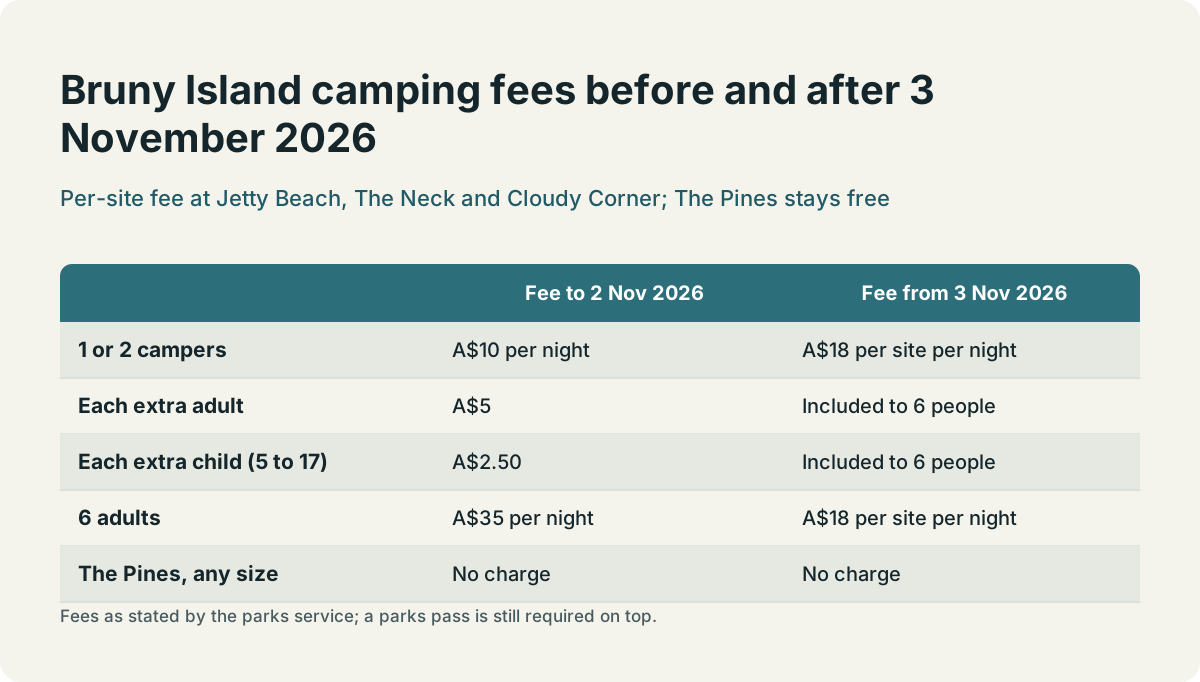
| Party size | Fee to 2 Nov 2026 | Fee from 3 Nov 2026 |
|---|---|---|
| 1 or 2 campers | A$10 per night | A$18 per site per night |
| Each extra adult | A$5 | Included to 6 people |
| Each extra child (5 to 17) | A$2.50 | Included to 6 people |
| 6 adults | A$35 per night | A$18 per site per night |
| The Pines, any size | No charge | No charge |
Do You Need A Parks Pass To Camp At South Bruny?
Yes. A valid Tasmanian parks pass is required for entry to South Bruny National Park, which contains the Jetty Beach and Cloudy Corner campgrounds and Cape Bruny Lighthouse. A Daily Pass costs A$49.15 per vehicle for up to 8 people or A$24.55 per person arriving on foot, by bus or by cycle. A Holiday Pass, valid up to 2 months, costs A$98.35 per vehicle.
For most campers the Holiday Pass is the better arithmetic. Two nights of camping plus a Daily Pass adds A$49.15 on top of the site fee, and three or more days inside a two-month window tips the balance to the A$98.35 vehicle pass, which also covers a return trip to the lighthouse. Campers arriving without a vehicle, a rare but real case given the ferry carries walk-on passengers free, pay the per-person rate. The pass fee schedule is printed on the parks pass and entry fees page. Note that a pass is not the same thing as a campsite booking: you need both, and campgrounds are booked separately through the camping page.
One point where guided tours and camping budgets intersect: several roster day tours fold a National Parks Pass into the ticket. The Tassie Tours full-day minibus tour from Hobart includes the pass, the ferry crossing and live commentary, from A$180 per person, which can undercut the cost of driving yourself once fuel, ferry and a solo Daily Pass are added up. The Bruny Island Safaris lighthouse day, from A$280 per person with a 4.8 rating from 1,003 reviews, also includes the pass plus guided entry inside Cape Bruny Lighthouse and a one-course lunch at Hotel Bruny for up to 20 guests.
What Facilities Do The Campgrounds Have?
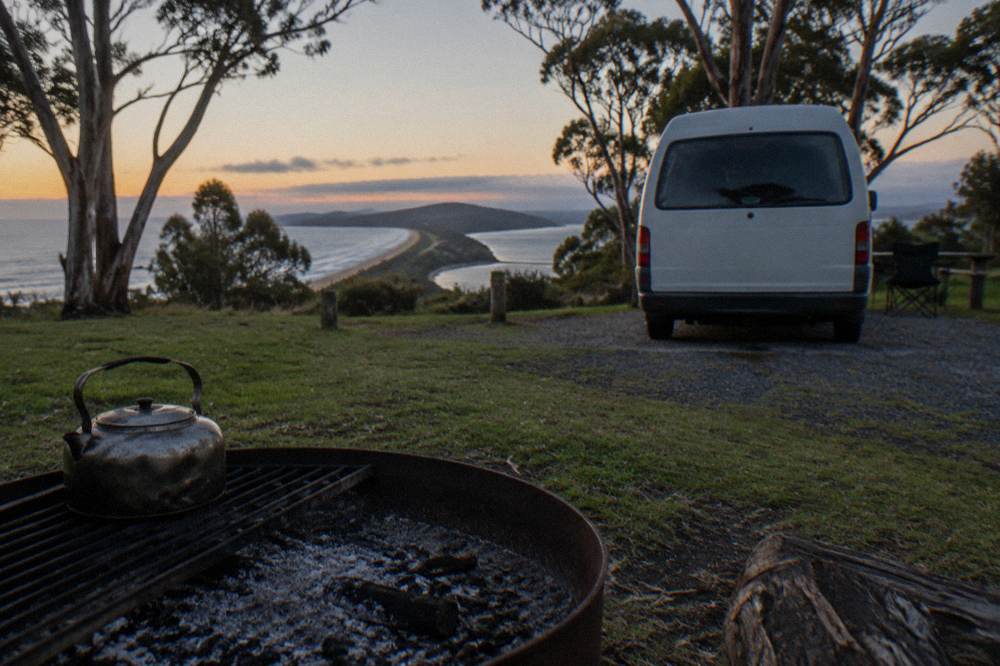
All three national park campgrounds on Bruny Island are basic: toilets, water that should be treated or boiled before drinking, picnic tables and defined tent or campervan pads. There are no showers, no powered sites, no dump points and no on-site managers. Campers bring their own cooking gear, food and drinking water treatment, and the free The Pines site offers even less.
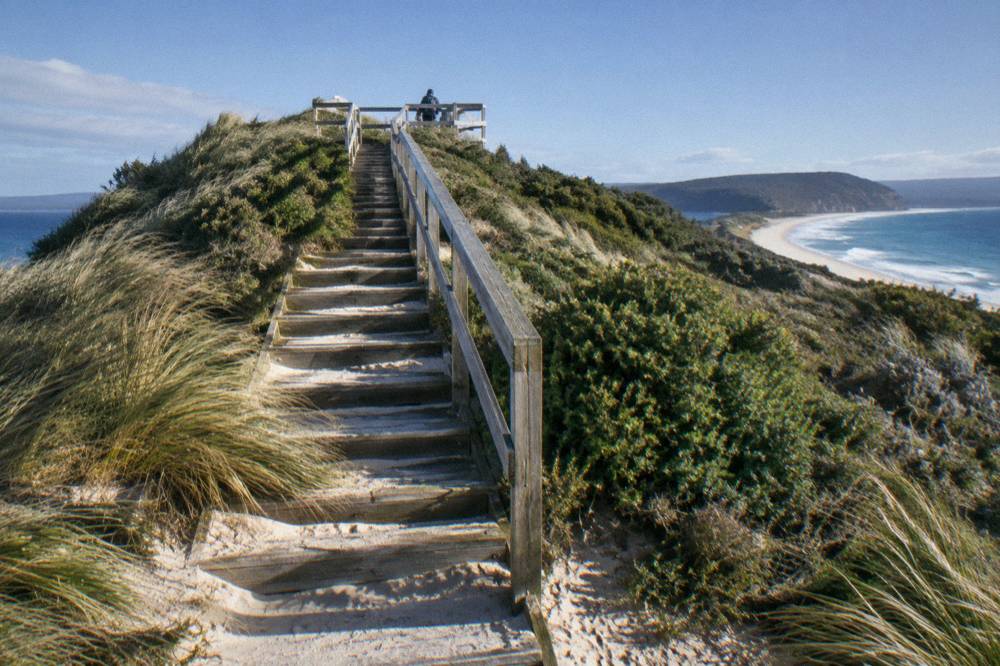
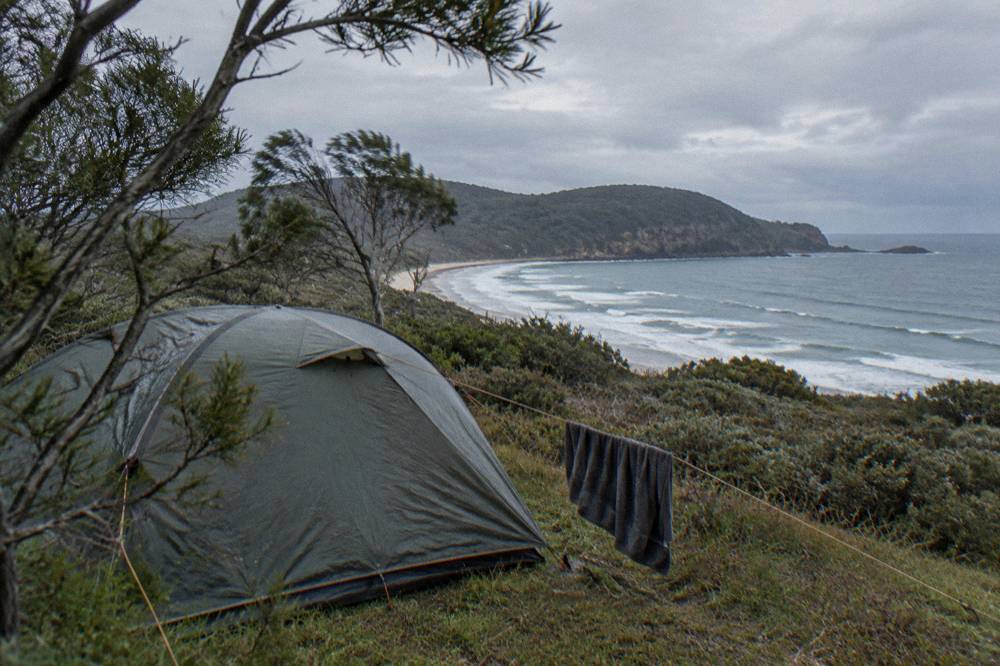
That sparseness is the point for many visitors, but it rewards realistic packing. Jetty Beach has toilets and tank water set among the trees near the sand. The Neck campground places you within walking distance of the timber stairway and viewing platform over the isthmus, which puts the evening wildlife show within a two-minute walk of your tent flap. Cloudy Corner is the barest of the three and the most weather-exposed, sitting near Cloudy Bay on the roaring southern coast, so wind stakes and guy lines earn their place in the kit.
The Neck's dusk wildlife has rules worth learning before your first night. The state's penguin watching guidelines ask visitors to arrive before last light, use only dim red-light torches and never point them at the water or the birds, approach the platform from land rather than along the beach, stay out of the colony itself and keep quiet and still. No flash photography on the beach. Shearwaters nest on Tasmanian shores from late spring to late summer, and the penguin watching guidelines are published by the state's wildlife authority: penguin watching guidelines.
| Facility | Jetty Beach | The Neck | Cloudy Corner |
|---|---|---|---|
| Toilets | Yes | Yes | Yes |
| Tank water (treat before drinking) | Yes | Yes | Yes |
| Powered sites | No | No | No |
| Showers | No | No | No |
| Walk to beach | Short walk | Isthmus nearby | Coastal setting |
| Shade | Good, treed | Limited | Exposed |
When Is The Best Season To Camp On Bruny Island?
Summer, from December to February, is the warmest and driest window, with mean maximums of 18.6 to 20.2 degrees Celsius at Cape Bruny and mean rainfall of 39 to 58 millimetres per month. Winter campers face mean maximums near 12 degrees and heavier rain, with August the wettest month at 85.7 millimetres. The parks service warns that Tasmania's fire danger season normally runs November to March.
The Bureau of Meteorology's Cape Bruny station, averaged across 1997 to 2026, paints a mild maritime climate rather than a hot one. January and February tie as the warmest months at a 20.2 degree mean maximum, with overnight minimums around 12.4 degrees, mild by mainland standards but cold in a tent without a proper sleeping bag. July is the coldest month, with a 12.2 degree mean maximum and a 6.7 degree mean minimum. Rain falls year round, ranging from 39.3 millimetres in January to 85.7 in August, so pack for showers in any season. The full table is published by the Bureau of Meteorology for Cape Bruny.
| Month | Mean max (C) | Mean min (C) | Mean rain (mm) |
|---|---|---|---|
| Jan | 20.2 | 12.4 | 39.3 |
| Feb | 20.2 | 12.4 | 50.9 |
| Mar | 18.9 | 11.7 | 53.1 |
| Apr | 16.7 | 10.1 | 56.2 |
| May | 14.4 | 8.7 | 69.3 |
| Jun | 12.6 | 7.3 | 76.3 |
| Jul | 12.2 | 6.7 | 72.7 |
| Aug | 12.9 | 6.7 | 85.7 |
| Sep | 14.5 | 7.5 | 70.8 |
| Oct | 15.6 | 8.3 | 70.9 |
| Nov | 17.0 | 9.6 | 56.7 |
| Dec | 18.6 | 10.7 | 58.2 |
Shoulder seasons reward flexible campers. November and March share similar temperatures and thinner campground competition, and the fee change in early November makes late-spring trips slightly cheaper per site than midsummer for large groups. Wildlife shifts with the calendar, with shearwaters nesting from late spring to late summer and about 120 bird species recorded across the island.
Campers planning water-based days should weigh the weather reality of the southern coast. The three-hour wilderness cruise from Adventure Bay, from A$190 per person with a 4.8 rating from 632 reviews, runs in open-air boats along wind-lashed coastline where the operator provides wet weather jackets and recommends warm layered clothing, a fair description of Bruny's summer sea conditions generally. Pennicott's full-day coast cruise and island tour, from A$290 per person with a 4.8 rating from 562 reviews, adds morning tea, lunch and the ferry crossing, though it departs from Hobart's Franklin Wharf and does not collect from hotels, a wrinkle for campers already on the island.
Can You Camp On Bruny Island And Still Take A Tour?
Yes, and it is a combination worth planning deliberately. A campsite covers your nights, while a guided day tour covers the driving, the ferry logistics from Hobart and the commentary, letting you rest at the campground instead of mapping every producer stop and lookout yourself. The roster includes coach, minibus, small-group hike and lighthouse options across a wide price range, from A$25 to A$360 per person.
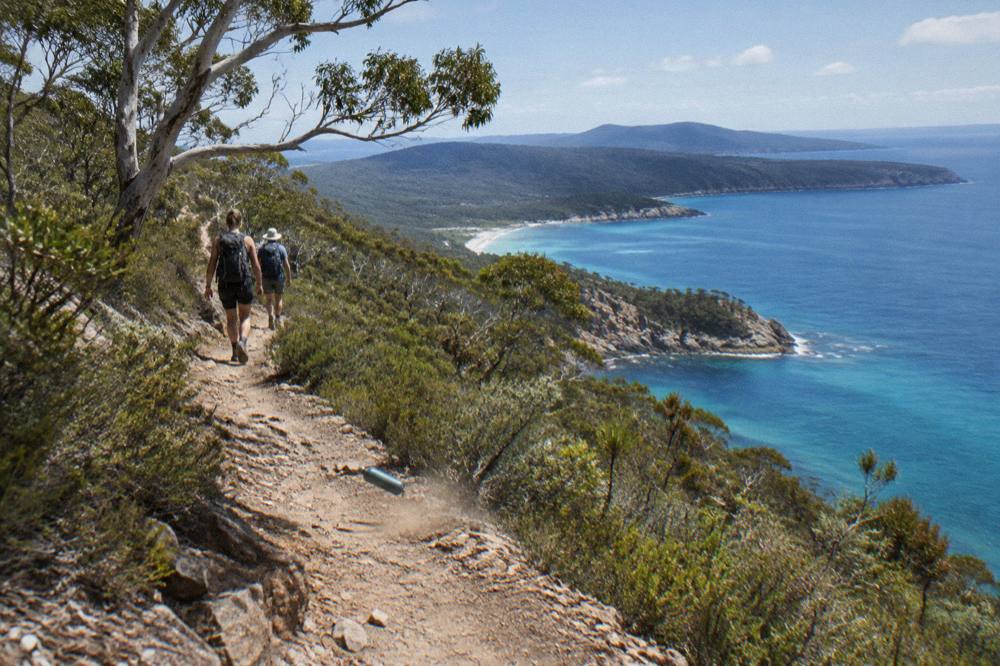
The strongest fit for campers who want active days is the Hike, Highlights and Tastes small-group day from Tours Tasmania, from A$169 per person with a 4.8 rating from 76 reviews. It runs to a maximum of 15 guests, hikes the coast to the Arch, climbs stairs to 360-degree views, then finishes with local produce tastings, with ferry transfers included and meals and drinks extra. Free cancellation applies up to two days before the tour, a longer cutoff than most roster listings, so read the booking page for your date. The tour's own page carries the full itinerary detail. If you'd rather plan your own hiking days, the guide to Bruny Island's best walks and guided hikes covers the routes in detail.
Food-focused campers who would rather not drive to every cellar door have a matched option. The Pennicott gourmet sightseeing day from Hobart, from A$290 per person with a 4.8 rating from 581 reviews, runs a 9.5-hour coach day with tastings of fudge, honey, mead, cheese and ale plus a beachside lunch at Pennicott's own restaurant. Hotel pickup applies to select CBD hotels only. A guest review on the listing captures the shape of the day: "Had the best day taking in the sights of Bruny Island with guide Louis. He was informative and had a great knowledge of the island. The food was spectacular and overall a great day."
For campers based on the island already, the 30-minute guided Cape Bruny Lighthouse climb is the cheapest structured experience on the roster, from A$25 per person with a 4.9 rating from 316 reviews, departing the lighthouse car park for groups of up to 10. Transport to the cape and the parks pass are not included, so it pairs naturally with a camper's own vehicle and Holiday Pass. The lighthouse, built 1836 and first lit 1838, is the only southern Tasmanian lighthouse open for tours, and its grounds are open any time with vehicle access from 9.30 am to 4.30 pm.
What Should You Know Before You Set Up Camp?
Book the site and the pass separately, arrive with fuel and a card, and plan food carefully: Bruny's campgrounds have no shops, the only fuel stop is at Adventure Bay General Store, and there is no ATM on the island. Every camper pays three separate costs, the site fee per night, the parks pass, and the vehicle ferry return, so budget each line on its own using the printed rates above.
Rather than one bundled figure, work your budget line by line. Two site-nights under the per-site fee run to two lots of A$18. The pass is either A$49.15 for a one-day vehicle pass or A$98.35 for the two-month Holiday Pass, and the vehicle ferry return sits between A$50.90 on the Saver fare and A$67.30 on peak Regular, depending on season. Two people traveling together by car share all three costs, which is why camping remains the cheapest way to sleep on the island once gear is owned. Self-caterers should know the island's grocery situation is thin, covered in detail in the guide to free and cheap things to do on Bruny and the producer guide, though the Bruny Island Cheese Co cellar door, open 10 am to 4 pm daily, makes an excellent camp-lunch detour, with its kitchen serving 10 am to 3 pm.
Leave-no-trace rules apply everywhere, and fire restrictions matter: the fire danger season normally runs November to March, and total fire bans can change day to day, so check state fire information before lighting anything. Weather decides much of a Bruny trip, on land and water alike, and no cruise, flight or wildlife sighting is ever promised (see Weather By Month). For trip planning beyond the campsite, Bruny Island Tasmania Tours compares every guided option on the island, from the A$25 lighthouse climb to three-day Tasmania loops that fold Bruny in with Port Arthur.
Common Questions About Bruny Island Camping
How much does it cost to camp on Bruny Island?
From 3 November 2026 the three national park campgrounds charge A$18 per site per night for up to 6 people. Until 2 November 2026 the rate was A$10 per night for 1 or 2 campers, plus A$5 per extra adult and A$2.50 per extra child. The Pines campground is free.
Can you camp for free on Bruny Island?
Yes, at The Pines, which the parks page lists with no charge. The three South Bruny National Park campgrounds, Jetty Beach, The Neck and Cloudy Corner, are all paid sites, and neither the ferry nor the parks pass is free.
Do I need a parks pass to camp on Bruny Island?
Yes, if you are camping at Jetty Beach, The Neck or Cloudy Corner, all inside South Bruny National Park. A Daily Pass costs A$49.15 per vehicle for up to 8 people or A$24.55 per person without a vehicle, and a two-month Holiday Pass costs A$98.35 per vehicle.
Do the Bruny Island campgrounds have showers or power?
No. All three park campgrounds are basic, with toilets, tank water that should be treated before drinking, and picnic tables. There are no showers, powered sites or on-site managers at any of them.
Can you see penguins while camping at The Neck?
The Neck campground sits near the viewing platform where little penguins and short-tailed shearwaters come ashore at dusk. Follow the state guidelines: red-light torches only, no flash, approach from land, stay out of the colony and keep quiet.
Is there fuel or an ATM on Bruny Island?
The only fuel on the island is at Adventure Bay General Store, and there is no ATM anywhere on Bruny. Arrive with a full tank and payment cards that work without cash withdrawal.