What Is Bruny Island Known For?
Bruny Island is known for its food producers, the 1838 Cape Bruny Lighthouse, The Neck's penguin colonies and a dolerite coastline best seen from the water. Here is what each is famous for, and the tours that cover it.
What Is Bruny Island Known For?
Bruny Island is known for five things above all else: its food and drink producers, the 1838 Cape Bruny Lighthouse, The Neck and its little penguin and shearwater colonies, a wild dolerite coastline with deep sea caves, and wildlife ranging from white Bennett's wallabies to Australian fur seals. About 120 bird species have been recorded on the island, and the park service lists little penguin and short-tailed shearwater colonies at the Bruny Neck, seals around The Friars and whales in the surrounding marine environment. Nearly every guided day from Hobart, including the Pennicott Gourmet Tasting Day, is built around some combination of those five. Whether those five highlights add up to a worthwhile trip depends on your travel style, and our honest take on whether Bruny Island is worth visiting weighs exactly that.
That short list explains most of the island's pull. It is a single island, reached by a 20-minute ferry from Kettering, yet it carries the weight of a full regional itinerary: a cheese maker with a national reputation, an oyster bar at Great Bay, a lighthouse that is the only one in southern Tasmania open for tours, and a coastline that tour boats run along in open-air craft. The wild food-and-sightseeing day tours from Hobart compress the food half of that list into a single day, while the walks, lighthouse climbs and wilderness cruises take on the rest.
The proportions matter. Bruny is really two islands, north and south, joined by a narrow sandy isthmus called The Neck. The north is farmland, producers and quiet bays; the south is South Bruny National Park, where the lighthouse, the big cliffs and most of the wildlife live. A visitor who only does one half leaves with half the story, which is exactly why the island's reputation is best understood one theme at a time.
The Food And Produce Scene
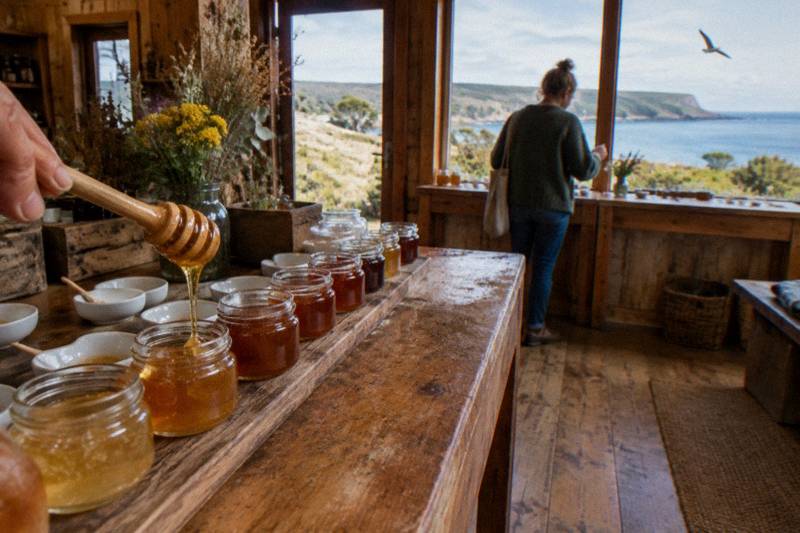
Bruny Island is famous across Australia for a food and drink scene far bigger than its size suggests: cheese, oysters, honey, chocolate, wine, whisky, beer and fudge are all produced on the island itself, a remarkable output for a place with fewer residents than most country towns. Bruny Island Cheese Co, the name that started much of the reputation, opens its cellar door from 10 am to 4 pm daily with the kitchen serving to 3 pm, and takes bookings for tastings. Get Shucked at Great Bay shucks oysters on site, and the roster's food tours stop there, alongside honey, fudge, chocolate and mead producers. For a place reached only by ferry, the density of producers is remarkable, and it is the reason food is the first word in almost every answer to the island's claim to fame.
The food reputation is not a marketing invention. It grew from a handful of small producers who set up on the island because land was affordable and the paddocks and clean waters suited cheese and oysters. Visitors now plan whole days around the cellar doors, and the tour industry followed: the Pennicott Gourmet Tasting Day (from A$290 per person, rated 4.8 from 581 reviews) runs a 9.5-hour coach day from Hobart with the ferry crossing and tastings of fudge, honey, mead, cheese and ale, finishing with a beachside lunch at Pennicott's own restaurant. Reviews on the listing lean hard into the food: "The food was spectacular and overall a great day," one guest wrote, and another called it "a lovely day out." If you're wondering whether a single day is enough to do the island justice, our guide to whether a one-day Bruny Island trip is worth it weighs the ferry, the producers and the lighthouse against staying overnight.
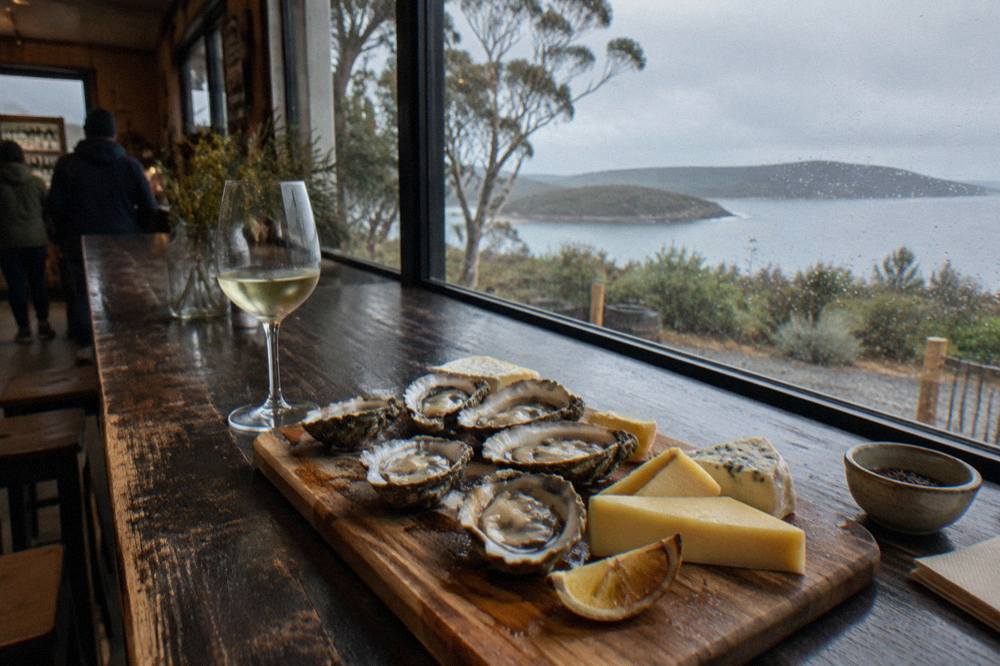
What surprises many first-time visitors is how tightly the producers cluster. Most sit along or just off the main road running down the island, so a self-drive day can reasonably cover cheese, oysters and honey without long detours. The trade-off is logistics: the island has limited fuel (Adventure Bay General Store is the only outlet, per the park page) and no ATM, so cash-free cellar doors and a full tank before the ferry are practical planning points.
| Producer or stop | What it is known for | Typical visiting pattern |
|---|---|---|
| Bruny Island Cheese Co | Cheese, and the island's food reputation | Cellar door 10 am to 4 pm daily, kitchen to 3 pm, tastings by booking |
| Get Shucked | Oysters farmed at Great Bay | A standard stop on food day tours |
| Bruny Island Honey (The Honey Pot) | Honey tastings | Open daily |
| Bruny Island Premium Wines | Vineyard and restaurant | Bookings recommended for lunch |
| Bruny Island Chocolate Co | Chocolate and fudge tastings | Open daily |
| Hotel Bruny | A one-course lunch stop on several guided days | Open daily |
Food-focused tours differ mainly in depth and group size. The Tassie Tours Budget Day (from A$180 per person) leaves food and drinks to be paid separately, which suits travellers who want to choose their own stops; the Six-Guest Signature Tasting Day (from A$360, maximum 6 guests) goes the other way, with a private driver and wine, oyster, honey and cheese samples built in. For the full picture of tasting days, the food and wine tours guide breaks down the options by budget and appetite.
Cape Bruny Lighthouse
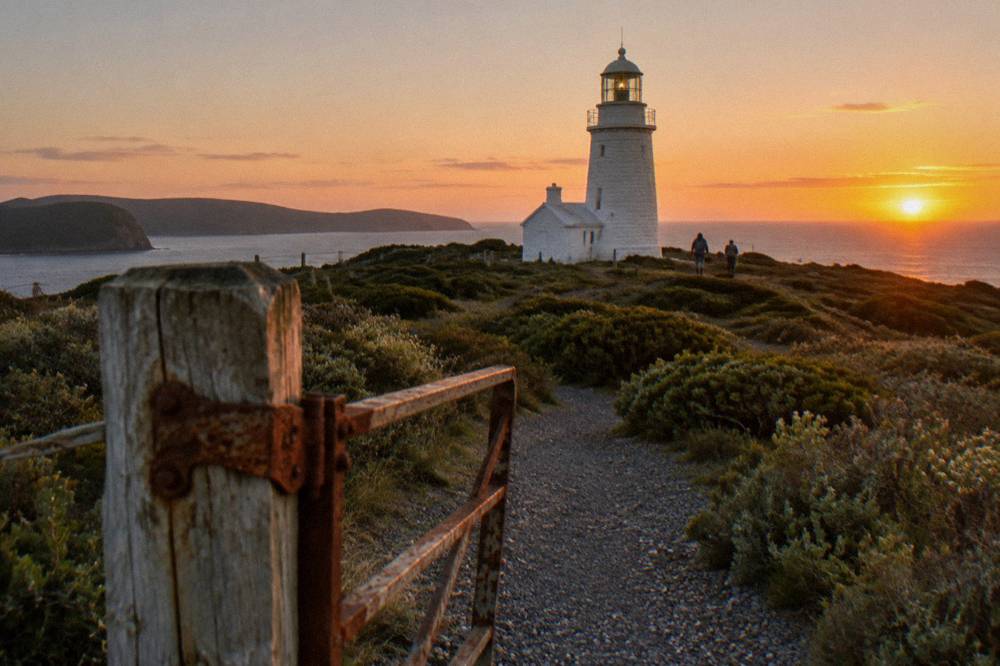
Cape Bruny Lighthouse is the attraction that Bruny Island is best known for. Built in 1836 and first lit in 1838, this historic lighthouse is described by the park service as the only lighthouse in southern Tasmania that is open for tours, making it a highlight for anyone visiting the island. It stands on the southern tip of the island inside South Bruny National Park, about 1 hr 15 min from the ferry terminal at Roberts Point, and was last lit in 1996 before being decommissioned. Guided climbs run throughout the day with sunset tours arranged on request, and a valid parks pass is required to join a tour. As heritage attractions go, it is unusually accessible: a working climb with binoculars provided, not a museum behind glass.
The lighthouse anchors the island's maritime history. Convict-built and continuously staffed for more than 150 years, it watched over one of the most feared stretches of the southern ocean approaches to Hobart. The grounds are open any time, with vehicle access between 9.30 am and 4.30 pm, and the tower itself is climbed on a guided basis only. The standard climb on the live listing is a 30-minute guided tour, from A$25 per person, rated 4.9 from 316 reviews, for up to 10 travellers at a time, with binoculars provided; the parks pass and transport to the cape are not included.
Two practical notes shape most visits. First, because the lighthouse sits in a national park, a Daily Pass at A$49.15 per vehicle (up to 8 people) or a Holiday Pass at A$98.35 applies, unless a tour already carries the pass; the Safaris Lighthouse And Lunch Day (from A$280, rated 4.8 from 1003 reviews) includes the Parks Pass, the guided lighthouse entry, oysters at Get Shucked and a one-course lunch at Hotel Bruny. Second, several of the island's day tours treat the lighthouse as the southern highlight, so independent travellers should weigh the ferry, pass and climb cost against simply joining a day that bundles all three. More detail is in the Cape Bruny Lighthouse guide.
The Neck And Its Penguin Colony
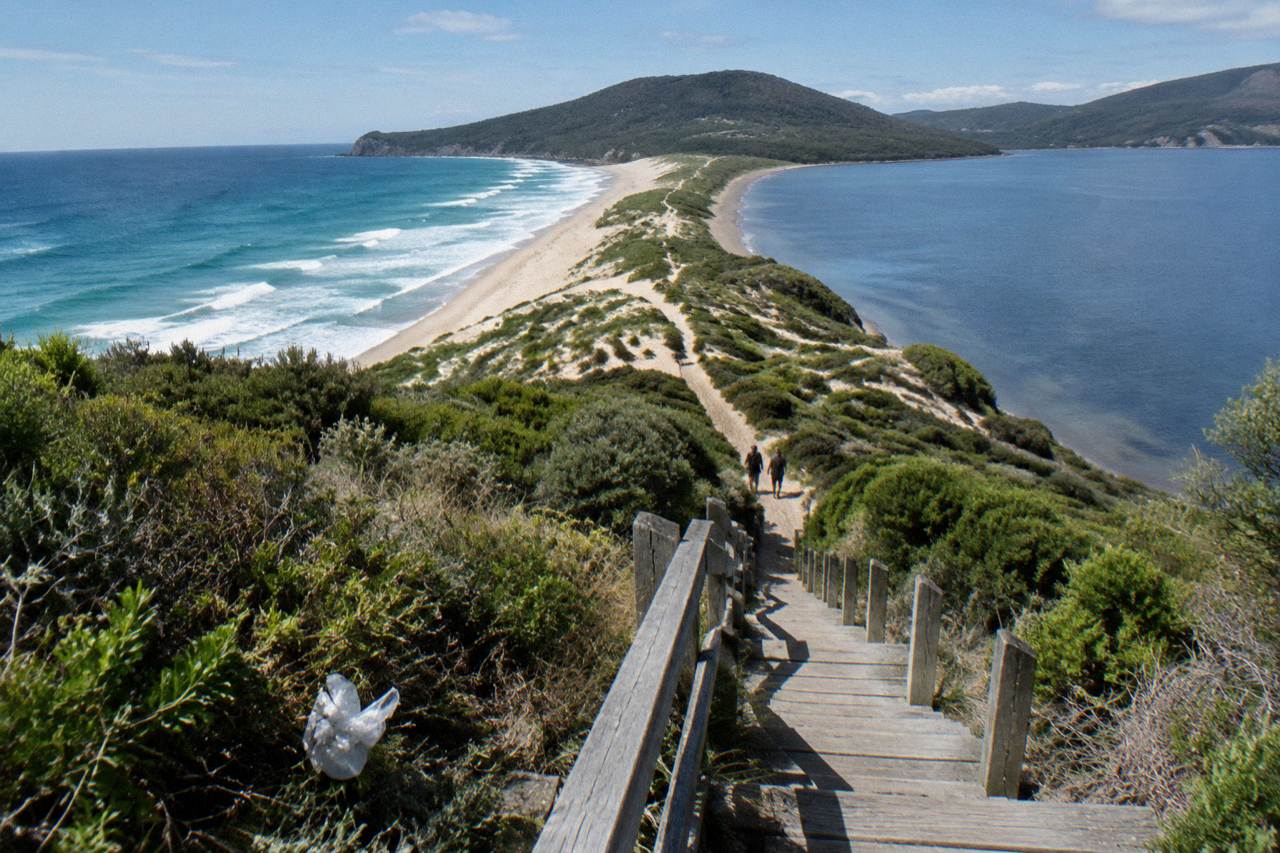
The Neck is the narrow isthmus that joins north and south Bruny Island, and it stands among the island's best-known features because it shelters colonies of little penguins and short-tailed shearwaters, which the Parks and Wildlife Service records at the Bruny Neck. This slim connection of land between the island's two halves is celebrated both for its striking geography and for the seabird colonies found there. A viewing platform at the Bruny Island Neck Conservation Area is the designated place to watch both species at dusk, and the shearwaters visit Tasmanian shores in late spring to late summer to nest. The park service's seabird page names the Neck platform specifically as a dusk viewing site, and the staircase to it doubles as the island's most photographed viewpoint.
The viewing rules are unusually strict, and for good reason: these are highly sensitive birds. The state's penguin watching guidelines ask visitors to arrive for last light, use only dim red-light torches and never point them at the water or the birds, avoid flash photography on the beach, approach the observation point from the land rather than along the sand, and stay quiet with minimal movement. Penguins come ashore under cover of darkness to protect them from predators, so patience and darkness are the whole method.
What the official record does not say is worth knowing too. Exact penguin season months at The Neck are not published by the park service, and it does not state whether a parks pass applies at the viewing platform, so any website promising a guaranteed month or a specific arrival time is filling a gap the authorities have left open. What can be said plainly is that the platform is free of charge to stand on, the walk up the stairs gives the classic photograph of the double island, and dusk is the hour that matters. The dedicated Bruny Island penguins article covers the guidelines in full.
Because The Neck sits roughly at the island's midpoint, it pairs naturally with either half of the day, and most guided itineraries stop at the lookout between producer visits in the north and the lighthouse or cruise in the south. Travellers building their own day around all of it may find that the food and sightseeing days handle the logistics, the ferry queue and the driving in one purchase.
The Dolerite Coast And Wilderness Cruises
Bruny Island is known for its dolerite coastline, where sea cliffs, arches and caves rise out of the Southern Ocean along South Bruny National Park, and the best way to experience it is the three-hour wilderness cruise that departs from Adventure Bay. The cruise, from A$190 per person for the boat alone and rated 4.8 from 632 reviews, spends three hours in an open-air vessel along that coast looking for seals, dolphins and sea birds, with the option to board at Adventure Bay or add the bus and ferry connection from Hobart, priced separately on the listing. No road reaches most of this coastline, which is precisely why the boats matter.
This is the Bruny that photographs cannot quite carry. The coastline around Fluted Cape and The Friars is exposed, wind-lashed and geologically dramatic, and the operators are candid about the conditions: the open boats run in whatever weather the day brings, wet-weather jackets are provided, and warm layered clothing is recommended because of wind. Reviews on the listing embrace exactly that character. "Great tour, weather was great, got my thrill ride with all the big waves, got to see wildlife and awesome scenery would highly recommend," one guest wrote.
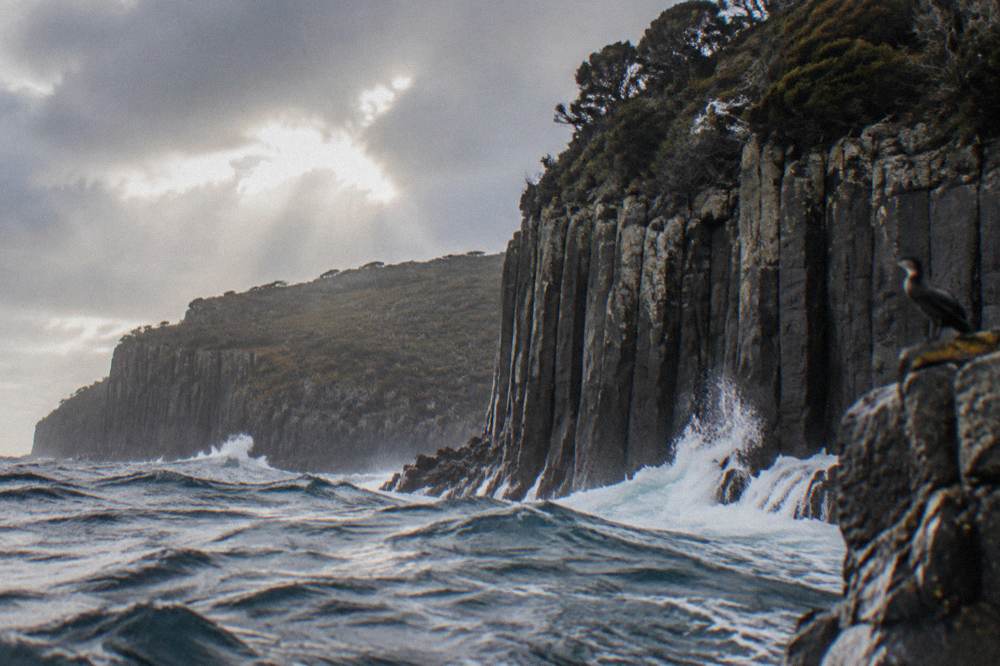
For visitors who want the coast and the island in one purchase, the Wilderness Cruise Plus Island Day (from A$290, rated 4.8 from 562 reviews) combines a guided bus tour, the ferry crossing, a three-hour cruise past the sea cliffs and caves, morning tea and lunch in a single 10-hour day from Hobart's Franklin Wharf. It is worth reading the pickup note carefully: the cruise listings drop guests back at a Hobart hotel but do not collect from one, which is the reverse of most coach days. A full comparison of the cruise choices, including the Tasman Island alternative across the state, sits in the Bruny Island cruises guide.
Wildlife Beyond The Birds
Bruny Island is known for wildlife that is unusually visible for an island so close to a capital city: about 120 bird species recorded, Australian fur seals around The Friars, whales in the surrounding waters, and the white variant of Bennett's wallaby feeding in paddocks near the Fluted Cape entrance at dusk. The park service lists all of these on its South Bruny National Park page, and the white wallabies in particular have become one of the island's signature sightings, a genetic variant rather than a separate species.
No sighting is ever promised, and honest copy should say so. Seals haul out on the rocks of The Friars, humpback and southern right whales pass through the marine environment on their annual migration, and the wallabies graze at dusk, but weather, season and luck decide each encounter. What the island does guarantee is habitat: a national park across the whole south, unpatrolled beaches, and a conservation area at The Neck managed around its seabird colonies.
That habitat quality is the real information gain for a planner. Bruny sits inside one of the world's more accessible wild coastlines, less than an hour's drive and a 20-minute ferry from Hobart, which is why operators can sell a morning with seals and an afternoon with cheese on the same ticket. It also explains the fire discipline: the fire danger season in Tasmania normally runs November to March, and conditions on tracks change, so the Parks and Wildlife Service alerts page is the source to check before any walk.
How The Tours Cover The Highlights
Bruny Island's tour roster covers its five famous themes in three broad shapes: coach food days from A$180, activity days built on a cruise, lighthouse or hike from A$25 to A$290, and multi-day Tasmania combos that pair the island with Hobart or Port Arthur from A$305. Every one of the 14 verified listings departs from or connects through Hobart, most include the ferry crossing in the price, and most allow free cancellation though the cutoff differs by listing, so the booking page is the final word.
The fit between theme and tour is fairly clean. Food reputation: the gourmet coach days and small-group tasting days. Lighthouse: the 30-minute climb on its own, or the full days that bundle it with lunch and producers. Coast and wildlife: the three-hour cruise from Adventure Bay or the combined cruise-and-day tours. Hikers get their own option too, a small-group day from Tours Tasmania (from A$169, maximum 15) that hikes the coast to the Arch and climbs to 360-degree views before an afternoon of produce tastings, with ferry transfers included and meals not.
| Tour | Covers which claim to fame | From (per person) | Rating |
|---|---|---|---|
| Pennicott Gourmet Tasting Day | Food and producers, coach day | A$290 | 4.8 from 581 reviews |
| Safaris Lighthouse And Lunch Day | Lighthouse, food, small group | A$280 | 4.8 from 1003 reviews |
| Tassie Tours Budget Day | All-round sightseeing, low price | A$180 | 4.7 from 938 reviews |
| Three-Hour Wilderness Cruise | Coast and wildlife from the water | A$190 | 4.8 from 632 reviews |
| 30-Minute Lighthouse Climb | Lighthouse only, self-drive | A$25 | 4.9 from 316 reviews |
| Hike And Taste, Small Group | Coast walks plus producers | A$169 | 4.8 from 76 reviews |
Budget travellers are well served at the bottom of that table, and the free things to do guide shows how much of The Neck, the beaches and the lookouts cost nothing once the ferry fare is paid. At the other end, private options such as the Private Eight-Hour Driver Guide (from A$991 per group of up to 4) let a family or small party set their own mix of all five themes in one day.
The theme-first way of reading the island also explains which tours this site, Bruny Island Tasmania Tours, groups where. The food and sightseeing day tours category holds the tasting days, the wilderness cruises family holds the boats, and the multi-day combos suit travellers who want Port Arthur or Hobart folded in. Picking by theme first, then by group size and price, is the fastest route to the right listing.
For the food half of the island's fame specifically, the gourmet coach day is the reference point. Check availability alongside the detailed gourmet sightseeing day tour page before committing, since hotel pickup applies to select CBD hotels only and the day runs a full 9.5 hours.
Common Questions About What Bruny Island Is Known For
What Is Bruny Island Known For?
Bruny Island is known for its food and drink producers, especially cheese and oysters; the 1838 Cape Bruny Lighthouse; The Neck and its little penguin and shearwater colonies; a dramatic dolerite coastline with sea caves; and visible wildlife including white Bennett's wallabies and Australian fur seals.
Can You See Penguins On Bruny Island?
Yes. The Parks and Wildlife Service lists little penguin and short-tailed shearwater colonies at the Bruny Neck, with a designated viewing platform at the Neck Conservation Area used at dusk. Follow the penguin watching guidelines: red-light torch only, no flash, approach from the land, and stay quiet.
What Food Is Bruny Island Famous For?
Cheese from Bruny Island Cheese Co, oysters from Get Shucked at Great Bay, honey, chocolate, fudge, wine and single malt. Most producers open daily, and the food-focused day tours from Hobart build their whole itinerary around tastings.
Is The Cape Bruny Lighthouse Worth Visiting?
The park service describes it as the only southern Tasmanian lighthouse open for tours, first lit in 1838. A guided 30-minute climb runs from A$25 per person, rated 4.9 from 316 reviews, and a valid parks pass is required to join, which several full-day tours include.
Do You Need A Tour To Enjoy Bruny Island?
No, but a tour removes the ferry driving, the parks pass logistics and the route planning. Self-drive visitors pay the return vehicle fare from A$50.90 to A$67.30 depending on fare type and season, while guided days bundle the ferry, guiding and often tastings or the parks pass into one price.