Bruny Island Penguins: When And Where To See Them
Bruny Island's little penguins come ashore at The Neck, and the only responsible way to watch them is from the official viewing platform at dusk, following a short list of rules that exist because the colony is fragile.
Short answer
Bruny Island's little penguins come ashore at the Neck Conservation Area viewing platform at dusk. Penguins leave the water at last light, and guidelines require a dim red torch only, no flash, quiet, and approaching from the land. No tour on the roster is a penguin tour, but several day tours stop at The Neck viewpoint in daylight.
Bruny Island's little penguins are one of the reasons people search for this island at all. The colony at The Neck, the narrow sandy isthmus that joins north and south Bruny, is one of the places Tasmania's wildlife agency names on its own seabirds page as a site where little penguins and short-tailed shearwaters can be seen at dusk. That official sentence carries most of what a visitor needs: the place, the platform, and the time of day. The viewing platform at The Neck is free to visit, and if you want more ideas that cost nothing, our guide to free things to do on Bruny Island covers beaches, walks, and lookouts nearby.
What it does not tell you is how the viewing actually works, what the rules are, and how a penguin hope fits into a day on the island. No tour on this site's roster is a penguin tour, and honesty matters more than a sale here: penguins arrive after dark, when every day tour is already back in Hobart. This guide covers the platform, the guidelines, the ferry and drive logistics of reaching The Neck yourself, and the day tours that stop at the Neck Lookout in daylight so the geography is familiar by the time you return at dusk. If you want the honest answer on timing, the guide to when the penguins actually come ashore at Bruny Island explains why last light matters more than any clock time.
Where Do Bruny Island Penguins Live?
The island's little penguins nest at the Bruny Neck, and the official viewing spot is the platform at the Bruny Island Neck Conservation Area. Parks and Wildlife Service Tasmania names that platform directly as a place where shearwaters and little penguins can be seen at dusk. There is no second official penguin site on the island, no visitor centre, and no guided penguin walk.
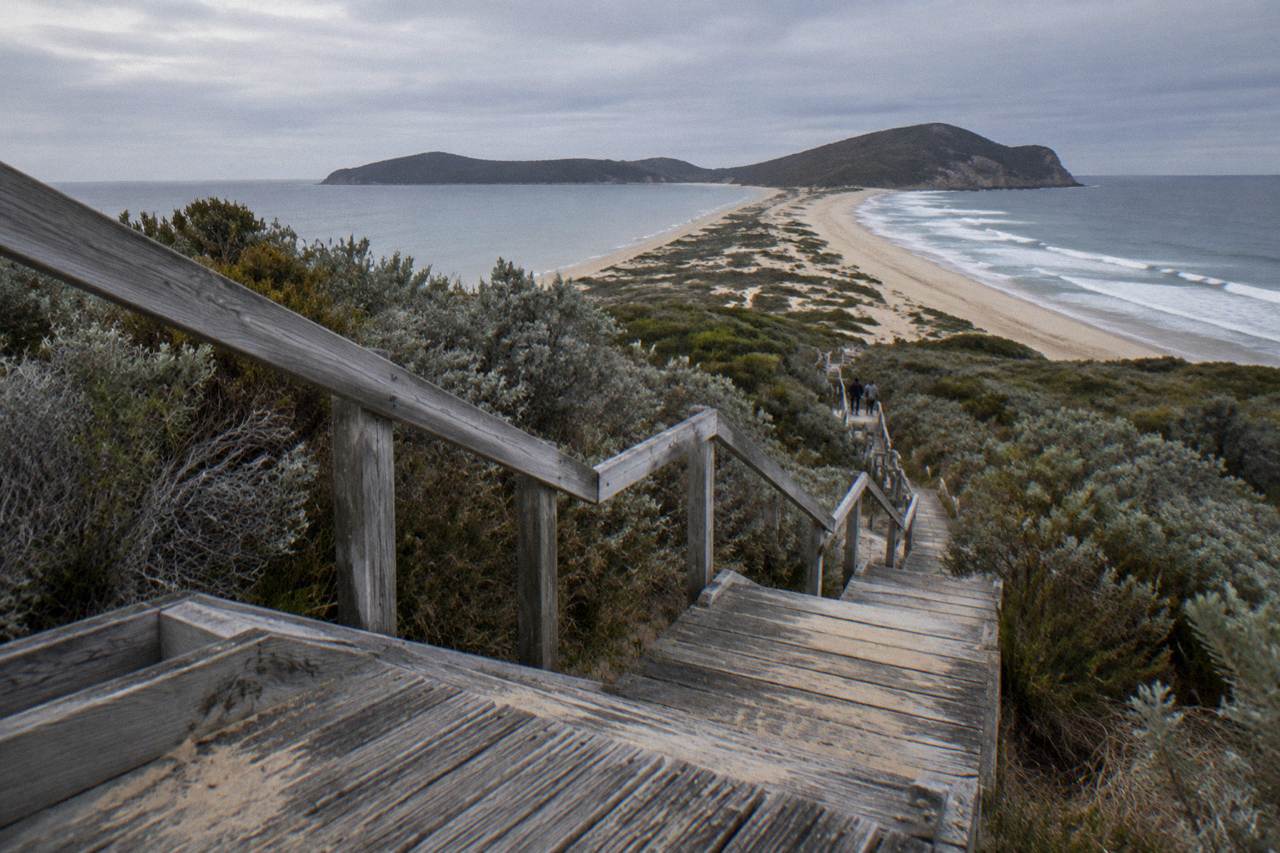
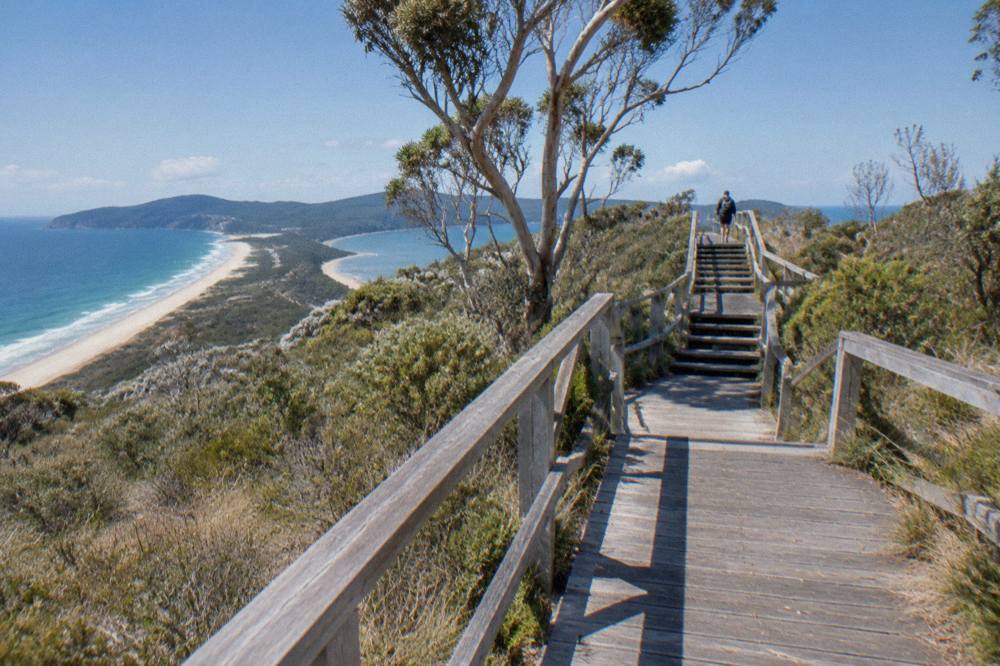
The Neck is the thin strip of sand, a few hundred metres wide, that connects North and South Bruny. Boardwalk stairs climb from the car park to a viewing platform above the dunes, giving a long view down the isthmus on both sides. It is a public structure in a conservation area, free to walk up in daylight, and it exists partly to keep people out of the dunes where the burrows are.
Little penguins, the smallest penguin species in the world, nest in burrows rather than on open ice-country terrain people picture when they hear the word. A colony like the one at the Neck lives in the dune vegetation, and the birds walk from the water to their burrows after dark. The park's page records both little penguin and short-tailed shearwater colonies at the Bruny Neck, and about 120 bird species on the island overall, which is why the platform doubles as a general seabird viewpoint.
One thing this guide will not do is promise you a bird. Penguins are wild, weather-affected and seasonal, and nobody can guarantee a sighting on any given evening. The park page says they can be seen at dusk; it does not say every dusk. Plan for the possibility, not the certainty, and the evening is a good one either way, because the platform view over both coastlines is one of the island's best.
Our fuller page on the isthmus itself, The Neck Lookout And Boardwalk, covers the stairs, the history panels and the photography angle if you want the complete picture of the site before you go.
What Time Do Penguins Come Ashore At The Neck?
Penguins leave the water at last light, so the birds arrive as the daylight fails, not at a fixed clock time you can plan a barbecue around. The wildlife guidelines published by Tasmania's natural resources department state plainly that penguins come out of the water at last light so they have the cover of darkness against predators. Arrival therefore shifts across the year with the seasons.
That single fact shapes the whole evening. The birds follow the light, not a timetable, and no official page publishes a month-by-month season for the colony, so any blog quoting exact months or a precise arrival time is filling a gap with invention.
Shearwaters are the companion species at the same platform. The park's seabirds page records that short-tailed shearwaters visit Tasmanian shores every year in late spring to late summer to nest, which is as specific as an official source gets, and is the window when both species share the Neck. Outside that window the penguins are still resident, but the evening spectacle is a quieter one.
The practical read: arrive at the platform well before the light goes, let your eyes adjust, and stay until the dark is total. People who turn up at a guess and leave after ten minutes routinely miss the birds that walk out twenty minutes later. The full question of timing, including what to do while you wait, is covered in our longread What Time Do The Penguins Come In At Bruny Island.
Which Tours Stop At The Neck?
No tour on this roster is a penguin tour, because penguins arrive after dark and day tours finish before then. But several full-day tours climb the Neck Lookout in daylight, which is the closest a booked product gets to the colony: you learn the layout, the drive, and the boardwalk, then return yourself at dusk if you have a car.
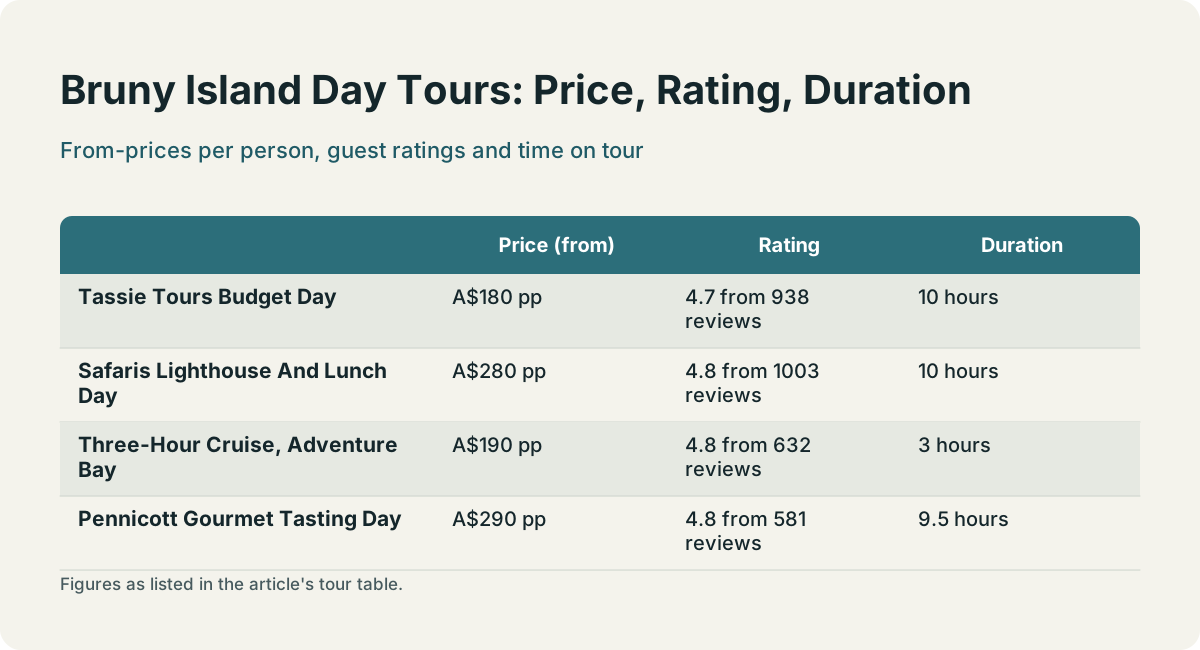
The honest framing matters here. A day tour cannot deliver penguins; it delivers the island, and The Neck stop is part of the route. The Tassie Tours Budget Day, titled From Hobart: Full-Day Bruny Island Tour with Guide on its listing, is a 10-hour minibus day from A$180 per person, rated 4.7 from 938 reviews, with hotel pickup in the Hobart CBD, the round-trip ferry, live commentary and the National Parks Pass, while food and drinks are paid for separately. The Neck Lookout is one of the standard photo stops on that route, and the roster for the private driver-guide days names it explicitly.
A review from a guest on that tour describes the shape of the day: "The tour went very smoothly from picked up to delivery back.I cant choose 1 great spot as it was all different the whole day from barge ride to pub lunch to lighthouse,Forrest walk to chocolate shop.The scenery was just magnificent, a must if you are visiting Hobart". That is an island day, not a wildlife evening, and it is best booked with that expectation. You can check the full-day guided tour's availability or keep reading for how it compares.
Two neighbouring products make a useful contrast. The Safaris Lighthouse And Lunch Day (Ultimate Full-Day Bruny Island Inc Exclusive Lighthouse Tour, from A$280 per person, 4.8 from 1003 reviews) spends its 10 hours on the island's south, including the lighthouse, oysters at Get Shucked and a one-course lunch at Hotel Bruny, for up to 20 guests. The Three-Hour Cruise from Adventure Bay (from A$190 for the cruise alone, 4.8 from 632 reviews) puts you on the water along the dolerite coast instead, in an open boat built for that coastline. Neither is a penguin product; both show you a Bruny that the platform view puts in context.
The Gourmet Tasting Day run by Pennicott, the Bruny Island Traveller coach day from Hobart at 9.5 hours and from A$290 per person (4.8 from 581 reviews), is the food-focused version of the same circuit: fudge, honey, mead, cheese and ale tastings, a beachside lunch, and the ferry crossing, all from the coach. One guest review on the listing sums up why these island days pair well with a later self-drive evening: "Wonderful trip all around Bruny. Dan was an excellent guide and had genuine rapport with the operators who were all happy to see us and him. Made for a lovely day out."
| Tour | Decision Name | Price (from) | Rating | Duration | Neck Or Wildlife Angle |
|---|---|---|---|---|---|
| From Hobart: Full-Day Bruny Island Tour with Guide | Tassie Tours Budget Day | A$180 pp | 4.7 from 938 reviews | 10 hours | Neck Lookout among the standard stops |
| Ultimate Full-Day Bruny Island Inc Exclusive Lighthouse Tour | Safaris Lighthouse And Lunch Day | A$280 pp | 4.8 from 1003 reviews | 10 hours | South island focus, lighthouse included |
| From Hobart/Adventure Bay: Bruny Island Wilderness Cruise | Three-Hour Cruise, Adventure Bay | A$190 pp | 4.8 from 632 reviews | 3 hours | Coastal wildlife from the water |
| Hobart: Bruny Island Gourmet Sightseeing Day Tour | Pennicott Gourmet Tasting Day | A$290 pp | 4.8 from 581 reviews | 9.5 hours | Producer circuit with lunch |
If a daytime tour is the shape of your Bruny day and penguins are the evening bonus, the day tours from Hobart hub compares every option on the roster side by side.
How Do You Watch Penguins Without Harming Them?
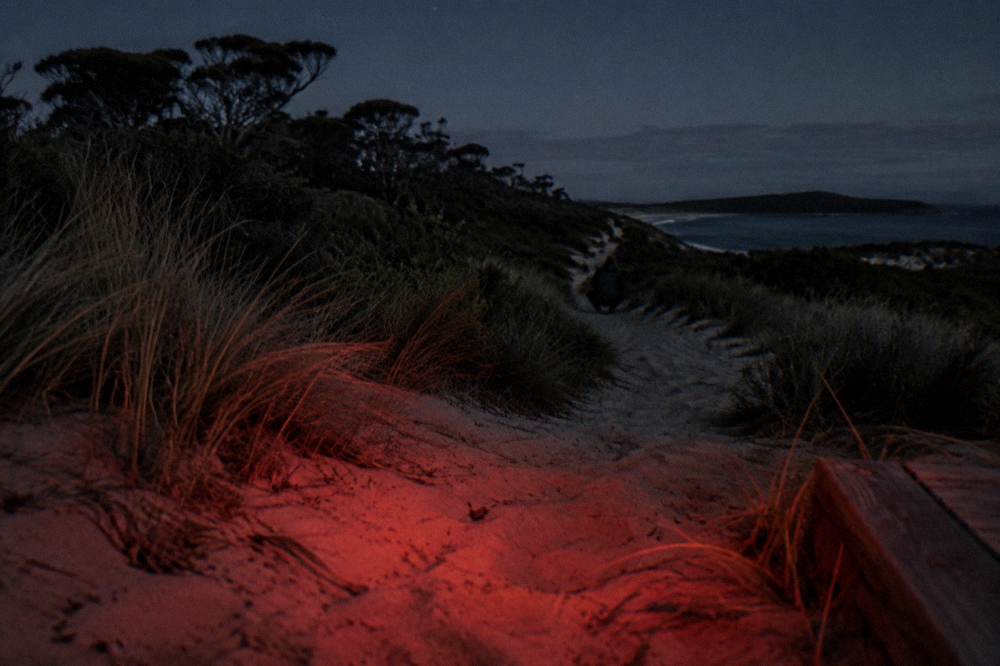
Tasmania's penguin watching guidelines are short and strict: use only a dim red-light torch, never shine it at the water or the birds, take no flash photos, approach the viewing point from the land rather than the beach, stay out of the colony and burrows, keep quiet, and keep movement to a minimum. The Neck platform exists so all of this is easy.
The guidelines exist because penguins are highly sensitive to disturbance. Walking through a colony destroys burrows; walking along the beach blocks the birds' access to their burrows; white light and flash frighten birds back into the water, which costs them energy and can cost chicks a meal. None of this is negotiable etiquette, it is the published rule set from the natural resources department, and rangers do enforce it at busy sites.
| Guideline | What It Means At The Neck |
|---|---|
| Red light only | Tape red cellophane over an ordinary torch, or buy a red torch; white light is out |
| Never at the water or birds | Light the path at your feet, nothing else |
| No flash cameras | Flash on the beach is banned outright; night modes without flash are still poor for penguins |
| Approach from the land | Use the boardwalk and tracks, not the beach, so the birds' path from surf to burrow stays clear |
| Do not enter the colony | Stay on the platform; burrows collapse underfoot |
| Stay quiet, minimal movement | Voices low, no running, no dogs ever |
The platform makes compliance almost effortless, which is why it is the recommended answer to "where". From the boardwalk you are above the colony, off the beach, and far enough back that the birds' walk from the water is unobstructed. Binoculars help in the last of the light. Warm layered clothing matters more than most visitors expect: Cape Bruny's mean minimum even in January and February is 12.4 degrees, and a still evening on an exposed platform is colder than the car felt.
There is one more reason to take the guidelines seriously, and it is not sentimental. Disturbed colonies shrink. The birds at the Neck tolerate visitors precisely because most visitors behave; every flash and every footprint in the dunes taxes that tolerance. Read the official penguin watching guidelines before you go, and the evening takes care of itself.
How Do You Get To The Neck For A Dusk Viewing?
You drive: across on the Island Connections (formerly SeaLink) ferry from Kettering, 20 minutes on the water, then roughly 25 minutes south from the Roberts Point landing to The Neck car park. The ferry runs 365 days a year, departing Kettering every 20 minutes from 6.10 am to 7.00 pm, and walk-on passengers should arrange island transport for dusk viewing.
That last clause is the one that decides the whole plan. An independent dusk visit needs a vehicle: your own, a rental collected in Hobart, or a bicycle if you are unusually committed. Hobart to Kettering takes 35 to 40 minutes by road, with the operator and the parks page differing slightly on the figure, so print it as a range.
| Ferry Or Drive Item | Figure |
|---|---|
| Operator | Island Connections (formerly SeaLink) |
| Crossing time | 20 minutes |
| Departures from Kettering | Every 20 minutes, 6.10 am to 7.00 pm |
| Service days | 365 days a year |
| Passengers including the driver | Free with a vehicle |
| Visitor vehicle under 6 m, Regular return | A$58.60 (to 30 November), A$67.30 (1 December to April) |
| Visitor vehicle under 6 m, Saver return | A$50.90 |
| Motorcycle or bicycle return | A$8.10 |
| Hobart to Kettering drive | 35 to 40 minutes |
Tickets are return fares valid 365 days, and pre-purchased tickets are for the next available ferry rather than a specific departure, which is why the ferry guide matters if you are nervous about queues in peak weeks. Two island facts are worth knowing before a late evening: the only fuel on the island is at Adventure Bay General Store, and there is no ATM anywhere on Bruny.
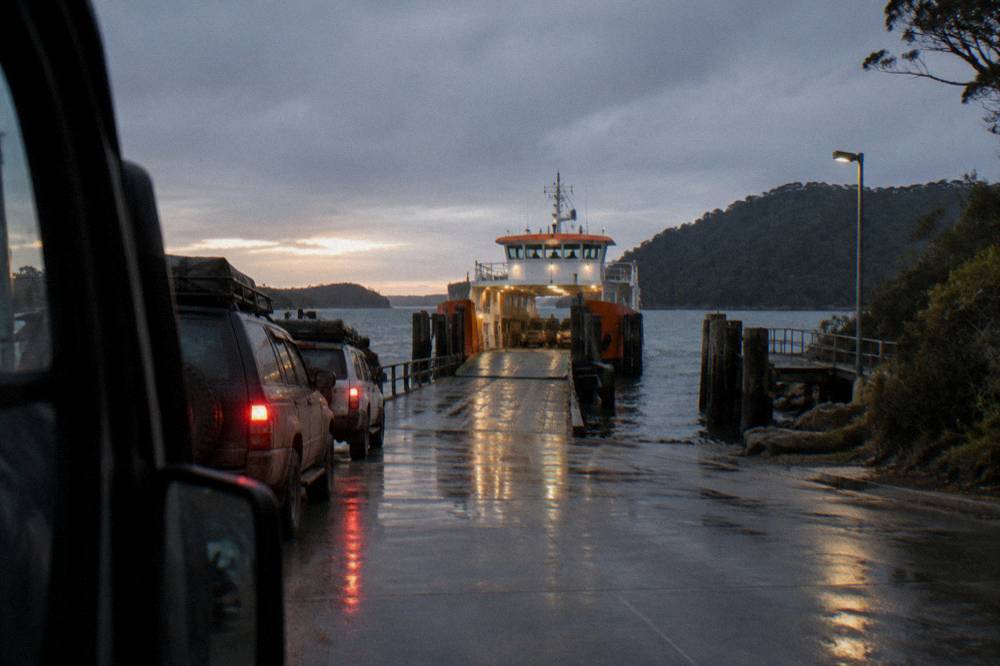
For travellers who would rather not drive at night on unlit island roads, the honest alternative is a daylight visit to the platform and an early ferry home, or an overnight stay. The driving distances, the fuel stop and the after-dark road conditions are the reason the roster's guided days exist at all, and the how to get to Bruny Island page works through the options in detail.
What Other Wildlife Shares The Neck At Dusk?
The Neck platform is a two-species viewpoint: little penguins and short-tailed shearwaters, which nest in the same dunes in late spring to late summer. Around the wider island, the parks page records about 120 bird species, Australian fur seals at The Friars, whales in the surrounding marine environment, and white-variant Bennett's wallabies feeding in paddocks near the Fluted Cape entrance at dusk.
The shearwaters are the underrated half of the evening. Muttonbirds, as they are also known, return to their burrows in swirling flocks at the same last-light hour the penguins walk in, and the combination of wheeling seabirds overhead and small penguins at the waterline is the full show. The park's page is also careful with the whale wording: whales move through the waters around South Bruny National Park, including Adventure Bay, but no official source publishes migration months, so no honest article should either.
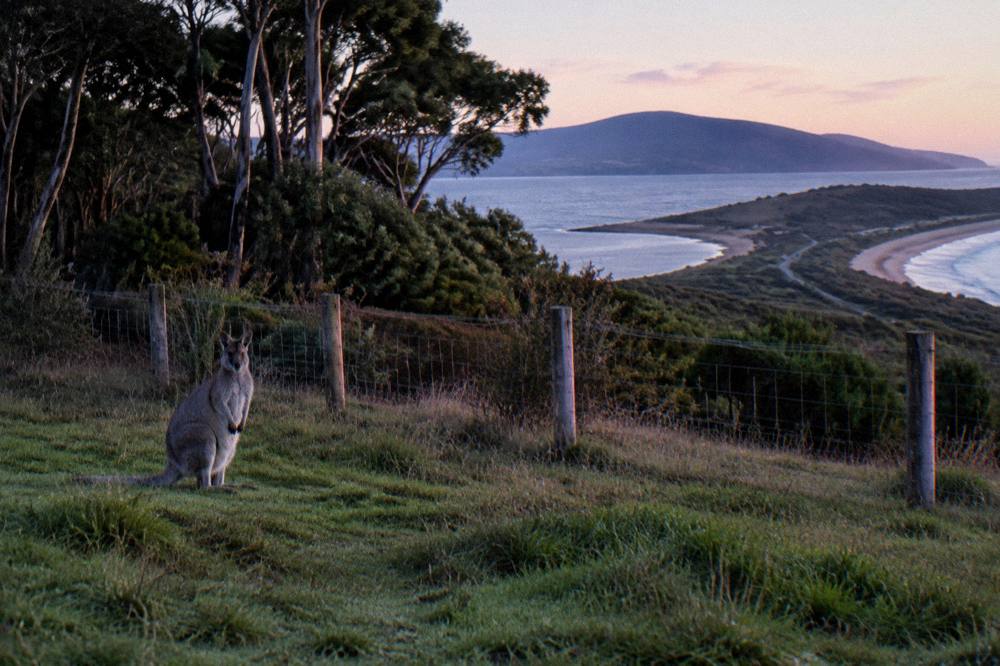
The white wallabies deserve their own mention because they are a drive-by bonus on the same evening. A genetic variant of Bennett's wallaby, they are recorded feeding at dusk in the paddocks near the Fluted Cape entrance to the national park, which is south of Adventure Bay and a continuation of the same road south past The Neck. Visitors building a dusk itinerary often do the platform first, then drive south slowly while the paddock light lasts.
If it is coastal wildlife from the water you want rather than a burrow colony on land, the Wilderness Cruise Plus Island Day, Pennicott's full-day coach and boat combination from A$290 per person (4.8 from 562 reviews), pairs the guided island circuit with a three-hour cruise past the sea cliffs and caves, morning tea and lunch included. A guest review on that listing captures the appeal: "Great tour, weather was great, got my thrill ride with all the big waves, got to see wildlife and awesome scenery would highly recommend." Weather and operations decide every sailing, so treat wildlife on any cruise as possible, never promised.
Should You Plan A Whole Day Around Penguin Viewing?
No, and that is the honest answer: penguin viewing is a two-hour evening, not a day. The plan that works is a full Bruny day, by tour or by car, with producers, the lighthouse and the lookouts in daylight, then the Neck platform at dusk if you have your own vehicle or you are staying on the island overnight.
Building the day is straightforward because the roster does it for you. A guided morning-to-evening structure such as the Hike And Taste small-group day (from A$169 per person, 4.8 from 76 reviews, maximum 15 guests, ferry transfers included) walks the coast to the Arch and climbs to 360-degree views before an afternoon of tastings, which pairs naturally with a free evening. Note that one requires free cancellation up to 2 days before, a longer cutoff than most roster listings, so read the booking page for whatever you choose. Most roster listings allow free cancellation but the cutoff differs.
The season question answers itself from the same data. Warmer months mean later light and a later penguin arrival, plus the shearwaters nesting from late spring to late summer; colder months mean an earlier finish but a colder platform, with July's mean minimum at 6.7 degrees. Rain falls year-round, 761.2 mm annually at Cape Bruny, so waterproof layers belong in the plan in any month, and the fire danger season normally runs November to March, which matters if you are planning the camping option at The Neck campground instead of an evening visit.
| Dusk Visit Factor | January To February | July | Notes |
|---|---|---|---|
| Mean maximum | 20.2 C | 12.2 C | Cape Bruny station averages |
| Mean minimum | 12.4 C | 6.7 C | Platform is exposed to wind |
| Mean rainfall | 39.3 / 50.9 mm | 72.7 mm | August is the wettest, 85.7 mm |
| Last light | Latest of the year | Earliest of the year | Penguins follow the light, not a clock |
| Shearwaters | Nesting, late spring to late summer | Absent | Two-species evenings in the warmer months |
Before any evening visit, check the Parks and Wildlife Service alerts page for current conditions on the island, since track and site conditions change and no article can promise a named sight is open on any given day. Wildlife timings follow the park service's own seabirds page, which is the source for the platform and its dusk viewing.
However you build the day, this site, Bruny Island Tasmania Tours, exists to keep the roster honest: no tour can promise a penguin, the birds come ashore at dusk, and the live listing carries the final times and prices. Plan for the platform, follow the red-light rules, and treat any bird that walks out of the surf as exactly what it is, a bonus on a very good evening.
Common Questions About Bruny Island Penguins
Where can I see penguins on Bruny Island?
At the viewing platform in the Bruny Island Neck Conservation Area, which Parks and Wildlife Service Tasmania names as a place where little penguins and short-tailed shearwaters can be seen at dusk. There is no other official penguin viewing site on the island and no guided penguin walk.
What time do the penguins come in at Bruny Island?
Penguins leave the water at last light, according to the official penguin watching guidelines, so they arrive as darkness falls rather than at a fixed clock time. Arrival shifts with the seasons: late in the long evenings of summer, early in winter.
Can I use a torch or take photos of the penguins?
Only a dim torch emitting red light, never pointed toward the water or the penguins. Red cellophane over an ordinary torch lens is acceptable. Flash cameras are banned on the beach, and the guidelines ask visitors to stay quiet and keep movement to a minimum.
Are there penguin tours on Bruny Island?
No tour on this site's roster is a penguin tour, because penguins arrive after dark when day tours have finished. Several full-day tours stop at the Neck Lookout in daylight, including the Tassie Tours full-day guided tour from A$180 per person, which shows you the site so you can return yourself at dusk with a vehicle.
When is penguin season at The Neck?
No official source publishes month-by-month season dates for the penguin colony at The Neck, so we do not print any. The companion species, short-tailed shearwaters, nest on Tasmanian shores from late spring to late summer, which is the window when both species share the platform.
Do I need a parks pass or a ticket for the Neck viewing platform?
There is no verified pass requirement published for the Neck viewing platform itself, so we do not claim one. The boardwalk and platform are in a conservation area, not inside South Bruny National Park. A parks pass is required for South Bruny National Park and Cape Bruny Lighthouse further south, at A$49.15 per vehicle for a 24-hour Daily Pass.