Where To Stay On Bruny Island: Adventure Bay, Alonnah And Kettering
Bruny Island splits its accommodation across a handful of small villages, and the one you pick shapes the whole trip: Adventure Bay for beaches and walks, Alonnah for a quiet central base, Kettering-adjacent stops for easy ferry access, and camping inside South Bruny National Park for the budget end. There are no large resorts, so the real choice is village first, property second.
Short answer
Adventure Bay suits beach time, the Fluted Cape Track and the wilderness cruise departure point. Alonnah sits near the island's centre, close to Hotel Bruny and the Bread Fridge. South Bruny camping runs at A$10 per night for one or two campers until 2 November 2026, then A$18 per site. Ferry-savvy day trippers can instead take a two-day combo tour from A$305 per person.
Choosing Bruny Island accommodation is really choosing a village. The island is long and narrow, the roads are narrow too, and everything closes early, so where you sleep decides how far you drive after dark and what is within walking distance when you wake up. This guide compares the main bases, Adventure Bay, Alonnah and the northern end near the ferry, then covers camping in South Bruny National Park and the alternative most visitors never consider: an overnight multi-day combo tour from Hobart that handles the ferry and the driving for you. If you want a closer look at the busiest of the three bases, the guide to Adventure Bay's beach, museum and cruise pier covers what to expect from the island's main hub.
One fact worth internalising before anything else: there is no ATM anywhere on the island, and the only fuel is at Adventure Bay General Store, according to the Parks and Wildlife Service Tasmania park page. Whatever base you choose, arrive with a full tank and cards that work. The ferry operator, Island Connections (formerly SeaLink), runs 365 days a year, with the 20-minute crossing departing Kettering every 20 minutes between 6.10 am and 7.00 pm.
Where Should You Base Yourself On Bruny Island?
Most visitors should base themselves in Adventure Bay or Alonnah. Adventure Bay puts the island's best beaches, the Fluted Cape Track and the three-hour wilderness cruise departure point on your doorstep. Alonnah sits closer to the island's centre, cutting drive times in every direction and sitting near Hotel Bruny and the famous honesty-system Bread Fridge on Sheepwash Road.
Those two villages cover most trips. The northern end around Dennes Point and Barnes Bay trades convenience for calm: you are minutes from the ferry at Roberts Point, which matters if you have an early departure or a late arrival, but it is a long run south to the lighthouse, the cheesemaker and the cruises. South Bruny, around Cloudy Bay and the lighthouse, is the quietest corner of all and the natural choice if your days revolve around the national park, surf or the 1838 lighthouse climb.
A rough orientation helps. From the Roberts Point ferry terminal, the lighthouse is about 1 hour 15 minutes away by road, per the parks page. Alonnah is roughly midway down the island's western side, and Adventure Bay sits on the eastern shore just north of the national park entrance where the white variant of Bennett's wallaby is sometimes seen feeding in paddocks at dusk.
| Base | Character | Best for | Main trade-off |
|---|---|---|---|
| Adventure Bay | Beach village, the busiest hub | Beaches, Fluted Cape, cruises, the general store and fuel | Busiest in summer, longest run from the ferry |
| Alonnah | Quiet central village | Short drives everywhere, Hotel Bruny, the Bread Fridge | No swimming beach to rival Adventure Bay |
| Dennes Point and Barnes Bay | Calm northern shores | Ferry convenience, quiet bays, cafes | Far from South Bruny sights |
| South Bruny and Cloudy Bay | Remote southern coast | Lighthouse, surf, national park, camping | Longest drives for food and fuel |
If you are weighing a single big day instead of an overnight, our Bruny Island day trip planning guide breaks down how much you can realistically fit, and the honest answer is: not everything. Distances on Bruny are short on a map and slow on the road.
Is Adventure Bay The Best Area To Stay On Bruny?
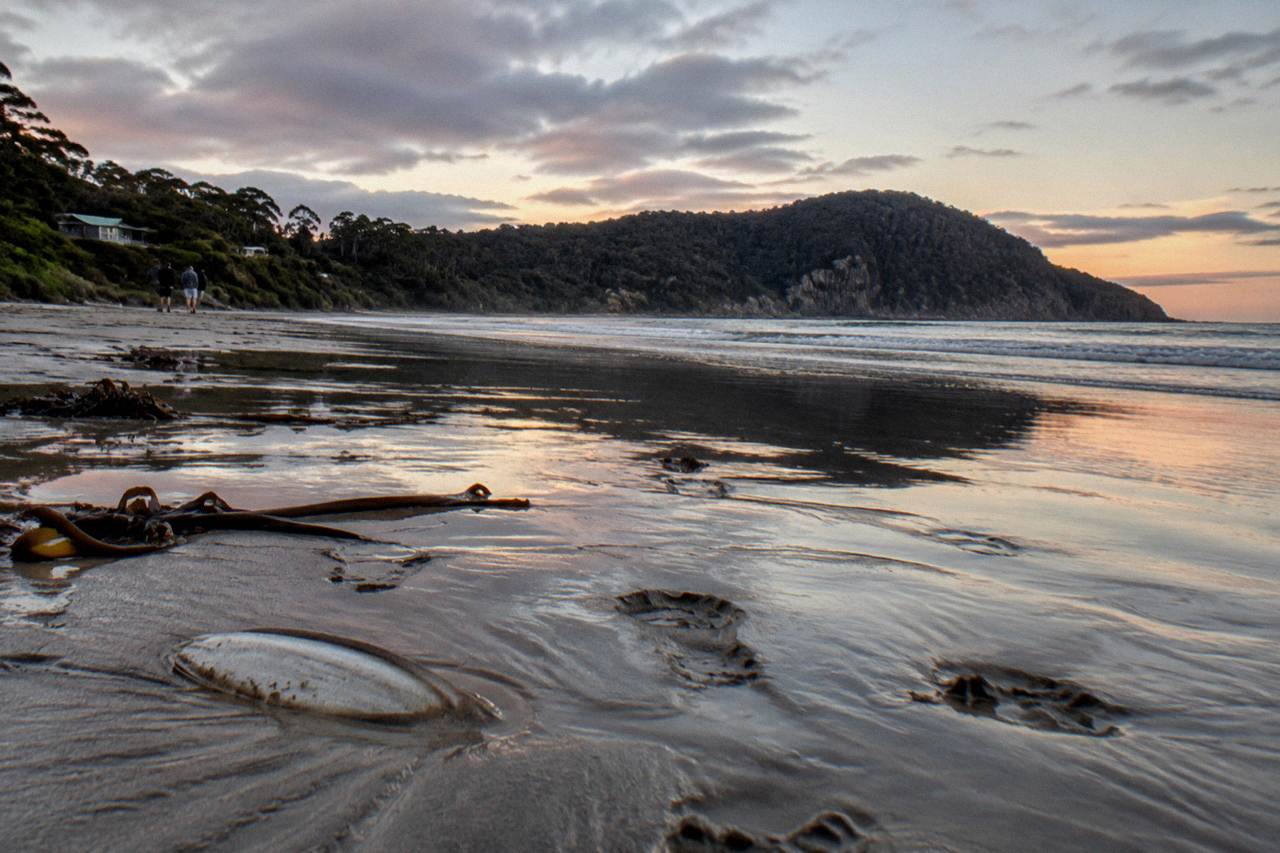
Adventure Bay is the strongest single base for first-time visitors. The village fronts a long curving beach, sits at the bottom of the Fluted Cape Track, one of Tasmania's 60 Great Short Walks, and is the departure point for the three-hour wilderness cruise from Adventure Bay, rated 4.8 from 632 reviews and priced from A$190 per person for the cruise alone.
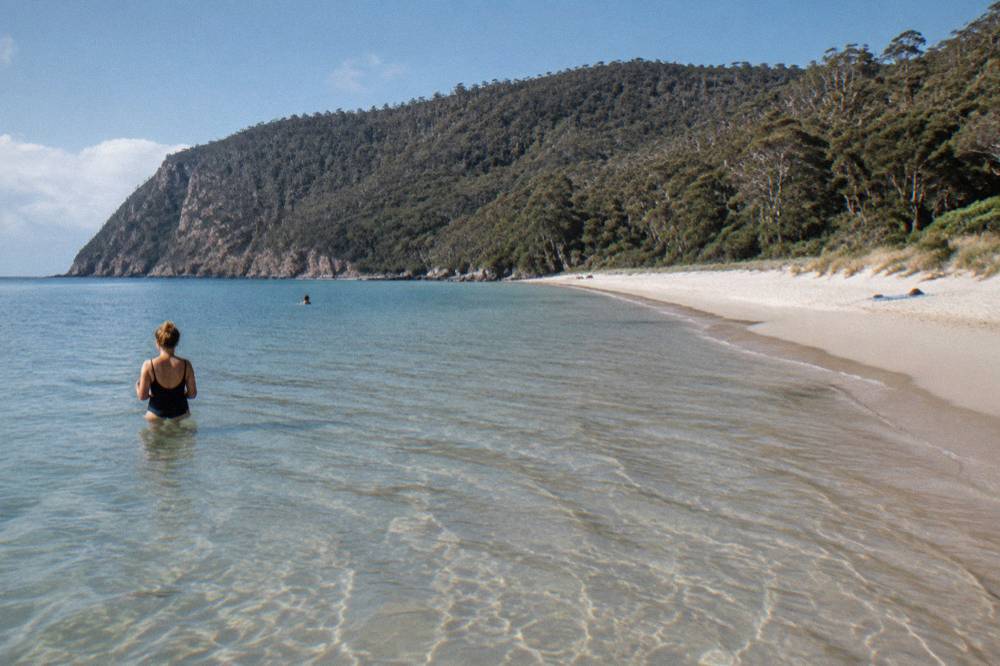
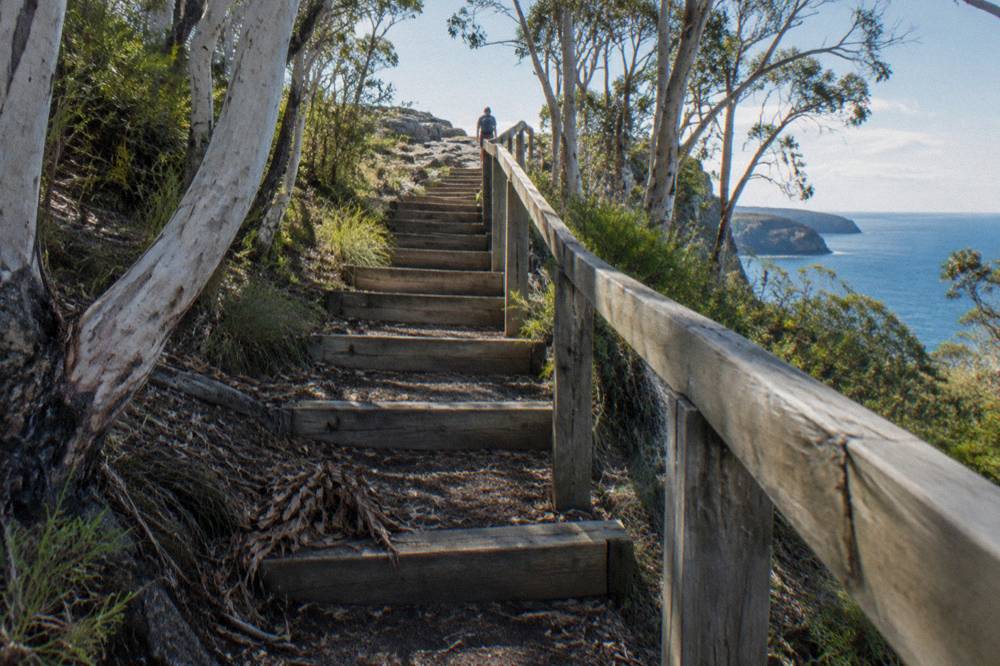
The beach itself is calm and shallow, suited to families and to anyone who wants an easy swim, though the parks page is blunt that Bruny's beaches are unpatrolled, so swimming is at your own judgement. The Fluted Cape Track climbs from the beach through forest to cliff-top views; the park notes describe it as steep with unprotected cliff edges, so it rewards proper shoes and a head for heights. And the wildlife cruise docks here, which means no early-morning drive on cruise days.
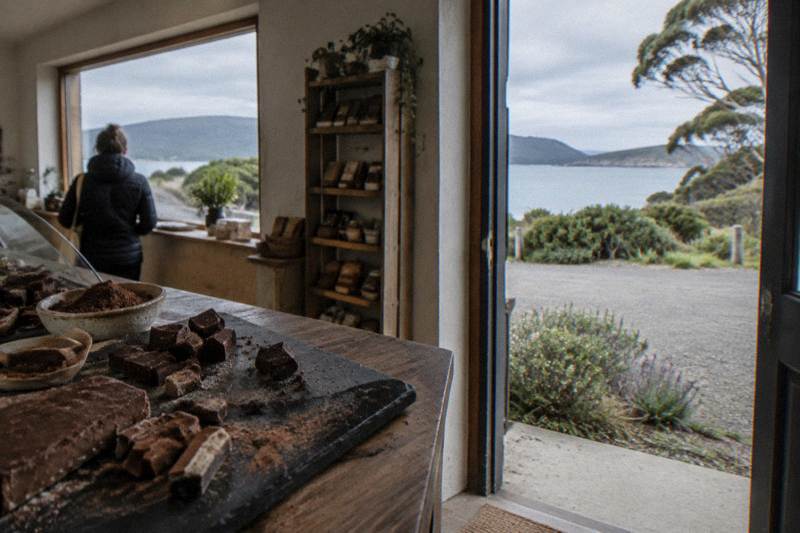
Adventure Bay is also the practical hub of the island in a way its size does not suggest. The general store is the island's only fuel stop, and the nearby producers, Get Shucked oysters, the Chocolate Co and the Honey Pot, all cluster within a short drive up the road. Our guide to Bruny Island's producers maps the tasting trail from this end of the island south.
The trade-off is summer crowds. The village is small, accommodation books out across peak summer, and the beach and boat ramp get busy when Hobart day trippers pour off the ferry. If your dates fall in the December to January window, book well ahead or shift your base to Alonnah and drive in.
For travellers who would rather let someone else handle the roads entirely, the day tour roster is deep from this end of the island. The Pennicott gourmet tasting day from Hobart, rated 4.8 from 581 reviews and from A$290 per person, runs a 9.5-hour coach day with the ferry crossing, tastings of fudge, honey, mead, cheese and ale, and a beachside lunch. One guest review sums up the style: "Wonderful trip all around Bruny. Dan was an excellent guide and had genuine rapport with the operators who were all happy to see us and him. Made for a lovely day out."
If staying overnight appeals but driving does not, the multi-day combos are worth a look before you book a cottage.
Is Alonnah Or The North End Better For A Quieter Stay?
Alonnah is the better choice for a quieter stay with central access. It sits near the island's midsection, within easy reach of Hotel Bruny, open daily, and the Bruny Island Bread Fridge on the corner of Sheepwash Road and Main Road, an honesty-system sourdough stop stocked daily. The north end around Dennes Point suits travellers who prize ferry convenience above all else. If you're still weighing those spots against the south, this guide to picking your base on Bruny Island compares all four areas in plain terms.
Alonnah's advantage is geometry. From the middle of the island, nothing is more than about 40 minutes away, whether that is the cheesemaker at Great Bay, the lighthouse in the far south or the ferry in the north. That matters because Bruny's evening dining options are thin, and a central base keeps dinner at Hotel Bruny, the island's most substantial pub kitchen, within a short drive rather than a trek. The general store at Alonnah, on William Carte Drive, is one of only two on the island. If you're still weighing Alonnah against the other townships, our plain comparison of where to stay on Bruny Island walks through the case for each base.
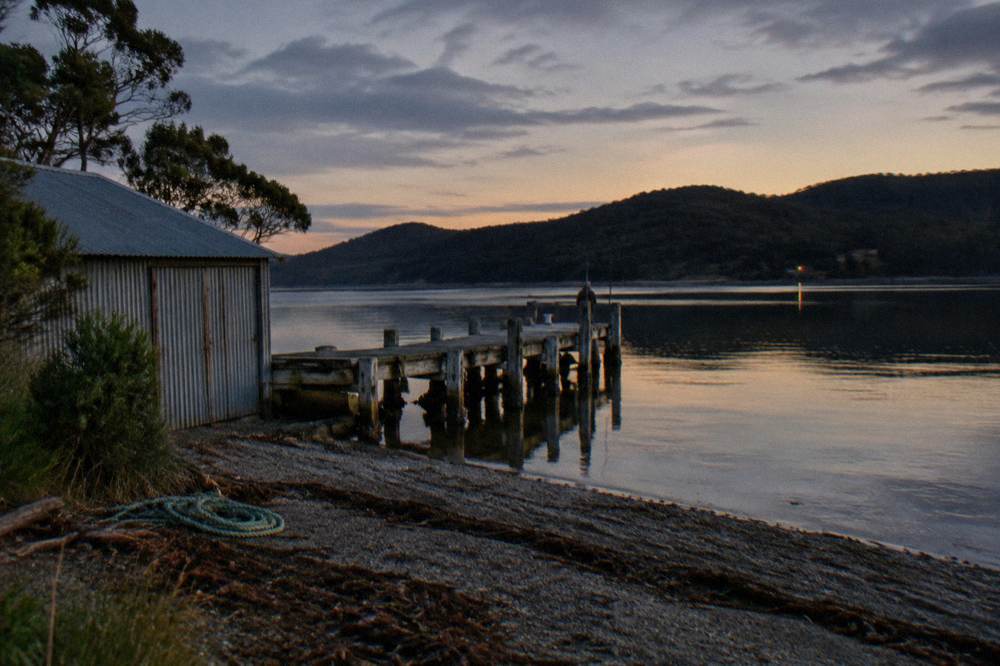
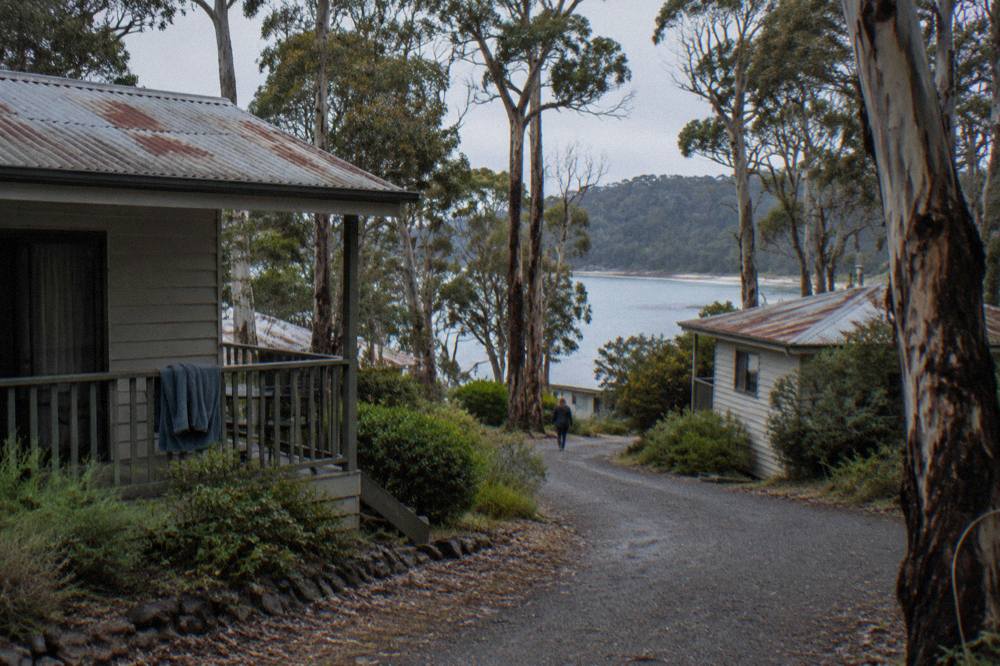
The north end, Dennes Point and Barnes Bay, is a different proposition. The ferry lands at Roberts Point on the north-western shore, so a base here means you can roll off the boat and be at your door in minutes, valuable for late arrivals or a next-morning departure. The bays are sheltered and lovely, and the small settlements have their own cafes and artist studios. What you give up is the drive: everything in the south is close to an hour away, which turns a lighthouse afternoon into a full-day commitment.
One honest note on the alternative: the two-day Hobart highlights and Bruny Island combo from Tassie Tours, rated 5 from 14 reviews and from A$305 per person, pairs a Hobart city day with a Bruny Island day in an air-conditioned minibus capped at 20 guests, with hotel pickup, Bonorong entry and the National Parks Pass included. It is a way to "stay overnight" on the itinerary without booking a single bed yourself, since the tour handles both days' logistics. Lunch and drinks are extra, and accommodation is not included, so it pairs best with a Hobart hotel rather than an island one.
Can You Camp On Bruny Island?
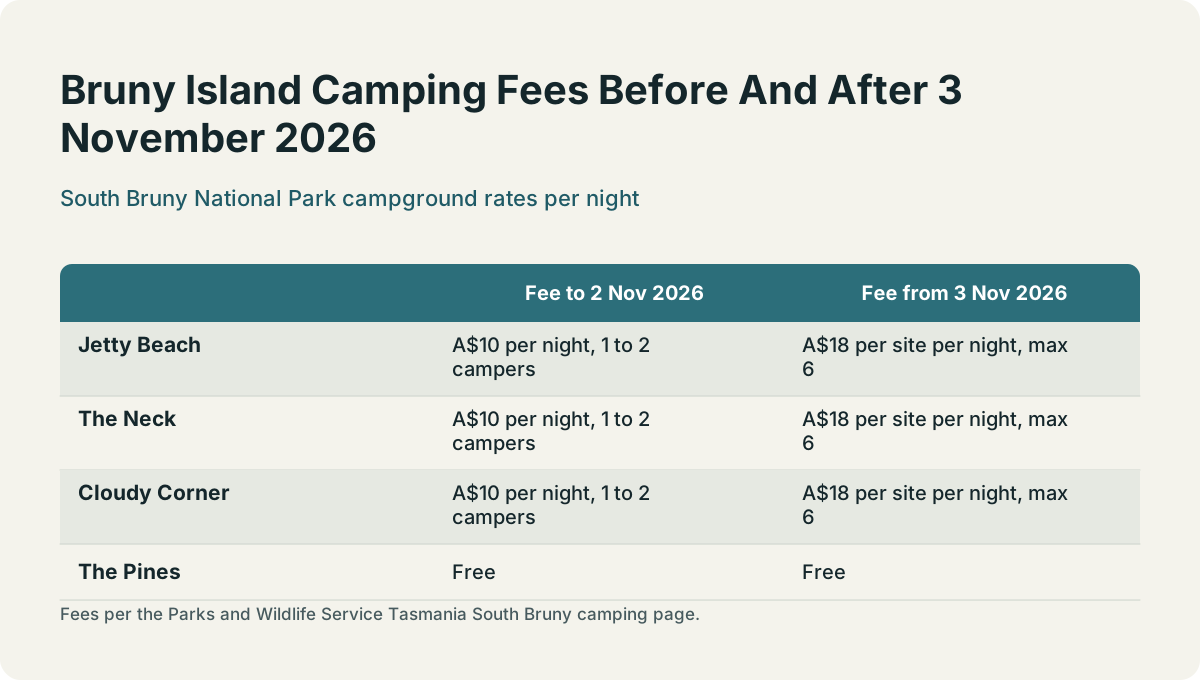
Yes, and it is the cheapest bed on the island. South Bruny National Park runs campgrounds at Jetty Beach, The Neck and Cloudy Corner, charging A$10 per night for one or two campers until 2 November 2026, then A$18 per night per site for up to 6 people from 3 November 2026. The Pines campground carries no charge. A valid parks pass is required for park entry.
Those figures come from the official camping page, which also lists the extra-adult and child rates under the current structure. The fee change on 3 November 2026 roughly doubles the per-night cost for couples and solo campers, so late-spring trips are noticeably cheaper than summer ones on the same site. Booking rules and site details live on that page.
Our Bruny Island camping guide goes deeper on which campground suits which trip. In brief: Jetty Beach is the pick for shelter and swimming, The Neck puts you at the penguin viewing platform, and Cloudy Corner is the remote surf-lover's option near Cloudy Bay. All are basic sites; bring everything, and remember there is no ATM on the island if any fee catches you cashless.
| Campground | Setting | Fee (to 2 Nov 2026) | Fee (from 3 Nov 2026) |
|---|---|---|---|
| Jetty Beach | Sheltered beach, southern park | A$10 per night, 1 to 2 campers | A$18 per site per night, max 6 |
| The Neck | Dunes beside the penguin platform | A$10 per night, 1 to 2 campers | A$18 per site per night, max 6 |
| Cloudy Corner | Remote, near Cloudy Bay surf | A$10 per night, 1 to 2 campers | A$18 per site per night, max 6 |
| The Pines | Forest setting, no charge | Free | Free |
Camping also puts you inside the park after the day crowds leave, which is exactly when Bruny is at its best: the dusk penguin and shearwater watch at The Neck's viewing platform, and the white wallabies feeding in paddocks near the Fluted Cape entrance. The state penguin watching guidelines ask visitors to arrive before last light, use only dim red-light torches, never point light at the water or birds, approach the platform from land rather than the beach, and stay quiet.
Do You Even Need To Stay Overnight On Bruny?
Not necessarily. Bruny Island works as a long day trip from Hobart: the ferry runs every 20 minutes from early morning, and guided days run 9.5 to 10 hours from A$169 per person. An overnight stay earns its cost when you want dusk wildlife, the southern sights at leisure, or two slow evenings; a well-chosen day tour covers the highlights otherwise.
The arithmetic is simple. Hobart to Kettering is a 35 to 40 minute drive, the crossing is 20 minutes, and every guided full-day option already bundles the ferry. The Tassie Tours budget day, rated 4.7 from 938 reviews and from A$180 per person, is one of the lowest-priced full-day guided tours on the roster, with hotel pickup, the round-trip ferry, live commentary and the parks pass, while food and drinks are paid for separately. One reviewer wrote: "The scenery was just magnificent, a must if you are visiting Hobart!!"
An overnight or two-night stay changes the character of the trip. Dusk on Bruny belongs to the penguins, the wallabies and the quiet bays, and none of that is reachable on a day tour that has a ferry to catch. Staying also unlocks the south properly: the lighthouse grounds are open any time, with vehicle access from 9.30 am to 4.30 pm, and the 30-minute guided climb, rated 4.9 from 316 reviews and from A$25 per person, is the only southern Tasmanian lighthouse you can tour. For campers and self-drivers who want the climb, parks pass and producer stops bundled, with lunch extra at Lunawanna Cafe, the small-group Lighthouse And Winery Lunch Day from Bruny Island Safaris, rated 5 from 3 reviews and from A$195 per person, covers the whole southern loop for up to 19 guests.
There is a middle path, too. The wilderness coast cruise and day tour, rated 4.8 from 562 reviews and from A$290 per person, spends 10 hours combining a guided bus day with a three-hour cruise past the dolerite sea cliffs, with morning tea and lunch included. Note it does not collect from hotels: it departs Hobart's Franklin Wharf, though it returns you to a Hobart hotel at day's end.
What Does Getting There And Around Add To The Cost?
Budget A$58.60 return for a standard visitor vehicle under 6 metres on the ferry from 28 September to 30 November, rising to A$67.30 from 1 December to April, with a Saver fare of A$50.90; all passengers, including the driver, travel free with the vehicle. A parks Daily Pass adds A$49.15 per vehicle for up to 8 people if you plan to enter South Bruny National Park.
The ferry fares are printed on the Island Connections fares page. Tickets are return fares valid 365 days, the service runs on a queueing system, and a pre-purchased ticket books you onto the next available sailing rather than a chosen departure time, so there is no need to time your crossing to the minute. You can buy online in advance or at the Kettering booth.
| Item | Cost | Notes |
|---|---|---|
| Ferry, visitor vehicle under 6 m, Regular | A$58.60 return | 28 September to 30 November |
| Ferry, visitor vehicle under 6 m, Regular | A$67.30 return | 1 December to April, peak applies to Regular only |
| Ferry, visitor vehicle under 6 m, Saver | A$50.90 return | Cheapest vehicle option |
| Ferry, motorcycle or bicycle | A$8.10 return | All categories |
| Passengers including driver | Free | With a vehicle |
| Parks Daily Pass | A$49.15 per vehicle | Up to 8 people, 24 hours |
| Parks Holiday Pass | A$98.35 per vehicle | Up to 2 months, better value for longer stays |
| Parks pass on foot, bus or cycle | A$24.55 daily | Per person |
Guided tours complicate this picture in a good way: most full-day listings already include the ferry and many include the parks pass, so the only true extra is food. Our overview of Bruny Island tours from Hobart compares what each ticket bundles.
When Is The Best Time Of Year To Book A Stay?
January and February are the warmest months to stay on Bruny, with a mean maximum of 20.2 degrees at Cape Bruny, against 12.2 in July, the coldest month. Rainfall is actually lowest in those peak summer months, from 39.3 mm in January, and highest in August at 85.7 mm, so summer delivers both the best weather and the biggest crowds and earliest sell-outs.
The Bureau of Meteorology's Cape Bruny station gives the island's most reliable averages. What surprises many visitors is how moderate the summers are: 20 degrees is warm rather than hot, and the ocean keeps nights near 12 degrees even in February, so pack layers for any season. The fire danger season normally runs November to March, which is worth knowing for camping trips.
| Month | Mean max (C) | Mean min (C) | Mean rain (mm) |
|---|---|---|---|
| Jan | 20.2 | 12.4 | 39.3 |
| Feb | 20.2 | 12.4 | 50.9 |
| Mar | 18.9 | 11.7 | 53.1 |
| Apr | 16.7 | 10.1 | 56.2 |
| May | 14.4 | 8.7 | 69.3 |
| Jun | 12.6 | 7.3 | 76.3 |
| Jul | 12.2 | 6.7 | 72.7 |
| Aug | 12.9 | 6.7 | 85.7 |
| Sep | 14.5 | 7.5 | 70.8 |
| Oct | 15.6 | 8.3 | 70.9 |
| Nov | 17.0 | 9.6 | 56.7 |
| Dec | 18.6 | 10.7 | 58.2 |
Shoulder months are the quiet bargain. October, November and April combine daytime means in the mid to high teens with thinner crowds, cheaper Saver ferry fares outside peak windows, and, before 3 November, the lower camping rate. Late spring through late summer is also when the short-tailed shearwaters nest at The Neck, though exact viewing months vary with the birds.
Which Overnight Option Suits Which Traveller?
Families and beach seekers should book Adventure Bay. Slow travellers and food-focused couples do better in Alonnah. Budget and wildlife campers belong in South Bruny National Park. And travellers who would rather not drive, book beds or queue for ferries at all should take a two-day or three-day combo tour from Hobart, from A$305 per person, with every transfer and the parks pass handled.
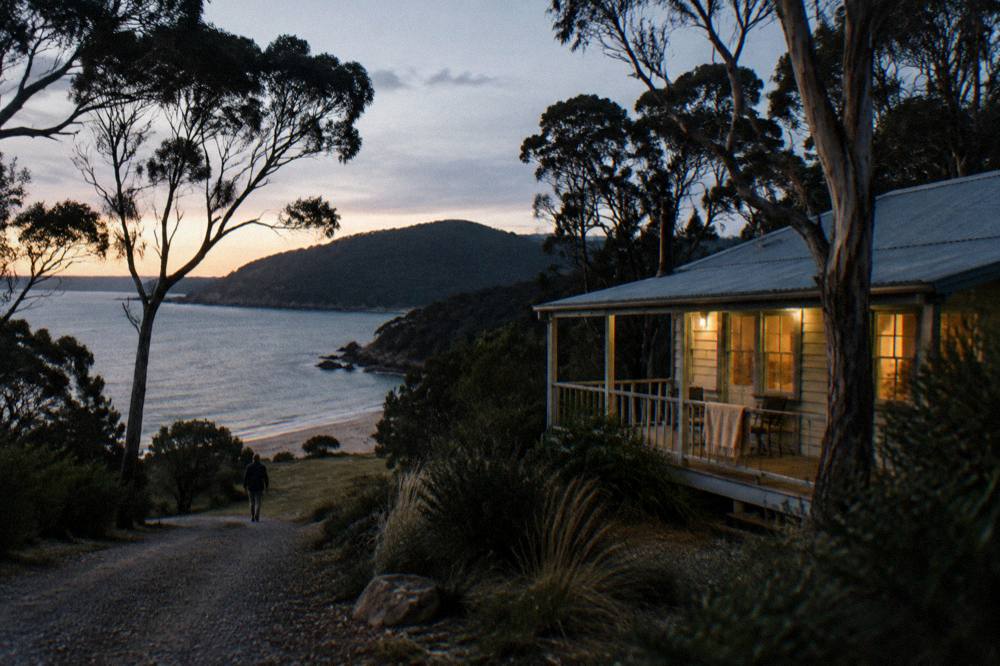
That last option deserves more attention than it gets. The three-day Tasmanian highlights loop, rated 4.8 from 29 reviews and from A$455 per person, moves between Hobart, Port Arthur and Bruny Island with hotel pickup, cheese tastings, the ferry ticket, Bonorong entry, the parks pass and Port Arthur entry all included. The Bruny and Port Arthur two-day version, rated 4.8 from 15 reviews and from A$310 per person, covers similar ground in less time. Neither includes accommodation, so you sleep in Hobart between guided days, which on an island where beds are scarce is less a compromise than a strategy.
Independent travellers booking their own beds should work village first, dates second, and everything else after. On Bruny Island Tasmania Tours we keep the full roster of guided days alongside this accommodation advice, because the two decisions, where you sleep and whether you drive, are really one decision.
| Traveller type | Best base | Why |
|---|---|---|
| Family with children | Adventure Bay | Calm shallow beach, fuel and store nearby, cruise departure point |
| Couple, food-focused | Alonnah | Central drives, Hotel Bruny dinner, Bread Fridge around the corner |
| Budget or wildlife camper | South Bruny campgrounds | A$10 to A$18 per night, dusk penguins and wallabies on your doorstep |
| Late arrival or early ferry | Dennes Point or Barnes Bay | Minutes from Roberts Point terminal |
| Non-driver or no-car traveller | Hobart hotel plus combo tour | Every transfer, ferry and pass handled, from A$305 per person |
Whatever you choose, book the ferry-adjacent decisions early in peak season: the bed, the dinner table and, if you want it, the guided day. Free cancellation terms vary by listing, with most roster tours allowing free cancellation but the cutoff differing, so read the booking page before you commit.
Common Questions About Bruny Island Accommodation
Where To Stay On Bruny Island: Adventure Bay, Alonnah Or Kettering?
Adventure Bay for beaches, the Fluted Cape Track and cruise departures. Alonnah for a quiet central base near Hotel Bruny and the Bread Fridge. The northern end near the ferry terminal suits early arrivals; the parks page puts Hobart to Kettering at about 40 minutes, with the 20-minute crossing landing at Roberts Point.
Is It Better To Stay On Bruny Island Or Visit On A Day Tour?
Stay overnight if dusk wildlife, the southern sights and slow evenings matter to you. A guided day tour suits highlight seekers: full-day options run 9.5 to 10 hours from A$180 per person with the ferry included, while the two-day Hobart and Bruny combo, from A$305 per person, adds a night's itinerary without any island driving.
Can You Camp On Bruny Island?
Yes. South Bruny National Park has campgrounds at Jetty Beach, The Neck and Cloudy Corner, at A$10 per night for one or two campers until 2 November 2026, then A$18 per site per night for up to 6 people. The Pines campground is free. A valid parks pass is required to enter the park.
What Is The Cheapest Way To Sleep On Bruny Island?
Camping at The Pines, which carries no charge, or at the paid South Bruny sites at A$10 per night before the 3 November 2026 change. Note that camping gear, food and a vehicle or bicycle still add cost, and the only island fuel is at Adventure Bay General Store.
How Much Is The Ferry With A Vehicle?
A visitor vehicle under 6 metres pays A$58.60 return on the Regular fare from 28 September to 30 November, A$67.30 from 1 December to April, or A$50.90 on the Saver fare. All passengers including the driver travel free with the vehicle, and tickets are open returns valid 365 days.
Which Part Of Bruny Island Is Closest To The Ferry?
The northern settlements, Dennes Point and Barnes Bay, sit closest to the Roberts Point terminal. Cape Bruny Lighthouse in the far south is about 1 hour 15 minutes from the terminal by road, which is why a northern base trades ferry convenience for longer southern drives.