Bruny Island Weather By Month: What To Pack And When To Go
Bruny Island sits in the Roaring Forties, so its weather can turn four seasons into one afternoon. Here is what the Bureau of Meteorology's Cape Bruny station actually records, month by month, and how it should shape what you pack and which tours you book.
Short answer
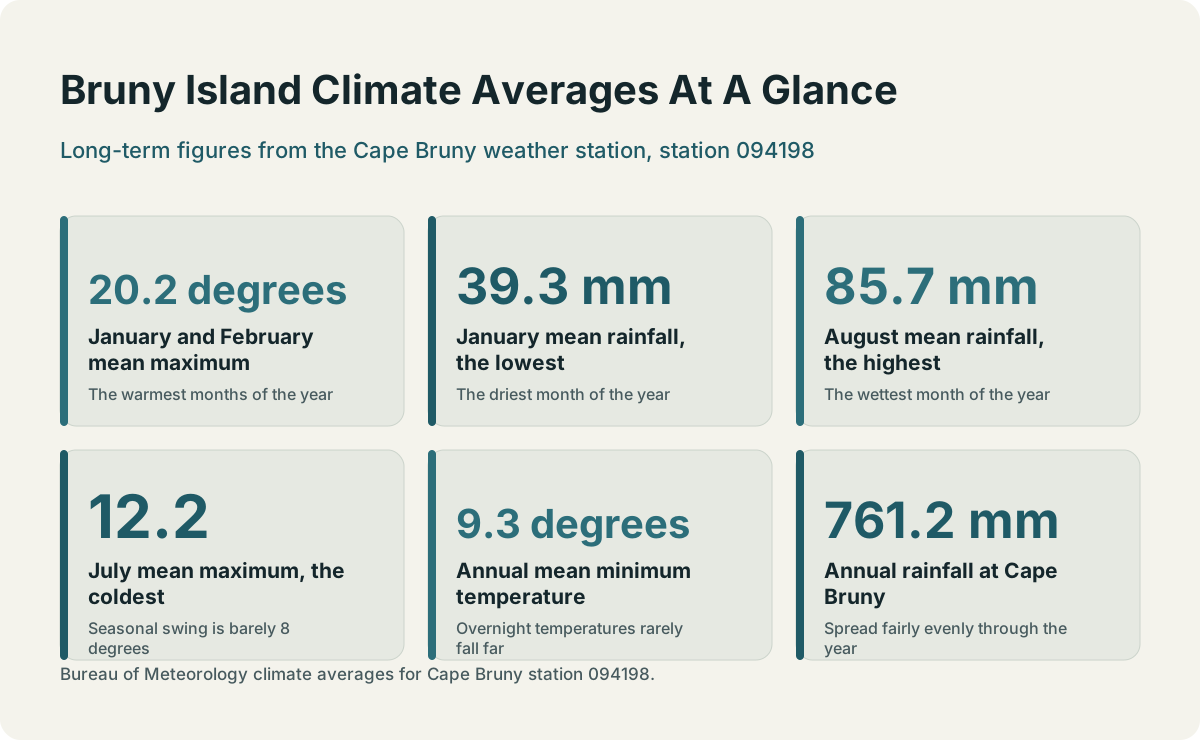
January and February are the warmest months at Cape Bruny, averaging a 20.2 degree maximum, while July is the coldest at 12.2. Rainfall peaks in August at 85.7 mm, and January is the driest at 39.3 mm. Fire danger season normally runs November to March.
Bruny Island weather is the single biggest variable in any plan for the island. The Bureau of Meteorology's Cape Bruny station, number 094198, has recorded the island's climate since 1997, and its averages paint a precise picture: warm, dry summers that hover just over 20 degrees, wet winters that push past 85 mm of rain a month, and a fire danger season that normally runs November to March. This guide works through those numbers month by month, translates them into packing lists, and connects them to the decisions that actually matter, from whether the three-hour wilderness cruise from Adventure Bay will be a smooth run or a thrill ride, to which month gives you the longest daylight for a full island day. If the wilderness cruise is the main draw for your trip, the guide to Adventure Bay and its cruise pier covers the beach, museum and departure point in detail.
Weather on Bruny is not just a comfort question, it decides which tour you should book. An open-boat cruise, a 20-minute scenic flight and a coach-based gourmet tasting day all interact with the forecast differently, Calm seas suit the cruise, clear skies the flight, and coach days are the most forgiving.
What Is The Average Weather On Bruny Island?
Bruny Island's climate is maritime and mild, with the warmest months, January and February, averaging a 20.2 degree maximum and the coldest, July, averaging 12.2. Annual rainfall at the Cape Bruny station totals 761.2 mm, spread fairly evenly through the year with a January minimum of 39.3 mm and an August maximum of 85.7 mm. Overnight temperatures rarely fall far: the annual mean minimum is 9.3 degrees.
The numbers come from the Bureau of Meteorology's Cape Bruny station on the island's south, the official long-term record for the area, published at the BoM climate averages table for station 094198. Two things stand out when you read the table closely. First, the seasonal swing is narrow: barely 8 degrees between the warmest and coldest monthly mean maximums, which is why locals layer clothing rather than swap wardrobes. Second, no month is genuinely dry. Even January's 39.3 mm average means rain somewhere in most weeks, and the island's position in the path of southern ocean weather systems means conditions can change within hours.
| Month | Mean max (C) | Mean min (C) | Mean rainfall (mm) |
|---|---|---|---|
| January | 20.2 | 12.4 | 39.3 |
| February | 20.2 | 12.4 | 50.9 |
| March | 18.9 | 11.7 | 53.1 |
| April | 16.7 | 10.1 | 56.2 |
| May | 14.4 | 8.7 | 69.3 |
| June | 12.6 | 7.3 | 76.3 |
| July | 12.2 | 6.7 | 72.7 |
| August | 12.9 | 6.7 | 85.7 |
| September | 14.5 | 7.5 | 70.8 |
| October | 15.6 | 8.3 | 70.9 |
| November | 17.0 | 9.6 | 56.7 |
| December | 18.6 | 10.7 | 58.2 |
Read as seasons, the table says summer is short and gentle, autumn is the sweet spot, winter is wet but never bitter, and spring warms slowly while staying damp. October and September both sit near the top of the rainfall table, which surprises visitors who assume Tasmanian spring is drier than winter. It is not, at least not on this coast.
Which Months Have The Best Weather For A Bruny Island Tour?
January and February offer the warmest, driest conditions on paper, both averaging a 20.2 degree maximum with January's 39.3 mm the lowest rainfall of the year. March and April trade two degrees of warmth for thinner crowds and still-reasonable rain. The shoulder months of October and November are wetter, at 70.9 and 56.7 mm, but milder than most visitors expect.
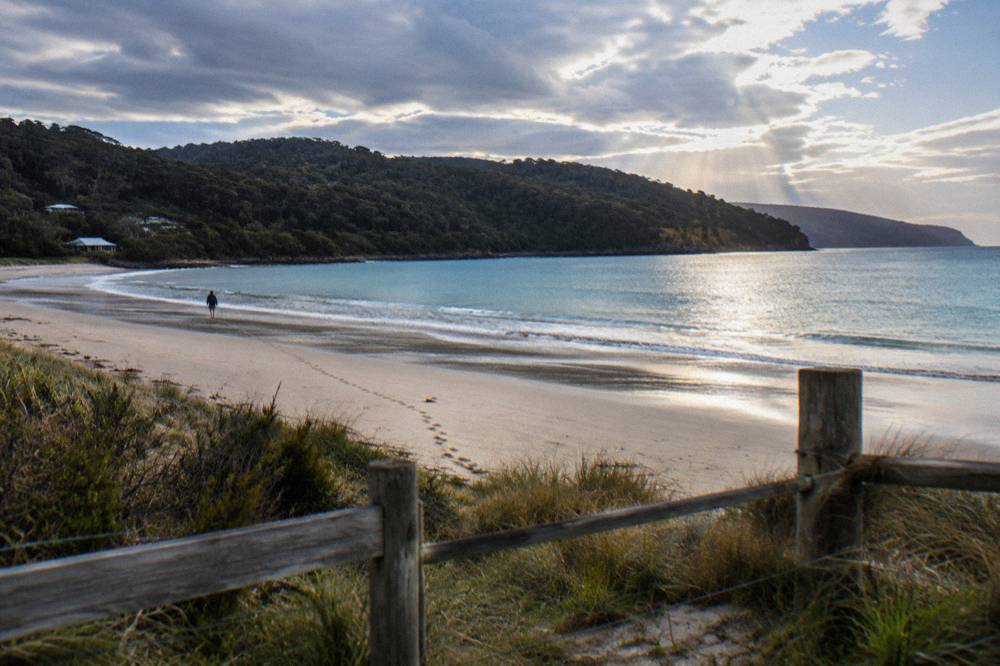
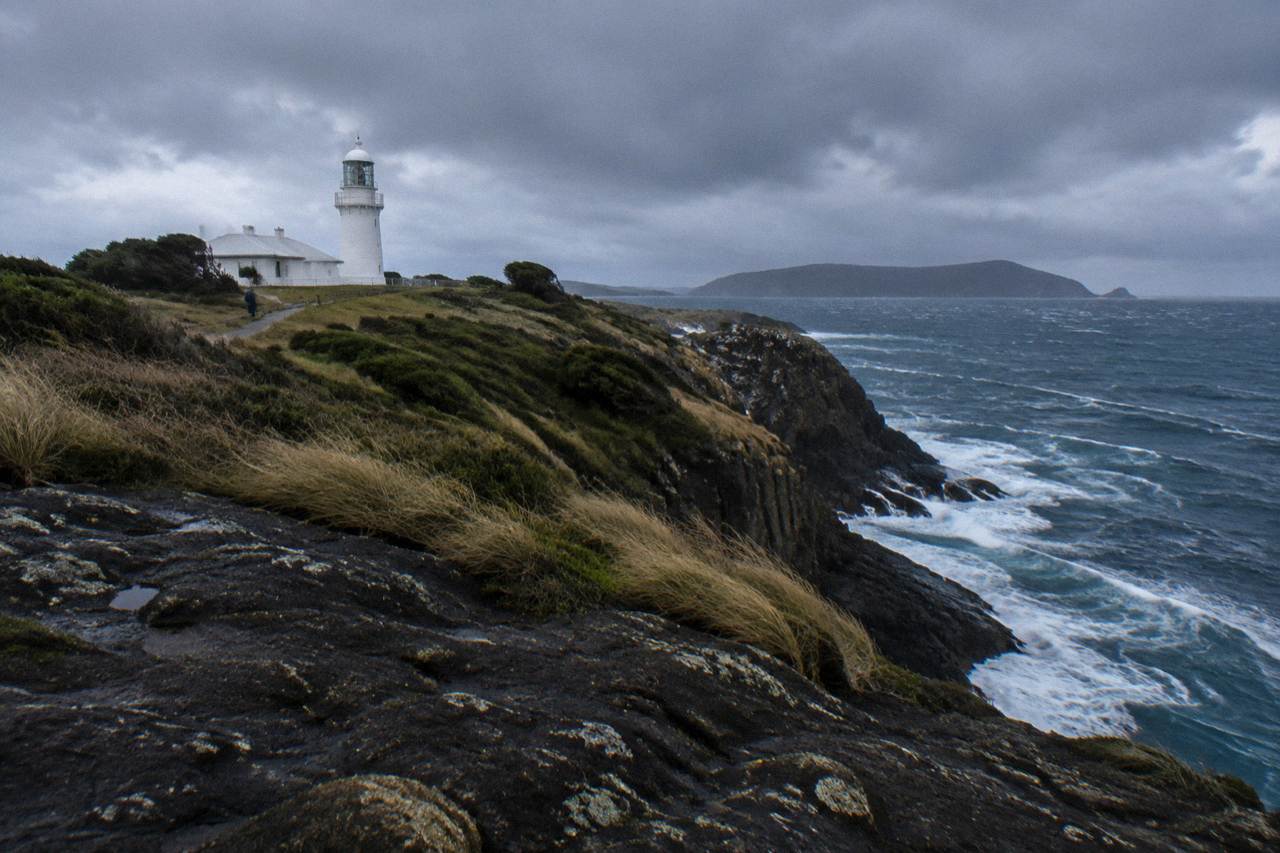
Paper averages only tell part of the story. Because Bruny Island is an island off an island, the weather you experience on a given day can differ from the Hobart forecast, and the exposed south around Cape Bruny and The Friars runs cooler and windier than sheltered Adventure Bay on the east. A day that feels like shorts weather at the beach can feel close to winter at the lighthouse, an hour and fifteen minutes' drive south of the Roberts Point ferry terminal. For a closer look at the island's most sheltered and family-friendly corner, our guide to Adventure Bay's beaches, museum and cruise pier covers what to expect when the wind is blowing elsewhere.
This is why the choice of tour matters as much as the choice of month. A coach-based day such as the Pennicott Gourmet Tasting Day, from A$290 per person with a 4.8 rating from 581 reviews, spends much of its 9.5 hours indoors or between producers, so a shower costs you little. The three-hour wilderness cruise is the opposite bet: an open boat on exposed coastline, where wind and swell are part of the product rather than a defect. One guest review of the cruise-plus-day-tour version puts it plainly: "Great tour, weather was great, got my thrill ride with all the big waves, got to see wildlife and awesome scenery would highly recommend."
The 20-minute scenic flight from Great Bay, from A$200 per person, is the most weather-sensitive product on the roster: it is a new listing with no reviews yet, and any flight depends entirely on conditions on the day. If you book a flight for a winter visit, treat it as a plan rather than a promise, and keep a flexible day around it.
How Much Daylight Do You Get On Bruny Island Through The Year?
A December visit gives you light from early morning to late evening, while a June visit leaves little time outside the middle of the day.
The practical consequence is for the 9.5 and 10-hour day tours. In midsummer, a tour that leaves Hobart in the morning and returns in the evening still leaves you daylight either side of it. In midwinter, the same tour consumes nearly all the usable light, so if you want to see The Neck at dusk for penguin viewing, or catch a late view from the Cape Bruny Lighthouse grounds, the calendar matters (see Penguin Times At Bruny). The lighthouse grounds are open any time, with vehicle access from 9.30 am to 4.30 pm, so short winter days squeeze that window.
Fire season interacts with daylight too. The Tasmanian fire danger season normally runs November to March, which overlaps exactly with the long-daylight months. Total fire bans can close walking tracks and restrict access to national park areas on high-risk days, so check the Parks and Wildlife Service Tasmania alerts page before any summer walk, including the steep Fluted Cape Track with its unprotected cliff edges.
For anyone weighing a cruise against the calendar: summer cruises get more light on the water and generally gentler swells, but the cruise runs year-round, and the operator supplies wet weather jackets on the open boat. Warm, layered clothing is the standing recommendation for any departure, whatever the season.
What Should You Pack For Bruny Island In Summer?
Pack for a mild, changeable summer: layers you can shed, a windproof and showerproof outer layer, sun protection and sturdy shoes. Summer days average 20.2 degrees at Cape Bruny, but the wind off the Southern Ocean can strip the warmth from a still afternoon in minutes, and even the driest month averages 39.3 mm of rain. A warm layer for the boat is not optional.
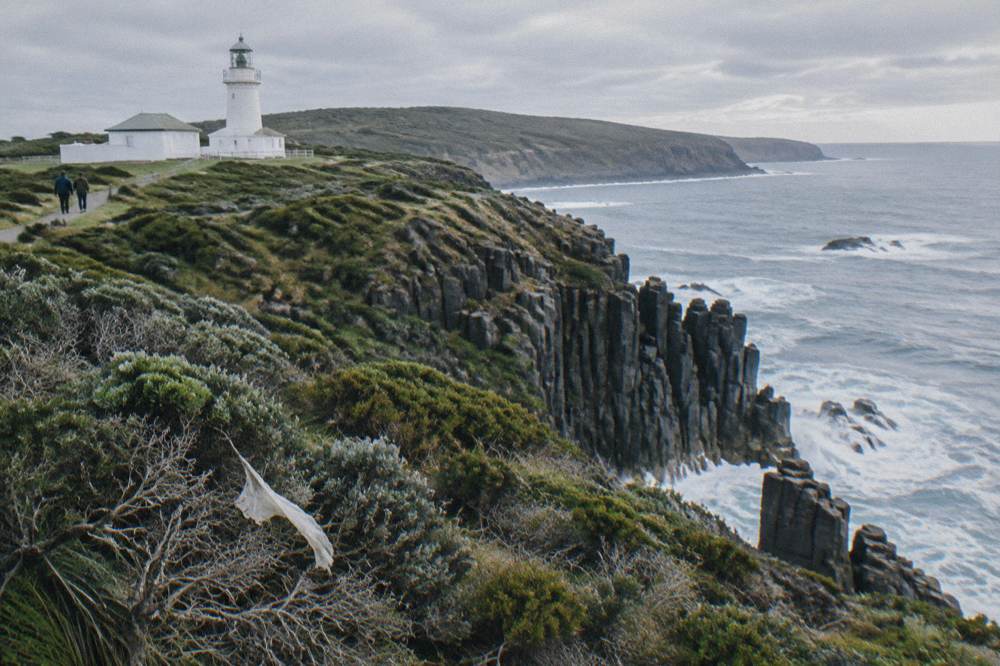
Summer packing errors on Bruny run in one direction: visitors dress for the 20-degree forecast and forget the wind chill of an open boat. If the three-hour wilderness cruise is on your itinerary, the listing's own guidance is warm layered clothing, with jackets provided. Binoculars, a strap for your hat and a dry bag for phones are the small items that make the difference.
| Season | Typical mean max | Rain per month | Packing essentials |
|---|---|---|---|
| Summer (Dec to Feb) | 18.6 to 20.2 C | 39.3 to 58.2 mm | Layers, windproof jacket, sunscreen, hat, sunglasses, sturdy shoes |
| Autumn (Mar to May) | 14.4 to 18.9 C | 53.1 to 69.3 mm | Mid-layers, rain jacket, waterproof footwear for tracks |
| Winter (Jun to Aug) | 12.2 to 12.9 C | 72.7 to 85.7 mm | Warm coat, beanie and gloves, waterproof everything, thermals for boats |
| Spring (Sep to Nov) | 14.5 to 17.0 C | 56.7 to 70.9 mm | Rain jacket, layers, mud-capable shoes, spare socks |
One more summer note: the fire danger season means November to March days can carry total fire bans. That affects campers most directly, and the island's campgrounds, A$10 per site per night for 1 or 2 campers until 2 Nov 2026, then A$18 for up to six people from 3 Nov 2026, sit inside that risk window. If you are pairing a camping trip with a tour, read up on the practicalities in the Bruny Island camping guide before you commit to dates.
What Should You Pack For Bruny Island In Winter?
Pack for wet and wind rather than for cold in the alpine sense: winter mean maximums sit between 12.2 and 12.9 degrees, but August averages 85.7 mm of rain, the wettest month of the year. A proper waterproof shell, insulated mid-layers, waterproof footwear and a beanie cover almost everything. Winter light is short, near 9 hours in late June, so plan days tightly.
Winter on Bruny rewards a different kind of visitor. The island is quiet, the light is dramatic, and the food and whisky producers that anchor a gourmet day are at their cosiest. This is the season to lean toward tours that spend time indoors between viewpoints: the Safaris Lighthouse And Lunch Day, from A$280 per person with a 4.8 rating from 1,003 reviews, pairs a guided Cape Bruny Lighthouse climb with oysters at Get Shucked, chocolate and honey tastings and a one-course lunch at Hotel Bruny, all in a small group capped at 20. Other pages covering the same trip are gathered on Bruny Island Tasmania Tours.
The lighthouse itself, first lit in 1838 and the only southern Tasmanian lighthouse open for tours, was built for exactly this coastline: 1836 construction, de-commissioned lighting in 1996, and a wind exposure that makes the climb bracing in any month. In winter, the 30-minute guided climb, from A$25 per person with a 4.9 rating from 316 reviews, is best booked with the weather window in mind rather than the clock.
How Does Weather Affect The Wilderness Cruise?
The Bruny Island wilderness cruise runs in an open boat on exposed coastline, so wind and swell shape every departure: wet weather jackets are provided and warm layered clothing is recommended on the operator's own material. The cruise operates year-round, but neither wildlife sightings nor smooth water are promised. Weather and operations decide each sailing, and cancellations are the operator's call.
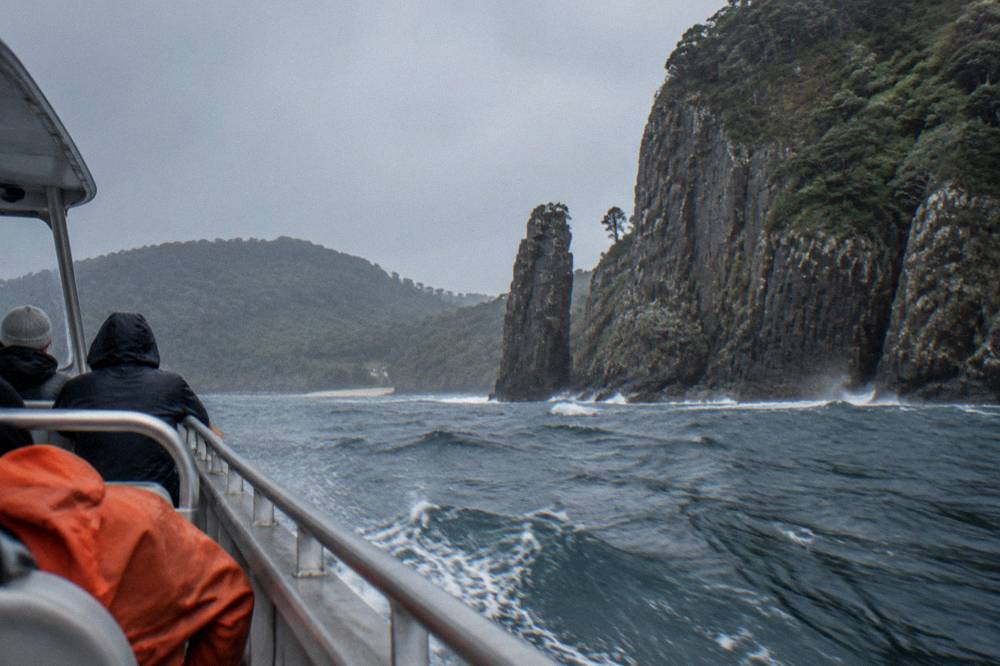
The three-hour cruise from Adventure Bay, from A$190 per person with a 4.8 rating from 632 reviews, travels the dolerite coastline looking for seals, dolphins and sea birds. The park's own pages record Australian fur seals around The Friars and about 120 bird species on the island, but no operator can guarantee a sighting on any given day, and honest planning treats wildlife as a bonus rather than the purchase.
Wind matters more than rain for this product. A drizzly day with light wind can be a superb cruise day; a clear day with a strong southerly can mean spray, spray and more spray. If you are booking from Hobart, note the A$190 price covers the cruise only, departing Adventure Bay, and the bus-and-ferry connection from Hobart is priced separately on the listing, so check the weather forecast for Bruny's east coast rather than the city forecast when you pick your day. For a deeper comparison of the cruise options, including the full-day version that adds a bus tour and lunch, see the guide to Bruny Island cruises.
Free cancellation up to 24 hours before the tour applies to the cruise listings, which gives you a genuine escape hatch if the forecast turns. Most roster listings allow free cancellation but the cutoff differs, so read the booking page for whichever product you choose.
Which Tours Work Best When The Forecast Looks Bad?
Coach and small-bus food tours shrug off bad weather best, because most of their running time is indoors at producers and restaurants. The Pennicott Gourmet Tasting Day, from A$290 per person, includes tastings and a beachside lunch. The Tassie Tours Budget Day, from A$180 per person, keeps live commentary and the ferry crossing but leaves food to buy separately. Hikes and flights suffer most in rain and wind.
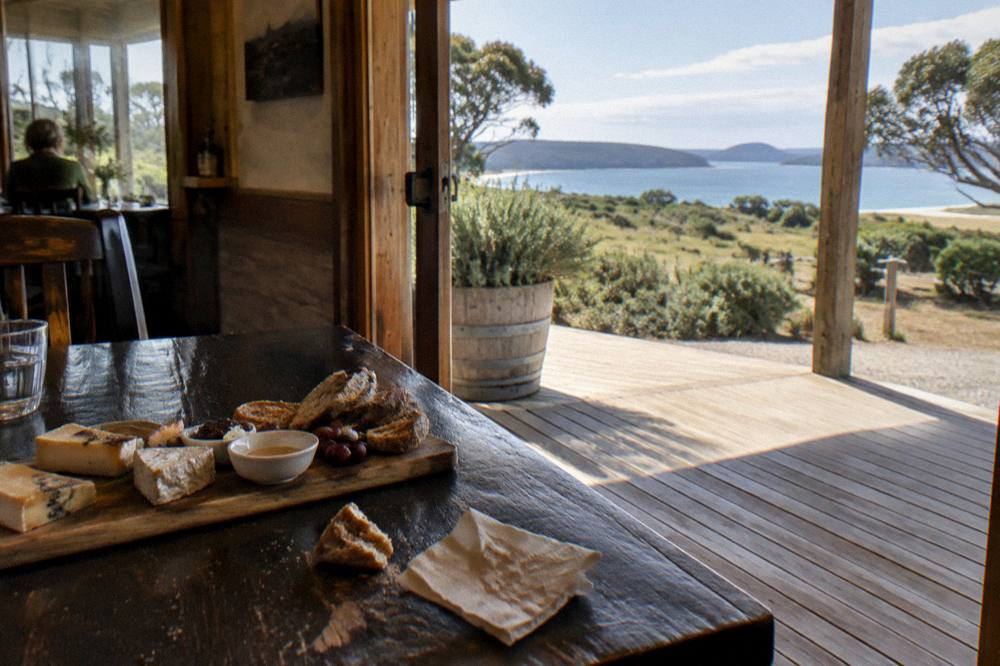
The rain-day hierarchy is straightforward. A gourmet coach day converts a wet front into a long lunch: fudge, honey, mead, cheese and ale tastings fill the hours between viewpoints, and the coach does the driving. Reviews bear this out, with one guest writing of the gourmet day, "Had the best day taking in the sights of Bruny Island with guide Louis. He was informative and had a great knowledge of the island. The food was spectacular and overall a great day." Another notes the itinerary itself: "Wonderful trip all around Bruny. Dan was an excellent guide and had genuine rapport with the operators who were all happy to see us and him."
The budget full-day minibus tour, 10 hours, up to 20 guests, from A$180 per person with a 4.7 rating from 938 reviews, is the value pick for a doubtful forecast: it includes hotel pickup in the Hobart CBD, the round-trip ferry, live commentary and the National Parks Pass, with food and drinks paid for separately. One guest review singles out the variety: "I cant choose 1 great spot as it was all different the whole day from barge ride to pub lunch to lighthouse,Forrest walk to chocolate shop.The scenery was just magnificent, a must if you are visiting Hobart!!"
At the other end of the exposure scale, the Hike And Taste small-group day, from A$169 per person with a 4.8 rating from 76 reviews, spends its morning hiking Bruny's coast to the Arch and climbing stairs to 360-degree views before an afternoon of tastings. In steady rain the hike half loses most of its appeal, so that is a booking to make when the forecast is confident. Its cancellation terms are stricter than most of the roster, free cancellation applies up to 2 days before the tour rather than 24 hours, which reflects how much the weather decides that product.
When Is Fire Danger Season And Why Does It Matter For Visitors?
Tasmania's fire danger season normally runs November to March, which covers Bruny Island's warmest and busiest months. On high-risk days, walking tracks can close and campfires are banned, and total fire ban days can restrict park access. The practical rule for summer visitors is to check official alerts each morning rather than assume a track or sight is open.
The overlap matters because November to March is exactly when most visitors come: the warm months, the long daylight, the berry and produce season. The Fluted Cape Track, one of the 60 Great Short Walks, is steep with unprotected cliff edges at the best of times, and fire weather adds a second reason to treat it with respect on hot, windy days. Beaches on the island are unpatrolled, and summer swells at Cloudy Bay draw surfers who read conditions carefully.
For a summer itinerary built around walking, the safest structure is to book the weather-proof components, a food tour or lighthouse day, and leave the hikes flexible. Conditions change, and the Parks and Wildlife Service Tasmania alerts page is the authoritative source on any given day.
What Is The Best Month Overall For A Bruny Island Trip?
March and April are the strongest all-round months: mean maximums of 18.9 and 16.7 degrees, rainfall of 53.1 and 56.2 mm, thinning crowds and full producer hours. February matches March for warmth but carries more visitors. For weather-tolerant travellers, winter trades warmth for quiet, and the island's food days carry the itinerary.
Every month on Bruny has a case. January and February give the warmest water, the longest light and the busiest producers, at 20.2 degree maximums and January's 39.3 mm, the year's driest figure. March keeps most of that warmth with fewer people on the ferry queue. May through August suits visitors whose itinerary is cheese, oysters, whisky and the lighthouse, with rain jackets close at hand. September and October are the wettest spring months on paper, but the island greens up, and those months still leave plenty of workable days between the showers.
The final word on month choice is that Bruny rewards the flexible. If your dates are fixed, pick the tour to fit the season, coach and tastings in the wet months, cruise and flight in the stable ones. If your tour is fixed, pick the month: the cruise and the scenic flight both want the calmer statistics of late summer and autumn.
For travellers pairing Bruny with a longer southern Tasmania stay, the multi-day combos such as the Three Days, Hobart To Bruny loop, from A$455 per person with a 4.8 rating from 29 reviews, spread the weather risk across days, which is a quietly powerful argument for them in the shoulder season.
Common Questions About Bruny Island Weather
What Is The Average Weather On Bruny Island?
The Cape Bruny station records an annual mean maximum of 16.2 degrees and a mean minimum of 9.3, with 761.2 mm of rain across the year. January and February are the warmest months at a 20.2 degree mean maximum, July the coolest at 12.2, and August the wettest at 85.7 mm.
Which Months Have The Best Weather For A Bruny Island Tour?
January and February are warmest and January is the driest at 39.3 mm, but March and April offer nearly the same warmth with fewer crowds and 53.1 to 56.2 mm of rain. Coach-based food tours are the most weather-proof choice in the wetter months.
How Much Daylight Do You Get On Bruny Island Through The Year?
Long December days suit full 10-hour tours and dusk penguin viewing, while June days compress winter itineraries.
What Should You Pack For Bruny Island In Summer?
Layers, a windproof and showerproof jacket, sun protection and sturdy shoes. Summer mean maximums reach only 20.2 degrees and the wind on the open cruise boat chills fast, so warm layers are recommended even in January.
How Does Weather Affect The Wilderness Cruise?
The cruise runs in an open boat on exposed coastline, with wet weather jackets provided and layered clothing recommended. Wind matters more than rain, wildlife sightings are never promised, and the operator decides each sailing.
When Is Fire Danger Season On Bruny Island?
The Tasmanian fire danger season normally runs November to March. On high-risk days tracks can close and fires are banned, so summer visitors should check the Parks and Wildlife Service Tasmania alerts page each day rather than assume access.