White Wallabies On Bruny Island: Where To Spot Them
Bruny Island is one of the few places where a white Bennett's wallaby can be seen grazing in a paddock, and the Parks and Wildlife Service Tasmania page for South Bruny National Park points to a specific spot: near the Fluted Cape entrance, at dusk.
Short answer
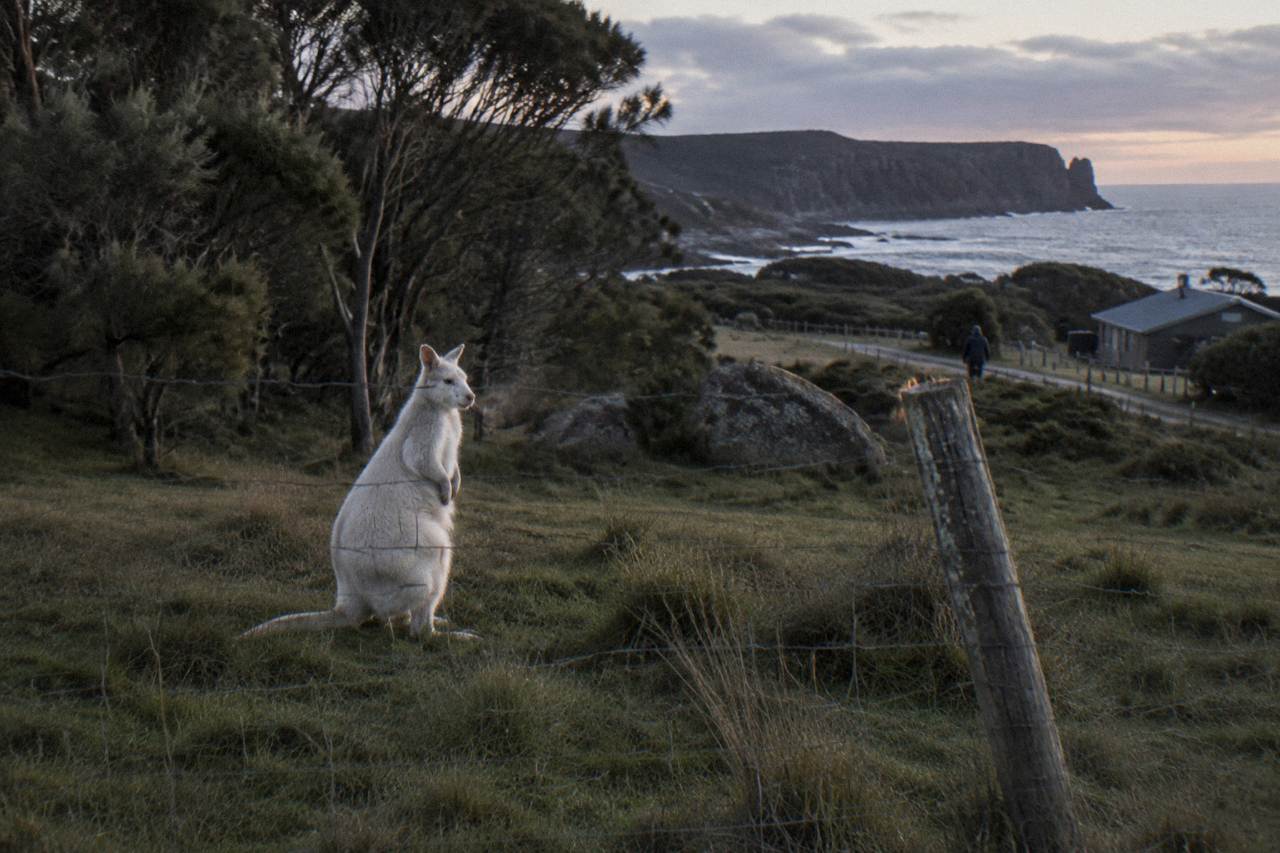
White wallabies on Bruny Island are a white genetic variant of Bennett's wallabies, not albinos. The park's own page says they can be seen feeding in paddocks at dusk near the Fluted Cape entrance to South Bruny National Park. Day tours that reach the south include a 10-hour lighthouse day from A$280 per person, and sightings are never guaranteed.
Bruny Island carries a strange genetic footnote that most visitors drive straight past. Among the island's ordinary grey Bennett's wallabies lives a white variant, and the Parks and Wildlife Service Tasmania page for South Bruny National Park names the place to look: paddocks near the Fluted Cape entrance to the park, at dusk. No tour can promise you one, and no honest guide should try. What this article does instead is set out exactly what the official sources say about these animals, where to stand, which day tours actually reach that corner of the island, and what the whole trip costs once you count the ferry and the parks pass.
What Is The White Wallaby On Bruny Island?
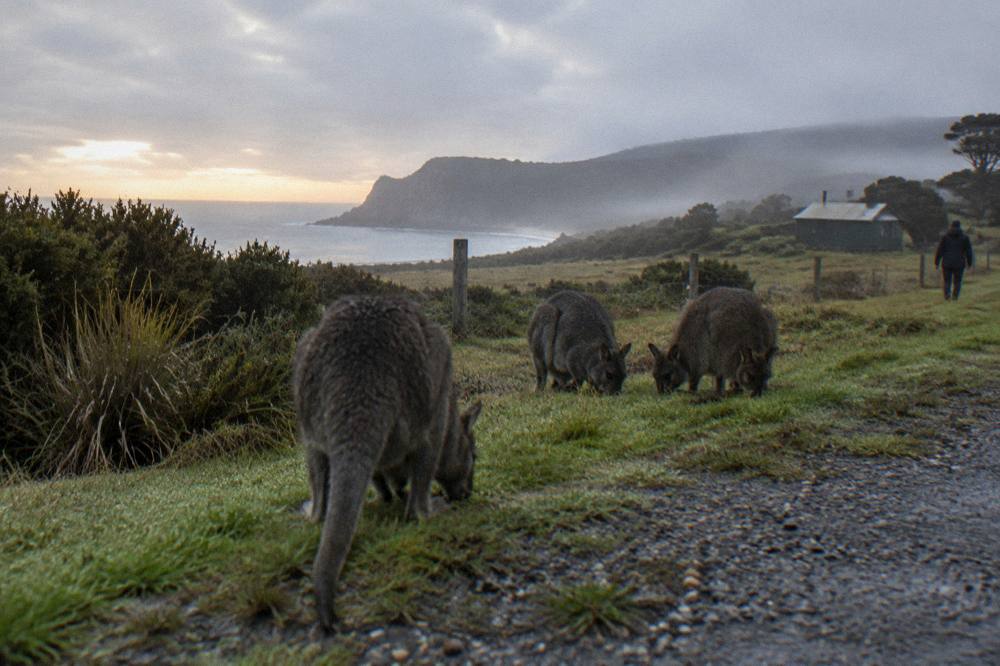
The white wallaby of Bruny Island is a white genetic variant of the Bennett's wallaby, the common grey macropod found across Tasmania. The park service describes it simply as a colour variant, which means it is not an albino and not a separate species, and it lives side by side with the normal-coloured population in and around South Bruny National Park.
The park page gives the facts plainly: unique white wallabies, a genetic variant of Bennett's wallabies, can be seen feeding in paddocks at dusk near the Fluted Cape entrance to South Bruny National Park. That is the whole official claim, and it is worth pausing on what it does not say. There is no population count, no percentage of the island's wallabies that carry the white coat, and no guarantee attached to any particular evening. A variant this visible in a closed island population is unusual enough that wildlife watchers plan whole evenings around it, but the animal behaves like any other wallaby: it grazes open grass at first light and again as the light fails, and it retreats to cover when disturbed.
The distinction between a white variant and an albino matters more than it sounds. Albinism generally pairs a white coat with pink eyes and poor eyesight, and albino animals rarely survive long in the wild. A genetic white variant like Bruny's carries normal pigmentation in the eyes and typically normal health, which is why the trait persists on the island generation after generation rather than fading out. Visitors sometimes report wallabies in shades between grey and cream, and the island's wallaby population generally is notably tame around roadsides and campgrounds, so the reliable field marks are the coat colour, the dark eyes and the size: a Bennett's wallaby stands roughly a metre tall, far smaller than the pademelons that share the undergrowth.
For planning purposes, treat the white wallaby as a dusk wildlife experience in the island's south. That single fact drives everything else in this guide: the timing, the location near Fluted Cape, the driving distances from the ferry terminal at Roberts Point, and the choice between a self-drive evening and a full day tour that finishes its island loop in the late afternoon. If your interest in these animals is the reason you are considering Bruny at all, the rest of this page is built around that decision.
Where Do You Actually See White Wallabies On Bruny Island?
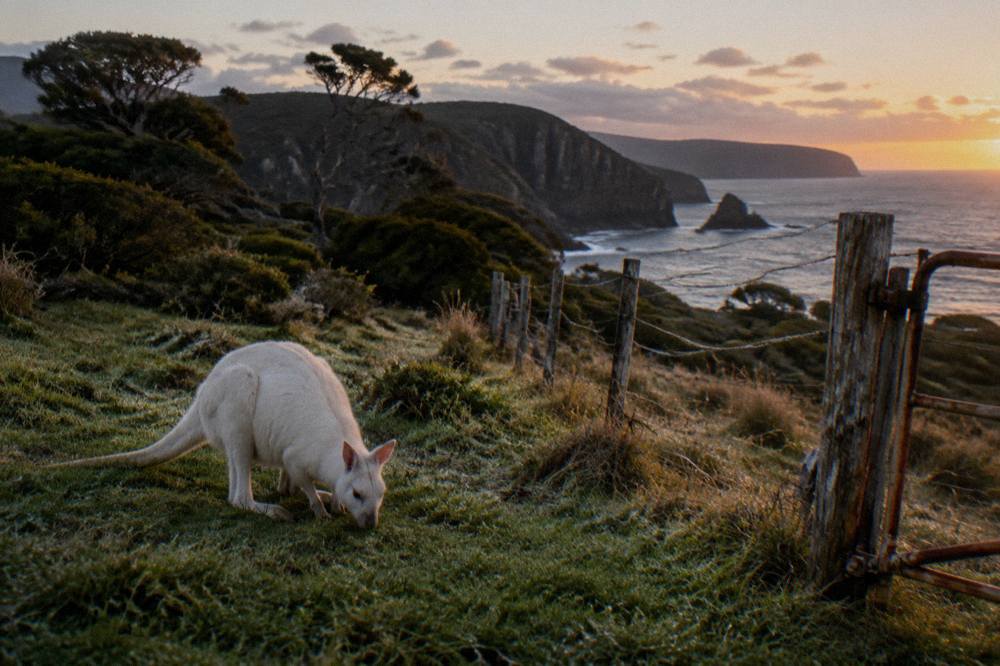
The official direction is the paddocks near the Fluted Cape entrance to South Bruny National Park, at dusk. Fluted Cape sits at the southern end of Adventure Bay on South Bruny, roughly a 35-minute drive south of the ferry terminal at Roberts Point, and the entrance the park page refers to sits along the road out of Adventure Bay toward the Fluted Cape Track.
Fluted Cape is better known to walkers as one of Tasmania's 60 Great Short Walks, a steep circuit with unprotected cliff edges that the park service flags clearly. The wallabies are not on the track. They are in the open farmland paddocks around the park entrance, where grazing land meets bush edge, and that boundary habitat is exactly where Bennett's wallabies of any colour do their evening feeding. Drive, park safely off the road, and watch the paddock edges from a respectful distance rather than walking into the field.
A few practical rules make the difference between a good sighting and a wasted evening. Stay in or beside your vehicle at first: wallabies habituate to stationary cars far faster than to standing humans. Keep well back from the fence line, never offer food, and keep dogs completely out of the equation, since even a leashed dog clears a paddock in seconds. The island's broader wildlife etiquette applies here too: quiet observation, no spotlights, and no approaching the animals for a photograph. A long lens from the roadside is the honest method.
Conditions change on the ground more than static pages admit, so before any visit it is worth checking the Parks and Wildlife Service Tasmania alerts page for current notices affecting tracks, roads or access in the south of the island. The same page covers the whole state's park network, and it is the primary source for anything that has changed since this guide was written. What it will not tell you is whether a white wallaby will appear, because no official source makes that promise, and neither does this one.
The Neck, further north, is sometimes mentioned in the same breath because of its little penguin and short-tailed shearwater colonies, also confirmed by the park service. But the Neck is a different wildlife experience at a different point on the island. Readers planning an evening around the wallabies should anchor themselves in the south, near Adventure Bay and Fluted Cape, where the official sighting directions actually point. Our guide to The Neck and its wildlife platform covers that northern alternative in full if your itinerary reaches both ends of the island.
Which Day Tours Reach The White Wallaby Country?
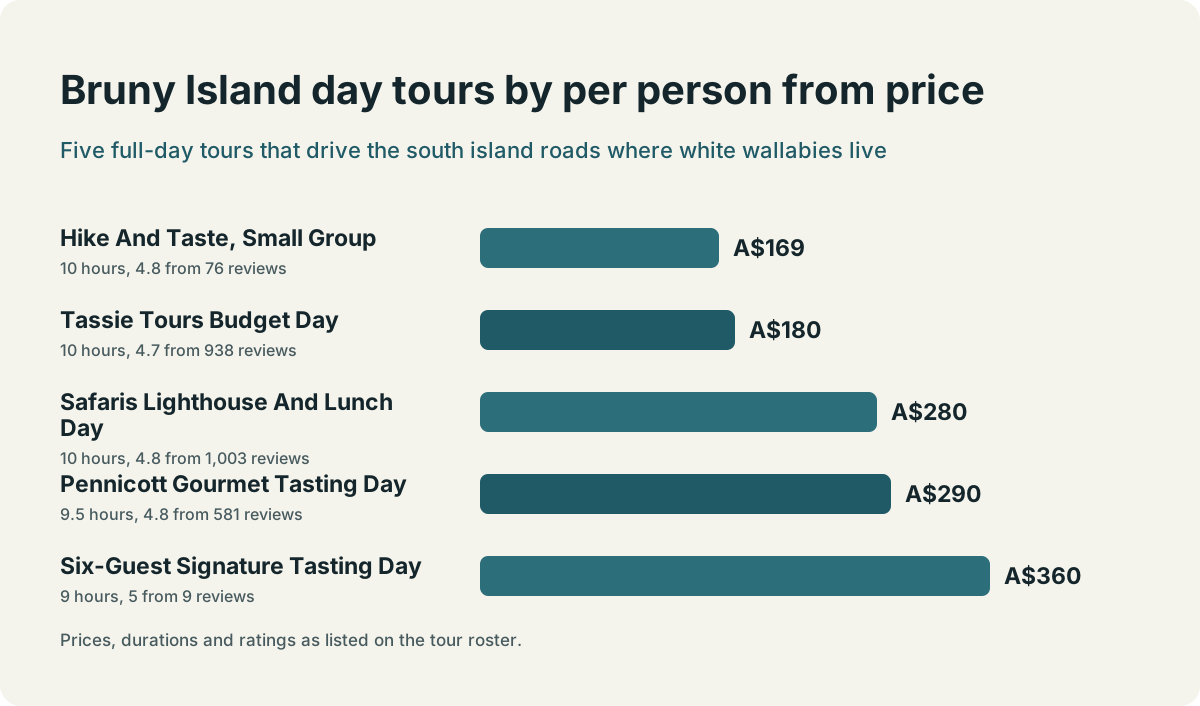
Any tour that reaches South Bruny and the Cape Bruny Lighthouse passes through the country where the white wallabies live, because the road to the cape runs out past Adventure Bay and Fluted Cape. The clearest fit on the roster is the Safaris Lighthouse And Lunch Day, a 10-hour small-group day from A$280 per person rated 4.8 from 1,003 reviews, which includes the guided lighthouse tour at the far southern tip.
The relationship between the tours and the wallabies is geographic rather than advertised. No listing on the roster promises a white wallaby, and none should. But a day tour that drives the south island loop puts you on the exact roads the park page describes, often in the mid-to-late afternoon when wallabies begin moving toward open ground, with a local guide who knows which paddocks the white animals frequent. The Safaris Lighthouse And Lunch Day is the strongest match: hotel pickup in Hobart, the return ferry, oysters at Get Shucked, chocolate and honey tastings, a one-course lunch at Hotel Bruny, the Parks Pass and the guided tour inside Cape Bruny Lighthouse, for a group of up to 20. The lighthouse and lunch day tour listing sets out the full itinerary, and its cancellation terms allow free cancellation up to 24 hours before the tour.
Two other formats work for different travellers, and the trio above shows the spread. The Tassie Tours Budget Day, from A$180 per person with a 4.7 rating from 938 reviews, is one of the lowest-priced full-day guided options on the roster: hotel pickup, ferry, live commentary and the Parks Pass, with food paid for separately. The Hike And Taste, Small Group day from Tours Tasmania, from A$169 per person and rated 4.8 from 76 reviews, limits the day to 15 guests, hikes the coast to the Arch and up stairs to 360-degree views, then finishes with produce tastings, with ferry transfers included but meals not. Both reach the south island roads; neither guarantees wildlife.
| Tour | Decision name | From (per person) | Rating | Duration | Reaches the south |
|---|---|---|---|---|---|
| Ultimate Full-Day Bruny Island Inc Exclusive Lighthouse Tour | Safaris Lighthouse And Lunch Day | A$280 | 4.8 from 1,003 reviews | 10 hours | Yes, lighthouse tour included |
| From Hobart: Full-Day Bruny Island Tour with Guide | Tassie Tours Budget Day | A$180 | 4.7 from 938 reviews | 10 hours | Yes, commentary route |
| Hobart: Bruny Island Adventure: Hike, Highlights & Tastes | Hike And Taste, Small Group | A$169 | 4.8 from 76 reviews | 10 hours | Yes, Fluted Cape area walk |
| Hobart: Bruny Island Gourmet Sightseeing Day Tour | Pennicott Gourmet Tasting Day | A$290 | 4.8 from 581 reviews | 9.5 hours | Island loop, tasting focus |
| Signature Bruny Island Tour - Hobart & SE Tasmania | Six-Guest Signature Tasting Day | A$360 | 5 from 9 reviews | 9 hours | Flexible, driver's route |
One guest review of the budget day captures what a guided loop of the island feels like from the passenger seat: "The tour went very smoothly from picked up to delivery back.I cant choose 1 great spot as it was all different the whole day from barge ride to pub lunch to lighthouse,Forrest walk to chocolate shop.The scenery was just magnificent, a must if you are visiting Hobart" That variety is the honest pitch for booking a tour to wallaby country: the day stands on its own, and the white animals are a possible bonus at the edges of it, never the promise.
When Is The Best Time Of Day To See Them?
Dusk is the time the park page names, and it is the only timing any official source commits to. White wallabies feed in open paddocks as the light fails, which in practical terms means arriving at the Fluted Cape entrance area in the hour before sunset and staying quietly until dark closes the viewing. The opposite edge of the day, first light, is the secondary window.
Bennett's wallabies are crepuscular feeders: most active at dawn and dusk, resting up in shade through the middle of the day. On an island this far south the evening window moves a long way across the year.
Weather is the quieter variable. The Bureau of Meteorology's Cape Bruny station records a July mean maximum of 12.2 degrees and a January and February mean maximum of 20.2 degrees, with mean rainfall peaking in August at 85.7 mm against January's 39.3 mm. Wallabies do not stop feeding in winter or in rain, and a cool, showery evening can be productive because the animals seem less bothered by a distant vehicle in poor light than in blazing sunshine. What rain does punish is the observer, so warm layered clothing is the consistent advice for any Bruny wildlife evening in any season.
How Much Does A Trip To See White Wallabies Cost?
A self-drive evening costs the return ferry fare for a vehicle, from A$50.90 Saver or A$58.60 Regular for a visitor vehicle under 6 metres, plus fuel for the 35 to 40 minute drive from Hobart to Kettering. A guided day tour that reaches the same roads starts from A$169 per person with the ferry, parks pass and pickup handled for you, rising to A$280 for the lighthouse day that includes lunch and tastings.
The ferry is the fixed cost every visitor pays, and its fares changed with the summer timetable. From 28 September 2026, a visitor vehicle under 6 metres pays A$58.60 Regular to 30 November, then A$67.30 Regular from 1 December to April, with the A$50.90 Saver fare available across the same period. All passengers, including the driver, travel free with the vehicle, and every ticket is an open return valid 365 days. The crossing itself takes 20 minutes, departing Kettering every 20 minutes from 6.10 am to 7.00 pm, 365 days a year. The full fare and timetable detail sits on the Island Connections (formerly SeaLink) fares page, and our Bruny Island ferry guide walks through the queueing system and the pre-purchase question in more depth.
The parks pass is the second cost, and it only bites if you enter the national park itself. A valid parks pass is required for entry to South Bruny National Park and to Cape Bruny Lighthouse: a Daily Pass costs A$49.15 per vehicle for up to 8 people, or A$24.55 per person arriving by bus, cycle or on foot, and a two-month Holiday Pass costs A$98.35 per vehicle or A$49.20 per person. Standing in a roadside paddock watching wallabies does not itself require a pass, but a south-island day that includes Fluted Cape, the lighthouse or Jetty Beach does, and several tours on the roster include the pass in the fare while others leave it to you. Our entry fees guide unpicks which is which.
| Cost item | Self-drive evening | Guided day tour |
|---|---|---|
| Ferry, vehicle under 6 m, return | A$50.90 Saver to A$67.30 Regular | Included in tour fare |
| Passengers, including driver | Free with vehicle | Included |
| Parks pass, per vehicle | A$49.15 daily, or A$98.35 holiday | Included on the lighthouse and budget days |
| Lunch and tastings | Paid separately | Included on the A$280 lighthouse day |
| Guide and commentary | None | Included |
| Typical total, one person sharing a car | Roughly A$60 to A$120 depending on sharing | From A$169 per person |
Two cash facts catch visitors out. The only fuel on the island is at Adventure Bay General Store, which happens to sit on the way to Fluted Cape, and there is no ATM anywhere on Bruny, so small producers and honesty-box stops want a card or exact change. Neither affects the wallabies, but both affect the evening you build around them.
What Other Wildlife Shares The Island With Them?
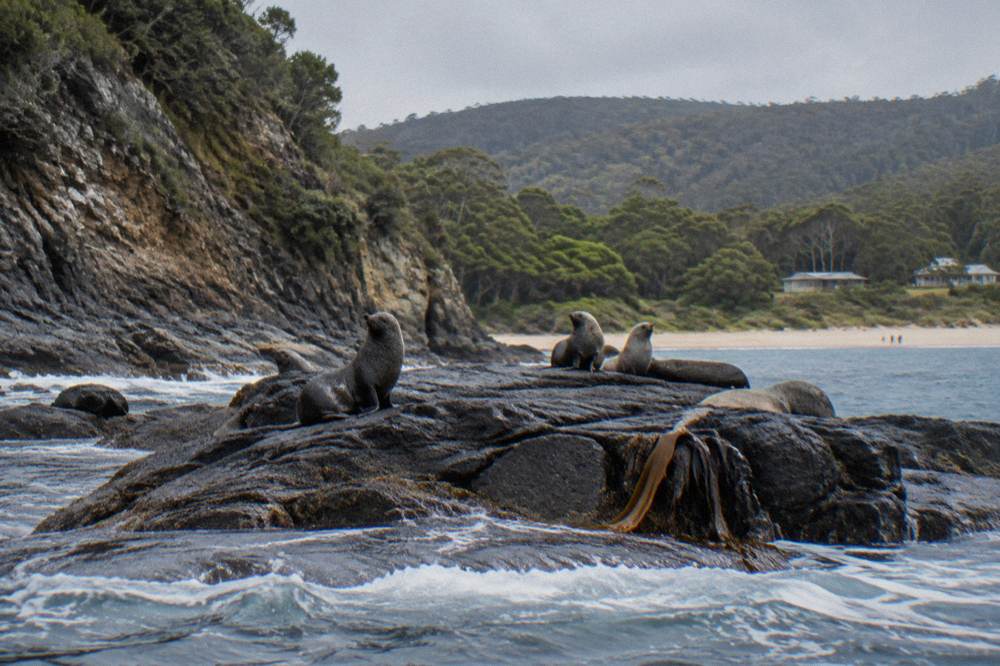
The park service records about 120 bird species on Bruny Island, alongside little penguin and short-tailed shearwater colonies at the Bruny Neck, Australian fur seals around The Friars off the south coast, and humpback and southern right whales in the surrounding marine environment. The white wallaby is one thread of a much larger wildlife fabric, concentrated at the island's southern end.
The south is where the marine wildlife gathers. The Friars, the rocky islets off the far southern coast, hold the Australian fur seal colonies, and the three-hour wilderness cruise from Adventure Bay, rated 4.8 from 632 reviews and from A$190 per person for the cruise alone, runs an open boat along the dolerite coastline past the cliffs and caves where the seals haul out. Pennicott Wilderness Journeys also runs a full-day wilderness cruise and island combination from Hobart's Franklin Wharf, from A$290 per person and rated 4.8 from 562 reviews, pairing the guided bus tour, ferry crossing and a three-hour cruise with morning tea and lunch. Neither listing promises specific animals on any sailing; the sea decides.
Birdlife rewards the patient rather than the hurried. The little penguins and shearwaters of the Neck come ashore at dusk, the shearwaters visiting Tasmanian shores from late spring to late summer to nest, and the official penguin watching guidelines from the Tasmanian government are specific: arrive for last light, use only a dim red-light torch, never shine it toward the water or the birds, no flash cameras on the beach, approach the viewing point from the land rather than along the sand, and stay quiet with minimal movement. Those rules exist because penguins abandon burrows when disturbed, and the same quiet, still, vehicle-adjacent discipline is exactly what serves you in the wallaby paddocks at Fluted Cape.
Our Bruny Island penguins guide covers the Neck colony and its rules in full. The temptation on a long summer evening is to try both ends of the island in one night, wallabies then penguins, and the geography does allow it in December when dusk runs late, but the driving between them eats most of the margin. Pick one headline wildlife experience per evening and treat the other as a next-day plan.
Should You Self-Drive Or Take A Tour?
Self-drive suits travellers who want to control the dusk timing and linger in the paddocks as long as they like, at the cost of organising the ferry, the parks pass and a dark drive back to the mainland. A day tour suits travellers who want the south island delivered whole, with a guide who knows the island's roads, producers and wildlife patterns, at the cost of a schedule set for the group rather than for the light.
The case for self-driving is timing freedom. Wallabies appear on their own clock, and a private vehicle lets you arrive early, wait properly and leave when the paddock goes quiet, which a 20-person coach cannot. The island's roads are sealed and manageable, the drive from the Roberts Point ferry terminal down to Adventure Bay is short, and the evening ferry back to Kettering runs until 7.00 pm from the island side. Against that: you are watching wildlife at dusk and then driving unfamiliar rural roads in the dark, and the last ferry does not negotiate.
The case for a tour is everything else the day contains. The reviews of guided days on this roster read like the one above: barge ride, pub lunch, lighthouse, forest walk, chocolate shop, all handled. A guide also knows where the white wallabies have been lately in a way no published page tracks, and the lighthouse day's own itinerary ends its island loop in the south, the right end of the island at the right end of the day. For travellers without a car, or those staying in Hobart on a tight schedule, the guided day is the only realistic route to wallaby country at all.
There is a third shape worth naming: the private day. The Private Eight-Hour Driver Guide, from A$991 per group for up to 4 people and rated 5 from 3 reviews, puts the schedule entirely in your hands, with a local driver-guide, Hobart pickup, the return ferry and stops at The Neck Lookout, Adventure Bay and local producers. Our private tours guide compares it with the six-guest signature days; the price covers the vehicle rather than individual seats, which changes the arithmetic for families.
What Does A Month-By-Month Plan Look Like?
There is no bad month for wallabies on Bruny, only different trade-offs between light, weather and crowds. January and February bring the warmest days at a 20.2 degree mean maximum and the latest dusks, winter brings early darkness and 12-degree days, and the shoulder months of March, April, October and November split the difference with milder weather and thinner traffic on the ferry queue.
The climate table below is drawn from the Bureau of Meteorology's Cape Bruny station, the closest official record to the wallaby paddocks. Two readings matter for a dusk trip: the mean minimum, which tells you how cold the wait gets, and the mean rainfall, which tells you how often the evening turns wet. Winter dusks are early and cold but dry-ish by the station's record; August is the wettest month on the books at 85.7 mm.
| Month | Mean max (C) | Mean min (C) | Mean rainfall (mm) | Dusk viewing notes |
|---|---|---|---|---|
| January | 20.2 | 12.4 | 39.3 | Warmest, driest, very late dusk |
| February | 20.2 | 12.4 | 50.9 | Warm, late dusk, busy island |
| March | 18.9 | 11.7 | 53.1 | Mild, dusk moving earlier |
| April | 16.7 | 10.1 | 56.2 | Comfortable evenings |
| May | 14.4 | 8.7 | 69.3 | Cool waits, quiet roads |
| June | 12.6 | 7.3 | 76.3 | Early dusk, cold, short day |
| July | 12.2 | 6.7 | 72.7 | Coldest month, earliest nights |
| August | 12.9 | 6.7 | 85.7 | Wettest month |
| September | 14.5 | 7.5 | 70.8 | Warming, spring activity |
| October | 15.6 | 8.3 | 70.9 | Showery, joeys emerging |
| November | 17.0 | 9.6 | 56.7 | Fire season begins, busy |
| December | 18.6 | 10.7 | 58.2 | Long light, peak visitors |
One seasonal note the park service raises for summer visitors: the Tasmanian fire danger season normally runs November to March, and on an island with a single road spine that matters for how you plan hot, dry, windy days. Check the alerts page linked above as part of any summer trip. A November visit also coincides with the island's running events, which draw crowds and fill accommodation, so book lodging early for that month if a dusk vigil is the centrepiece of the trip.
Planning The Evening: Practical Details
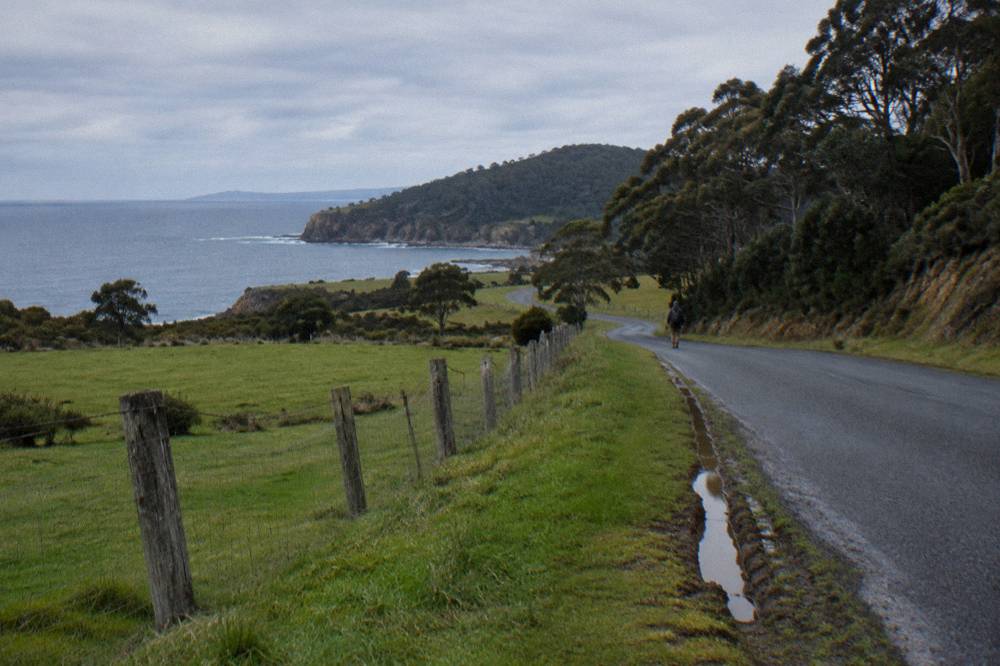
Anchor the evening in Adventure Bay or Alonnah so the drive to the Fluted Cape entrance is minutes, not the whole island. Bring warm layers regardless of season, a red-light torch rather than a white one, binoculars, a full tank from the Adventure Bay General Store, and no expectations of a guarantee: the park page says the white wallabies can be seen, and that is as far as any honest source goes.
Lodging close to the paddocks turns a rushed dusk into a relaxed one, and our Bruny Island accommodation guide and camping guide cover the options, including the park campgrounds at Jetty Beach, The Neck and Cloudy Corner, where unpowered sites cost A$18 per night per site for up to 6 people after 2 November 2026. Camping inside the national park requires the parks pass discussed above, on top of the site fee. For a one-night wildlife trip, staying on the island beats the last-ferry dash back to Kettering every time.
Photography deserves one honest paragraph. White animals against darkening paddocks fool camera metering into underexposing everything around the subject, so a wallaby that looks clearly visible to your eye can render as a grey smear at 9 pm. The workable approach is a long lens, the highest usable shutter speed the light allows, and acceptance that the memory will outperform the file. Never use flash, on the same grounds the penguin guidelines give: sudden light disturbs wildlife and, in the case of roadside wallabies, can send animals across the road into traffic.
Finally, keep the whole island in frame rather than just one animal. Travellers planning a broader trip will find our overview of things to do on Bruny Island useful, and Bruny Island Tasmania Tours exists to make exactly this kind of planning straightforward, from the ferry queue to the last paddock of the evening. The white wallaby is a rare thing, a living variant most people will never see anywhere else, and the island around it, cheese, oysters, cliffs, lighthouse, penguins, is the reason the day earns its place in your itinerary even if the paddock stays empty.
Common Questions About White Wallabies On Bruny Island
Where do you see white wallabies on Bruny Island?
The Parks and Wildlife Service Tasmania page for South Bruny National Park says white wallabies, a genetic variant of Bennett's wallabies, can be seen feeding in paddocks at dusk near the Fluted Cape entrance to the park, at the southern end of Adventure Bay.
Are Bruny Island's white wallabies albino?
No. The park service describes them as a genetic colour variant of the Bennett's wallaby rather than albinos, meaning they carry the white coat without the pink eyes and health problems associated with albinism.
Is a white wallaby sighting guaranteed?
No sighting of any wild animal is guaranteed, and no tour or official source promises one. The park page says the animals can be seen in the paddocks near Fluted Cape at dusk; treat that as a good probability in the right place at the right time, never a certainty.
What time of day is best for white wallabies?
Dusk, per the park page, with first light as the secondary window. In midsummer the evening window starts very late; in winter it arrives early.
Do you need a parks pass to watch them?
Watching wallabies from a roadside paddock does not itself require a pass, but entry to South Bruny National Park does: A$49.15 per vehicle daily, or A$24.55 per person arriving by bus, cycle or on foot. Several day tours include the pass in the fare.
Which tour is best for reaching the white wallaby area?
The Safaris Lighthouse And Lunch Day, from A$280 per person and rated 4.8 from 1,003 reviews, reaches the far south with a lighthouse tour, lunch and tastings included. The Tassie Tours Budget Day from A$180 and the Hike And Taste small-group day from A$169 also cover the south island roads.