The Neck On Bruny Island: Lookout, Penguins And Shearwaters
The Neck is the slim sand and scrub corridor that joins north and south Bruny Island, and its lookout staircase is the single most photographed stop on the island. After dark, the same spot becomes one of Tasmania's accessible places to watch little penguins and short-tailed shearwaters come ashore.
Short answer
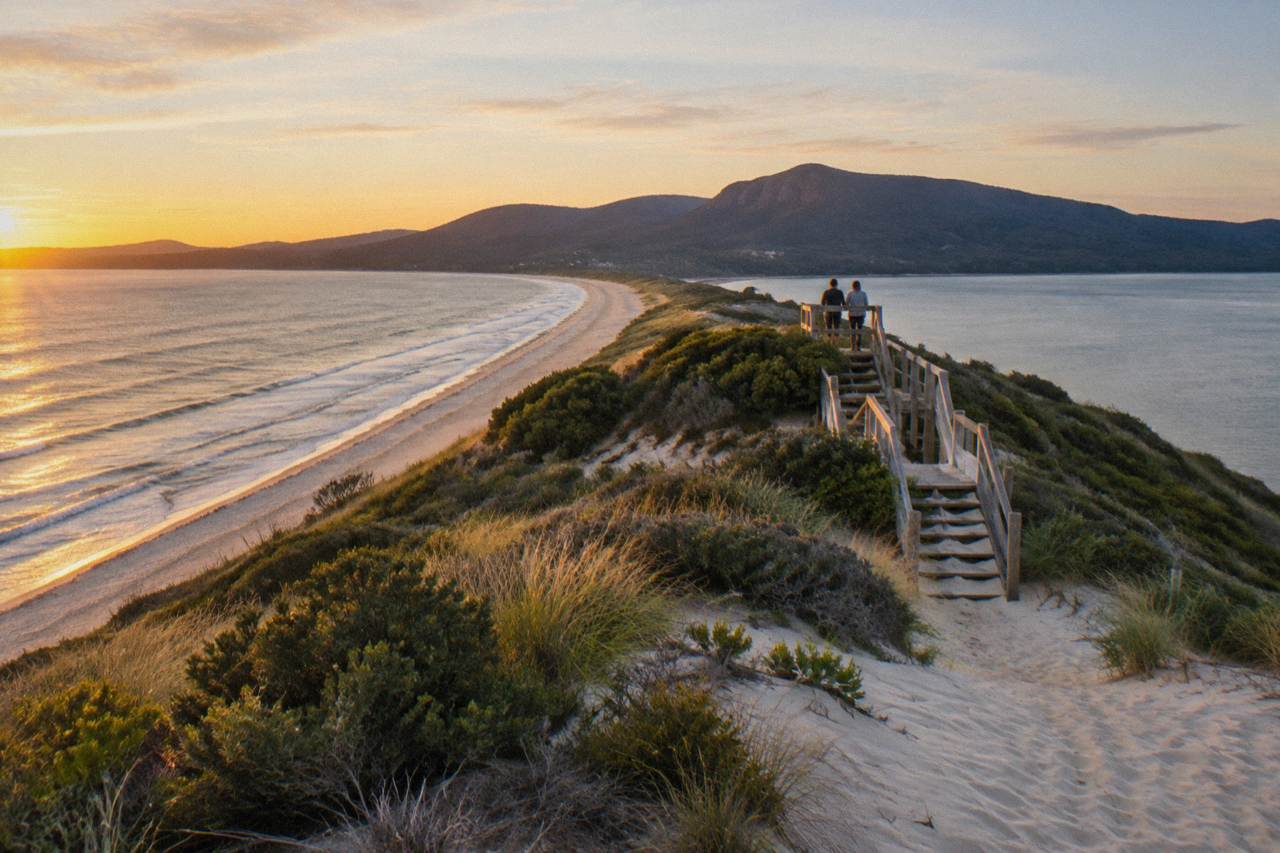
The Neck on Bruny Island is a narrow isthmus joining the island's north and south halves, crossed by the main road and watched over by a timber staircase and viewing platform in the Bruny Island Neck Conservation Area. Little penguins and short-tailed shearwaters are seen at dusk from the platform; shearwaters nest from late spring to late summer. The lookout is free to visit any time.
What Is The Neck On Bruny Island?
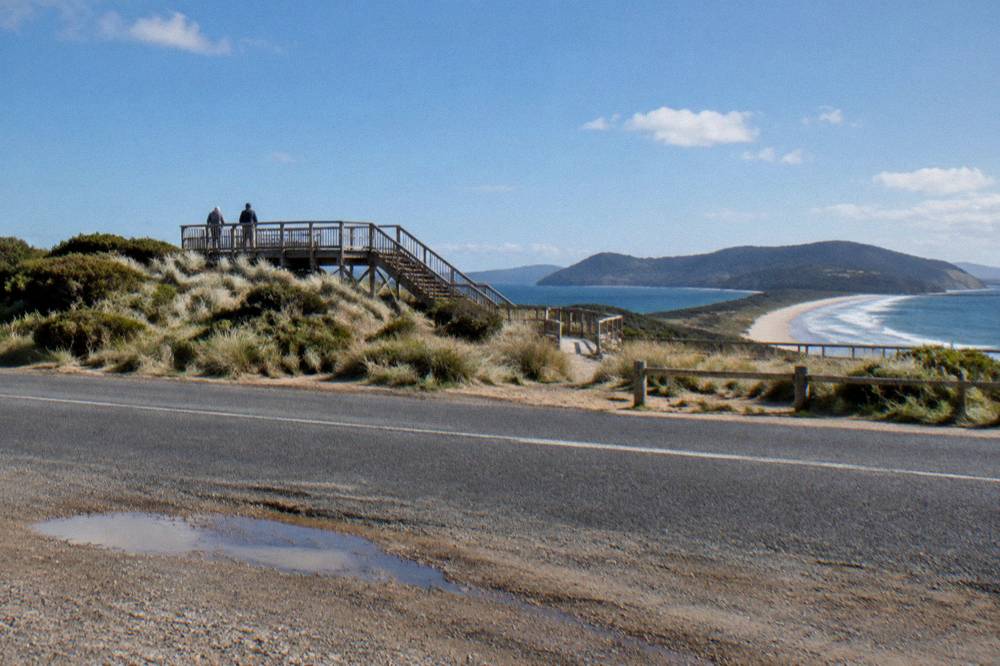
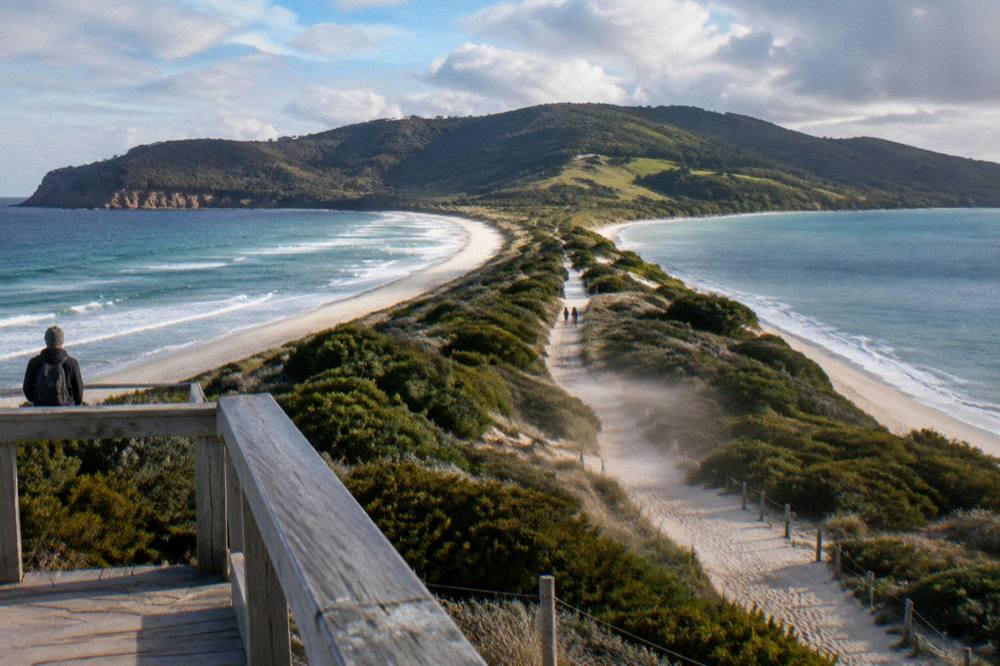
The Neck is the narrow isthmus of sand, scrub and beach that joins the north and south halves of Bruny Island, and almost every visitor crosses it because the island's main road runs over it. A timber staircase in the Bruny Island Neck Conservation Area climbs the dune to a viewing platform with 360-degree views over Isthmus Bay and Adventure Bay, where little penguins and short-tailed shearwaters can be watched at dusk.
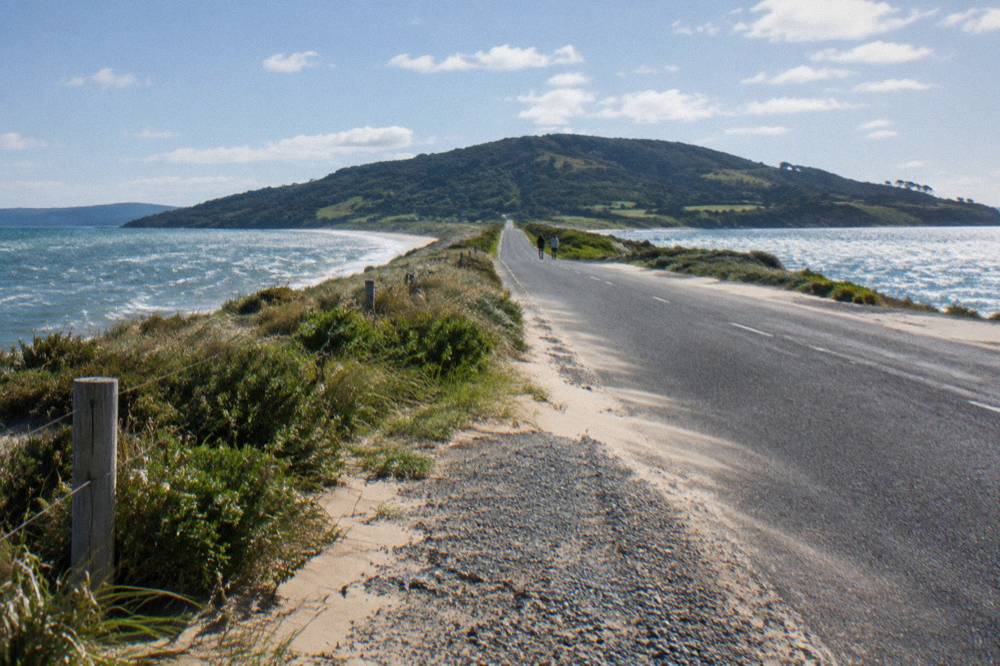
The crossing is short enough that it is easy to underestimate. You drive off the ferry at Roberts Point in the island's north, follow the main road south, and within minutes the land pinches down to a corridor of dunes with water on both sides. The staircase sits just off the road, and the climb is a few minutes of steps on a clear morning the view stretches back toward the ferry terminal in one direction and down toward the dolerite hills of South Bruny National park in the other.
The Parks and Wildlife Service Tasmania records about 120 bird species on the island, and the Neck's colonies are the wildlife feature most visitors come for. Little penguins, the world's smallest penguin, and short-tailed shearwaters, the migratory seabirds known locally as muttonbirds, both nest in burrows in the dunes here. The park's own page describes the viewing platform at the Bruny Island Neck Conservation Area as a place where shearwaters and little penguins can be seen at dusk, and the short-tailed shearwaters visit Tasmanian shores from late spring to late summer to nest.
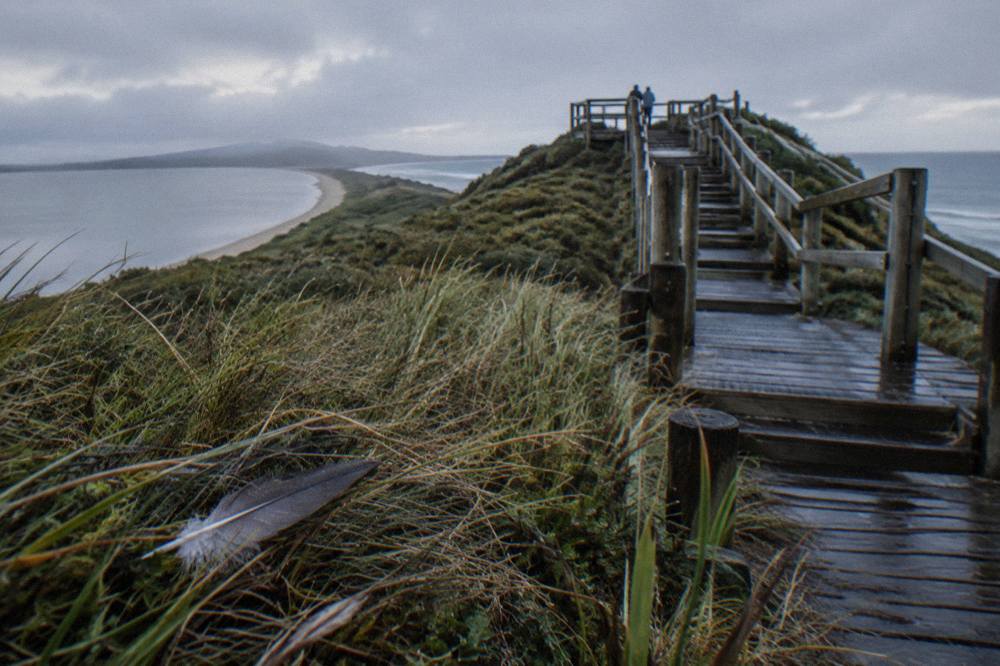
For most travellers the Neck works as a two-stop experience: the lookout by day, on the drive between the island's halves, and the platform by dusk, if the timing allows. Day tours from Hobart typically include the lookout as a photo stop, while independent visitors with a car can return in the evening when the seabirds come in. Conditions on the island change, so it pays to check Parks and Wildlife Service Tasmania alerts before any visit.
Where Is The Neck And How Do You Get There?
The Neck sits roughly midway along Bruny Island's only through road, about 20 to 30 minutes' drive south of the Roberts Point ferry terminal and north of Adventure Bay. To get there, drive 35 to 40 minutes from Hobart to Kettering, then take the Island Connections ferry, a 20-minute crossing that runs 365 days a year, departing every 20 minutes from 6.10 am to 7.00 pm, with all passengers, including the driver, travelling free with a vehicle.
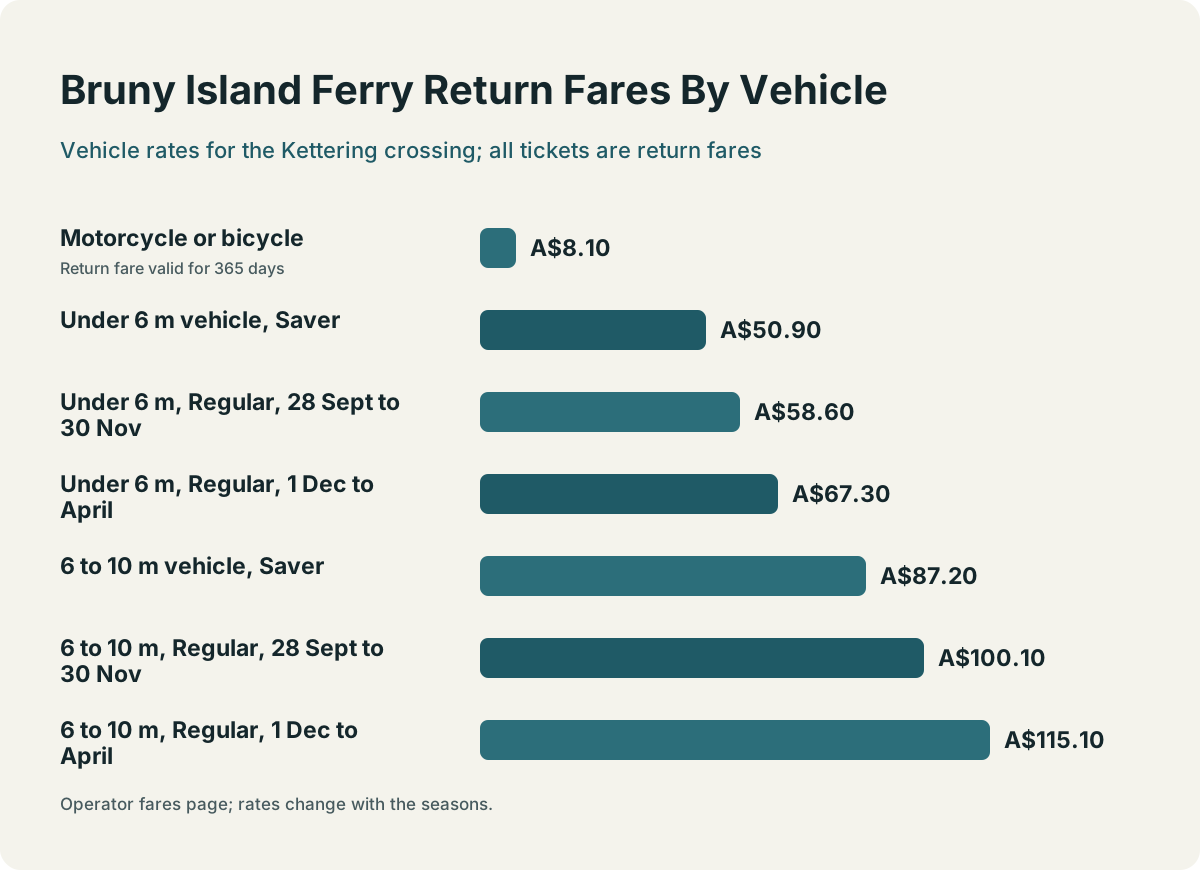
The ferry is operated by Island Connections (formerly SeaLink), and pre-purchased tickets are for the next available ferry rather than a specific departure, since the service runs on a queueing system. All tickets are return fares valid for 365 days. Tickets can be bought online in advance or at the Kettering terminal booth, and the operator's fares page lists the current vehicle rates, which change with the seasons. The visitor vehicle under 6 m return fare is A$58.60 Regular from late September to 30 November and A$67.30 from 1 December to April, with a Saver fare of A$50.90; peak pricing applies to the Regular fare only.
| Ferry ticket type | Fare (return) |
|---|---|
| Passengers, including driver, with a vehicle | Free |
| Visitor vehicle under 6 m, Regular, 28 Sept to 30 Nov | A$58.60 |
| Visitor vehicle under 6 m, Regular, 1 Dec to April | A$67.30 |
| Visitor vehicle under 6 m, Saver | A$50.90 |
| Visitor vehicle 6 to 10 m, Regular, 28 Sept to 30 Nov | A$100.10 |
| Visitor vehicle 6 to 10 m, Regular, 1 Dec to April | A$115.10 |
| Visitor vehicle 6 to 10 m, Saver | A$87.20 |
| Motorcycle or bicycle | A$8.10 |
Full fare details and the current timetable are on the Island Connections fares page. Once you land at Roberts Point, the Neck is signposted along the main road south. There is parking at the base of the staircase. Note the island's practical limits: the only fuel is at Adventure Bay General Store, and there is no ATM on the island, facts the park's own page states plainly.
If you would rather not drive, a guided day tour crosses the ferry and the Neck for you, and our overview of tours from Hobart to the island compares the formats. The trio below covers the main styles: a gourmet coach day, a budget guided minibus day, and a small-group day built around the lighthouse.
When Do The Penguins And Shearwaters Come In At The Neck?
Little penguins and short-tailed shearwaters come ashore at the Bruny Island Neck at dusk, when Natural Resources and Environment Tasmania guidance says penguins leave the water at last light under cover of darkness to stay safe from predators. The park's page names the Neck Conservation Area viewing platform for seeing both species at dusk, and shearwaters nest from late spring to late summer. Since dusk timing shifts with the seasons, check our guide to what time the penguins actually come ashore at Bruny Island before you plan your visit.
The evening arrival is the payoff. Both species spend daylight hours at sea or in their burrows, and the platform exists so visitors can watch the return without walking through the colony. The guidelines ask that you approach your observation point from the land, preferably not by walking along the beach, because the beach is the birds' route to their burrows. Use existing tracks, stay quiet, and keep movement to a minimum.
Light discipline matters most. Only dim torches emitting a red light should be used, red cellophane over the lens is acceptable, and a torch should never be pointed toward the water or directly at the penguins. Flash cameras should not be used on the beach. The full rules are on the Penguin Watching Guidelines page published by Natural Resources and Environment Tasmania, and reading them before you go is the single most useful thing you can do for the birds.
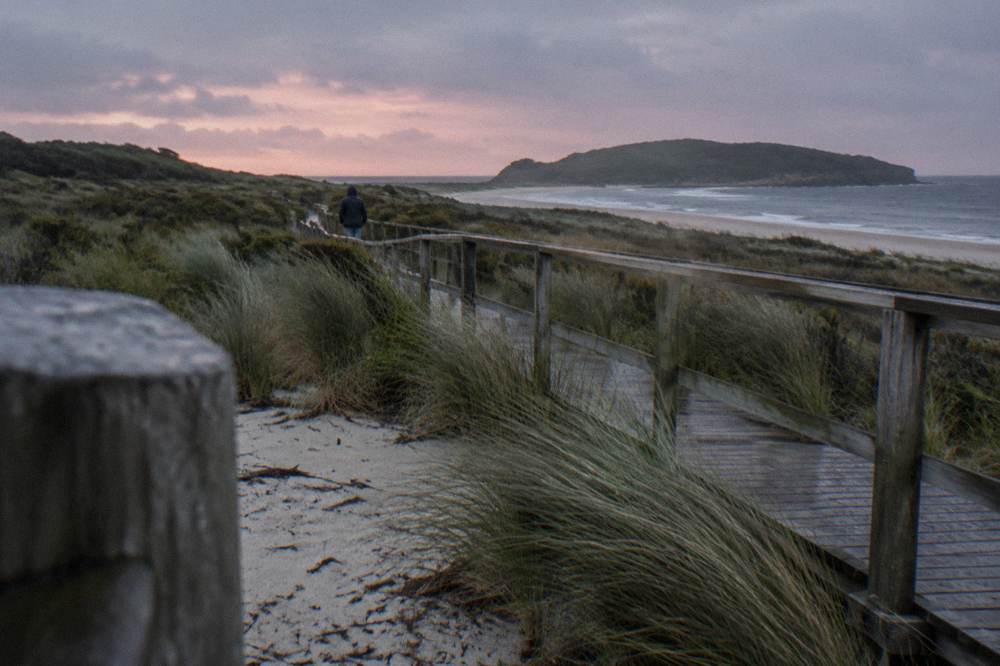
Sightings are never promised, and that is worth saying plainly. Penguins and shearwaters are wild birds, and the park describes them as present, not as guaranteed. Weather, season and disturbance all shape the evening. Our penguin watching guide for the island goes deeper on the species and the etiquette.
If dusk at the Neck is your priority, note that the standard day tours return to Hobart in the evening, so an independent stay on the island, or a look at where to stay on the island, is the more reliable route to a platform visit after last light. The same evening, a different kind of wildlife encounter runs from Adventure Bay: the three-hour open-boat cruise along the dolerite coast looks for seals, dolphins and sea birds. That is the bruny-island-3-hour-wilderness-cruise listing, from A$190 per person for the cruise only, with a Hobart bus option priced separately on the listing, and a rating of 4.8 from 632 reviews.
Do You Need A Parks Pass To Visit The Neck?
There is no clean official answer for the Neck itself, so honesty beats a false yes or no here. A valid parks pass is required to enter South Bruny National Park and to visit Cape Bruny Lighthouse, the park service states, but whether one applies at the Neck viewing platform is not stated by the Tasmania Parks and Wildlife Service.
The pass prices themselves are published by the Parks and Wildlife Service Tasmania. A Daily Pass, valid up to 24 hours, costs A$49.15 per vehicle for up to 8 people, or A$24.55 per person arriving by bus, cycle or on foot. A Holiday Pass, valid up to 2 months, costs A$98.35 per vehicle or A$49.20 per person. The details are on the park passes and entry fees page.
| Parks pass | Validity | Per vehicle (up to 8) | Per person (bus, cycle, foot) |
|---|---|---|---|
| Daily Pass | Up to 24 hours | A$49.15 | A$24.55 |
| Holiday Pass | Up to 2 months | A$98.35 | A$49.20 |
There is no island entry fee as such, the ferry fare is the crossing, and the pass question only bites if your itinerary enters the national park in the island's south. On the roster, the bruny-island-safaris-lighthouse-day-tour-with-lunch listing states the Parks Pass is included, as does the bruny-island-lighthouse-and-winery-lunch-day-tour listing, while the budget Tassie Tours day also lists the National Parks Pass among its inclusions. The standalone climb does not include it.
That standalone climb is the cape-bruny-lighthouse-tour listing: a guided 30-minute climb of the 1838 lighthouse with binoculars provided, from A$25 per person, rated 4.9 from 316 reviews, for up to 10 travellers, starting at the lighthouse car park. The lighthouse is about 1 hr 15 min from the ferry terminal at Roberts Point, the park states, with grounds open any time and vehicle access from 9.30 am to 4.30 pm. Tours require a parks pass and booking.
Do Day Tours Stop At The Neck Lookout?
Yes, in practice: most full-day tours from Hobart cross the Neck because it carries the island's only through road, and several treat the lookout as a photo stop, yet only listings that name it can be counted on. The clearest roster example is the private eight-hour day, whose listing names The Neck Lookout among its stops; otherwise read the itinerary, or travel independently for the staircase in good light.
What the roster lets us state is which days cross the island and for how long. The table compares the three most-booked styles, and every one of them drives the Neck road. The Bruny Island Traveller gourmet day, run by Pennicott Wilderness Journeys, is a 9.5-hour coach day from Hobart with the ferry crossing, tastings of fudge, honey, mead, cheese and ale, and a beachside lunch, from A$290 per person, rated 4.8 from 581 reviews. A guest review on the listing calls it "a lovely day out", praising the guide's rapport with the producers.
| Day tour | Duration | From (per person) | Rating and reviews | Pickup |
|---|---|---|---|---|
| Bruny Island Traveller Gourmet Sightseeing Day Tour | 9.5 hours | A$290 | 4.8 from 581 reviews | Select CBD hotels |
| Full-Day Bruny Island Tour with Guide (Tassie Tours) | 10 hours | A$180 | 4.7 from 938 reviews | Yes, Hobart CBD |
| Ultimate Full-Day Bruny Island Inc Exclusive Lighthouse Tour | 10 hours | A$280 | 4.8 from 1003 reviews | Yes |
The Tassie Tours budget day, the full-day-guided-bruny-island-tour-from-hobart listing, is one of the lowest-priced full-day guided options on the roster at from A$180 per person, with hotel pickup in the Hobart CBD, the round-trip ferry, live commentary and the National Parks Pass, food and drinks paid for separately. One verbatim reviewer, jodie, wrote that "The scenery was just magnificent, a must if you are visiting Hobart!!", naming the barge ride, pub lunch and lighthouse among the day's stops. The Safaris lighthouse day, from A$280 per person, adds a guided tour inside Cape Bruny Lighthouse, oysters at Get Shucked, chocolate and honey tastings and a one-course lunch at Hotel Bruny for up to 20 guests.
Whichever day you choose, the Neck will be on your route; the variable is whether you get five minutes at the staircase or time to climb it. If a proper stop matters, our things to do on the island guide ranks where each format spends its time. And if you want both a Neck stop and a walk, the bruny-island-adventure-hike-highlights-and-tastes day pairs a coastal hike to the Arch and a stair climb to 360-degree views with an afternoon of produce tastings, from A$169 per person for a maximum of 15 guests, rated 4.8 from 76 reviews.
What Else Is Near The Neck On Bruny Island?
South of the Neck, the road enters South Bruny National Park country, where Adventure Bay, Fluted Cape and Cape Bruny Lighthouse await near the island's southern end. The park notes the white variant of Bennett's wallaby can be seen feeding in paddocks at dusk near the Fluted Cape entrance, and the Fluted Cape Track, one of the 60 Great Short Walks, is steep with unprotected cliff edges.
Adventure Bay is the island's main settlement hub for visitors, with the general store that holds the island's only fuel pump, and the departure point for the wilderness cruises along the coast. Our Adventure Bay guide covers it in detail. The white wallabies are a genuine draw, and unlike the penguins they ask nothing more of you than patience and distance; the park's page simply notes where they feed.
| Camping in South Bruny National Park | Fee |
|---|---|
| Until 2 November 2026, 1 or 2 campers | A$10 per night |
| Until 2 November 2026, additional adult | A$5 per night |
| Until 2 November 2026, additional child (5 to 17) | A$2.50 per night |
| From 3 November 2026 | A$18 per site per night, max 6 people |
| The Pines campground | No charge |
Camping at The Neck puts you a short walk from the viewing platform, which solves the dusk problem neatly: no late drive back over the isthmus. Book and check conditions through the park's camping page, and remember beaches on the island are unpatrolled. For a fuller treatment of sleeping options on the island, see our camping guide.
When Is The Best Time Of Year To Visit The Neck?
January and February are the best months for most visitors: they are the warmest months at the Neck, with Bureau of Meteorology averages for Cape Bruny showing a 20.2 C mean maximum and 39.3 to 50.9 mm of rainfall. If early-evening penguins matter more, July's 12.2 C days and early dusk suit the platform better.
| Month | Mean max (C) | Mean min (C) | Mean rainfall (mm) |
|---|---|---|---|
| Jan | 20.2 | 12.4 | 39.3 |
| Feb | 20.2 | 12.4 | 50.9 |
| Mar | 18.9 | 11.7 | 53.1 |
| Apr | 16.7 | 10.1 | 56.2 |
| May | 14.4 | 8.7 | 69.3 |
| Jun | 12.6 | 7.3 | 76.3 |
| Jul | 12.2 | 6.7 | 72.7 |
| Aug | 12.9 | 6.7 | 85.7 |
| Sep | 14.5 | 7.5 | 70.8 |
| Oct | 15.6 | 8.3 | 70.9 |
| Nov | 17.0 | 9.6 | 56.7 |
| Dec | 18.6 | 10.7 | 58.2 |
The figures come from the Bureau of Meteorology's Cape Bruny station, station 094198 climate averages. Annual averages are 16.2 C maximum, 9.3 C minimum and 761.2 mm of rain, which tells you the honest story: this is a mild, changeable maritime climate, and layering is the local uniform. The fire danger season in Tasmania normally runs November to March, so check alerts in those months.
Daylight length shapes the penguin evening more than temperature does. Our island weather guide unpacks what each season means for tours, flights and cruises.
How Should You Plan A Day Around The Neck?
Plan the Neck as the middle of your island day rather than the start: take an early ferry, tour north or head south first, stop at the staircase when the light suits a photo, and finish at the platform after last light if you are staying on the island. Day tours from Hobart set the timing, while independent travellers should sort fuel, cash, and the return ferry queue before dusk.
A sample shape for a self-drive day: leave Hobart in time for a mid-morning sailing, drive south over the Neck with a quick lookout climb, spend the middle of the day at Adventure Bay and the producers around Great Bay and Alonnah, then return to the Neck platform for the last-light arrival. In summer that means a late evening; in winter it can be an early dinner in Alonnah followed by a short drive. The Bruny Island Cheese Co cellar door is open 10 am to 4 pm daily with its kitchen to 3 pm, which pairs well with a mid-afternoon leg of the loop.
For tour travellers, the Bruny Island Traveller gourmet sightseeing day remains the most direct way to fold the island's food producers and the Neck road into one booked day from Hobart: 9.5 hours, from A$290 per person, hotel pickup at select CBD hotels only, and free cancellation up to 24 hours before the tour. The site you are reading, Bruny Island Tasmania Tours, exists to make exactly this kind of comparison quick, and prices and schedules can change, so confirm details on the live booking page before you go.
Common Questions About The Neck On Bruny Island
What is the Neck on Bruny Island?
The Neck is the narrow isthmus of sand and scrub joining the island's north and south halves, crossed by the main road. A timber staircase and viewing platform in the Bruny Island Neck Conservation Area sit just off the road and give views over both coastlines.
When do the penguins come in at the Neck?
Little penguins leave the water at last light, per the official Penguin Watching Guidelines, so they come ashore under cover of darkness. Shearwaters nest from late spring to late summer. No official page publishes exact penguin season months for the Neck, so time your visit around dusk rather than a promised window.
What are the penguin watching rules at the Neck?
Approach the viewing point from the land, not along the beach; use only dim red-light torches, never pointed at the water or the birds; no flash cameras on the beach; stay quiet and keep movement to a minimum, and never walk through the colony.
Do you need a parks pass for the Neck viewing platform?
There is no settled official answer for the platform itself. A valid parks pass is required for South Bruny National Park and Cape Bruny Lighthouse, so if your day includes those, a Daily Pass at A$49.15 per vehicle or A$24.55 per person applies.
Do day tours stop at the Neck lookout?
Almost every day tour crosses the Neck because it carries the only through road. Only listings that name the stop can be counted on; the clearest roster example is the private eight-hour day, whose itinerary lists The Neck Lookout. Check the listing itinerary before booking if the stop matters to you.
Can you camp at the Neck?
Yes, The Neck is one of the campgrounds in South Bruny National Park, alongside Jetty Beach and Cloudy Corner. Fees are A$10 per night for one or two campers until 2 November 2026, then A$18 per site per night for a maximum of 6 people.